Climate management of electrical conversion stations
EOLIOS is an expert in the thermo-airflow sizing of transformers and other high-heat-output installations in conversion buildings.
Characterise
- Study of thermal plumes
- Maximum air temperature at the inlet
- Equipment suited to the climate
Secure
- Critical failure scenarios
- Bypass flows & recirculation
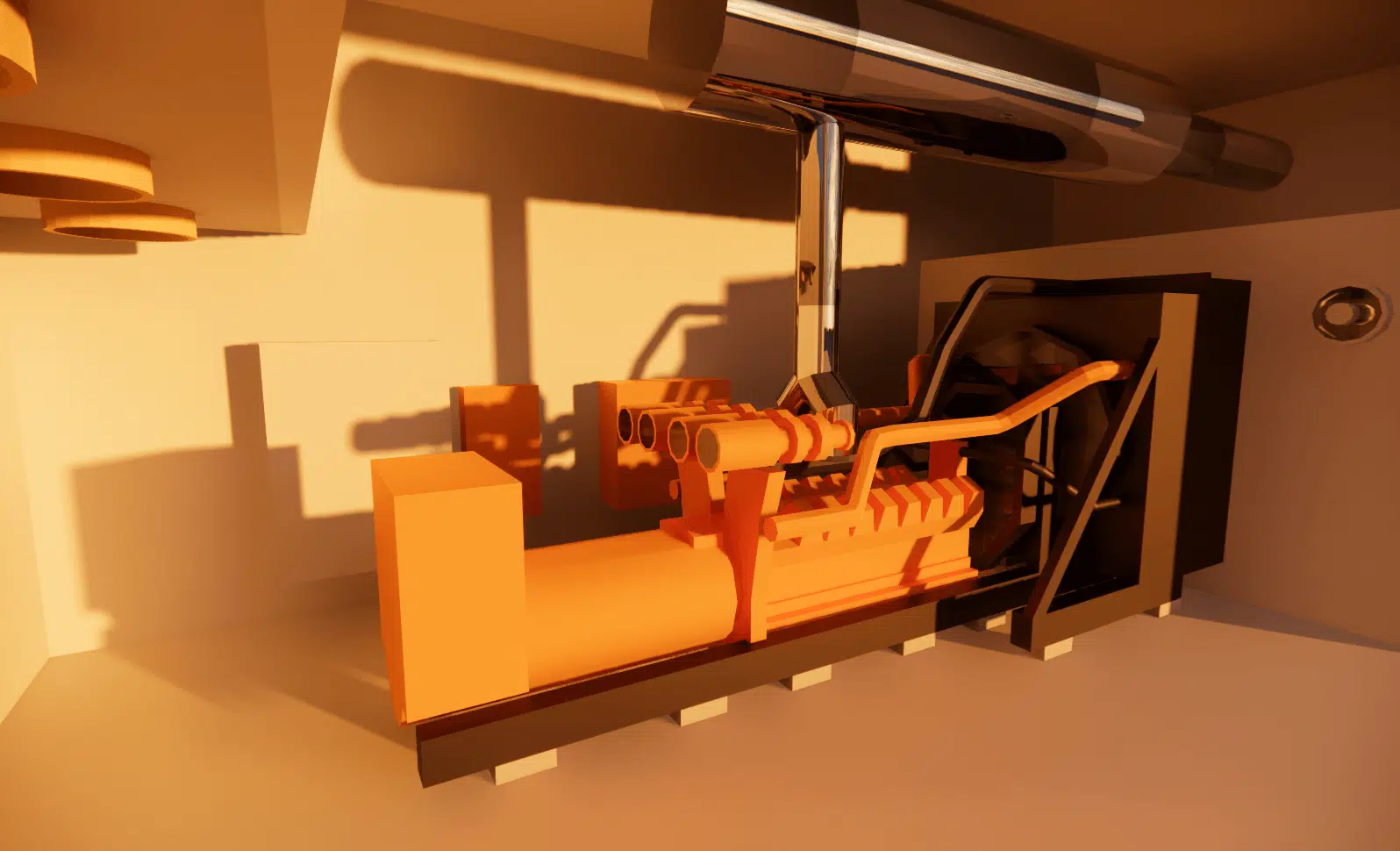
- Impact of generator sets
Optimise
- Validation of the installation layout
- Placement of air-treatment systems
- Tailor-made solutions
Present in various types of power plant — thermal as well as renewable — these stations carry out the transformation of electricity to make it accessible from households to large industries. Their thermal and airflow management is crucial, requiring precise control of temperatures and air velocities. CFD is a key tool to model and optimise these flows: EOLIOS offers suitable technical solutions ensuring performance and safety.
What is an electrical conversion station?
Definition and function
An electrical conversion station converts electricity from one form to another to facilitate the transport and distribution of energy. It makes it possible, in particular, to transform electricity back into alternating current in order to inject it into the transmission grid of the grid operator, for everyday use by all.
Main components: the converter towers
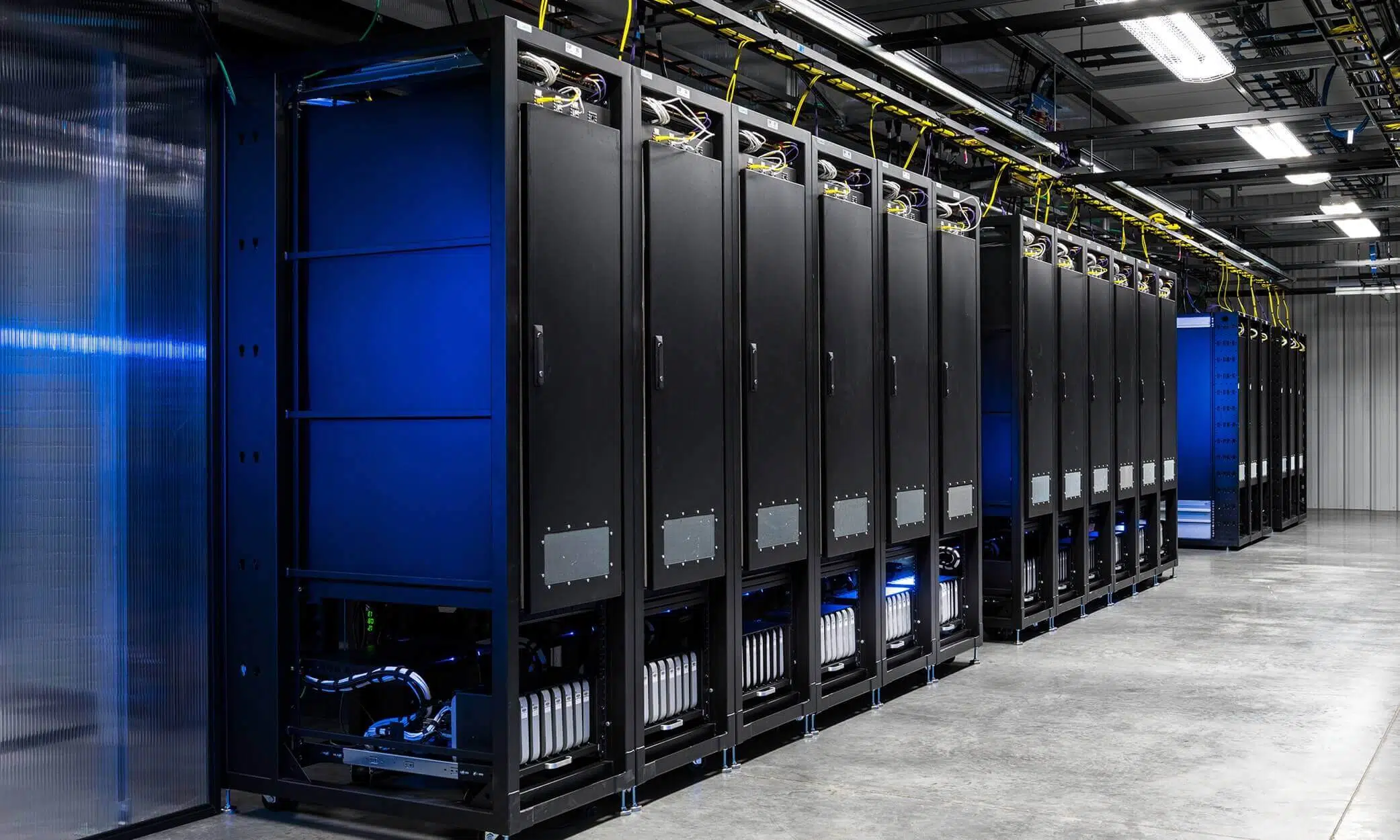
Within the station, the converter towers are essential devices: they modify the characteristics of the electricity (voltage, frequency, signal shape) to adapt them to the grid's needs. The thermo-airflow study ensures the operational efficiency of the station and anticipates the problems linked to thermal constraints.
Thermo-airflow constraints of a conversion station
Temperature regulation
It is essential to ensure an optimal temperature to avoid any overheating: as the conversion towers generate a large amount of heat, the room must be kept at a reasonable temperature.
Control of air velocities
The conversion-tower systems are often very sensitive to high air velocities, which are sources of malfunctions: it is crucial to keep the velocities below a precise threshold value.
Temperature homogeneity
Homogeneous temperatures throughout the room avoid the problematic air movements linked to thermal stratification. A supply flow of fresh air sufficient for cooling must be balanced with air velocities that are low enough everywhere — a better control of the thermo-airflow conditions ensuring performance and safety.
What does CFD bring to these stations?
Modelling and simulation of airflows
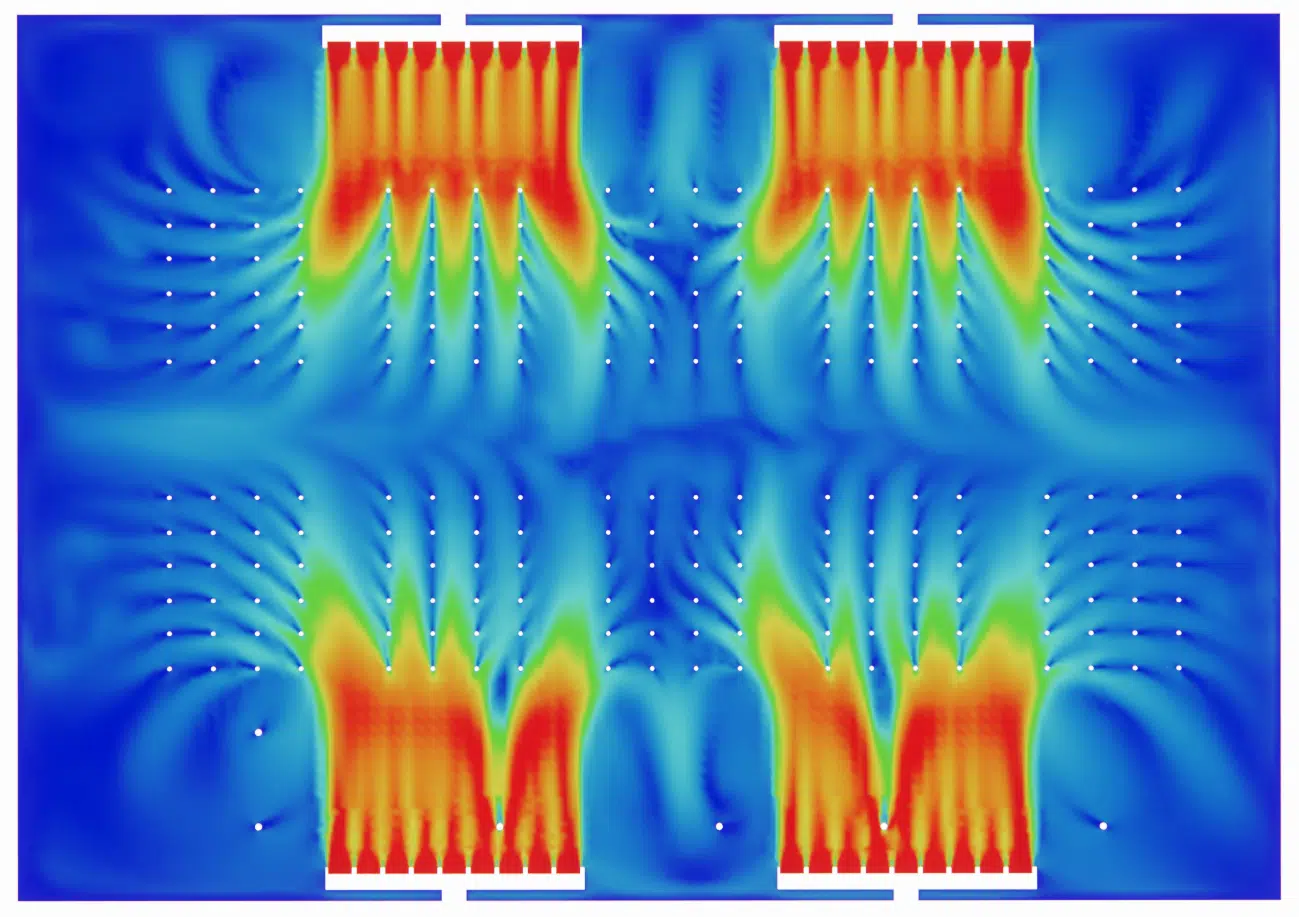
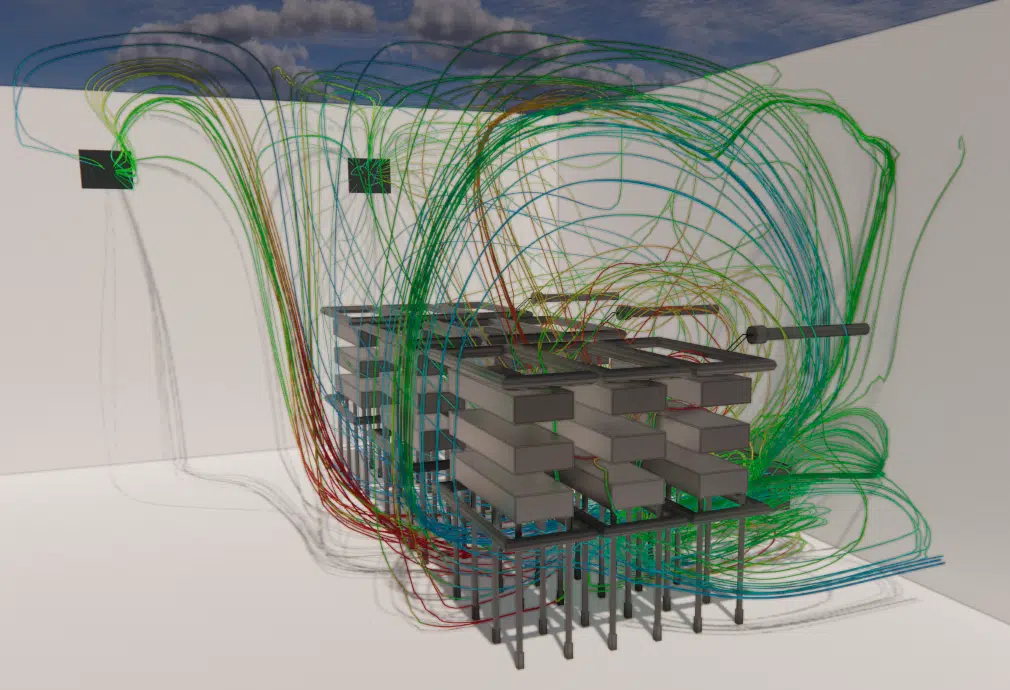
CFD precisely models and simulates the airflows, temperatures and velocities in the various zones of the station, making it possible to analyse in detail the phenomena of air circulation and heat transfer.
Optimisation of the ventilation systems
It optimises the design of the ventilation systems by simulating different arrangements: visualising the flows, identifying the zones of stagnation, overheating or over-speed and adjusting the supply grilles for better heat exchange and a homogeneous distribution of temperatures.
Prediction of the equipment thermal performance
CFD predicts the thermal performance of the equipment and heat exchangers, calculates the heat fluxes generated by the conversion towers and sizes the cooling systems — improving the efficiency, safety and durability of the installations.
Technical solutions & fire safety
Possible technical solutions
- Suitable ventilation: supply grilles, extractors, fans, air conditioners; mechanical ventilation or variable-flow air conditioning according to needs;
- Duct design: routes minimising pressure drops and resistances, with reduced bends and obstructions;
- Thermal regulation: temperature sensors controlling flow rates, air conditioning and heating;
- Air circulation: deflectors, ducts and grilles placed for a uniform distribution, without stagnation or overheating;
- Velocity control: adjustable diffusers, calibrated systems and airflow barriers.
Fire-start simulation in industrial rooms
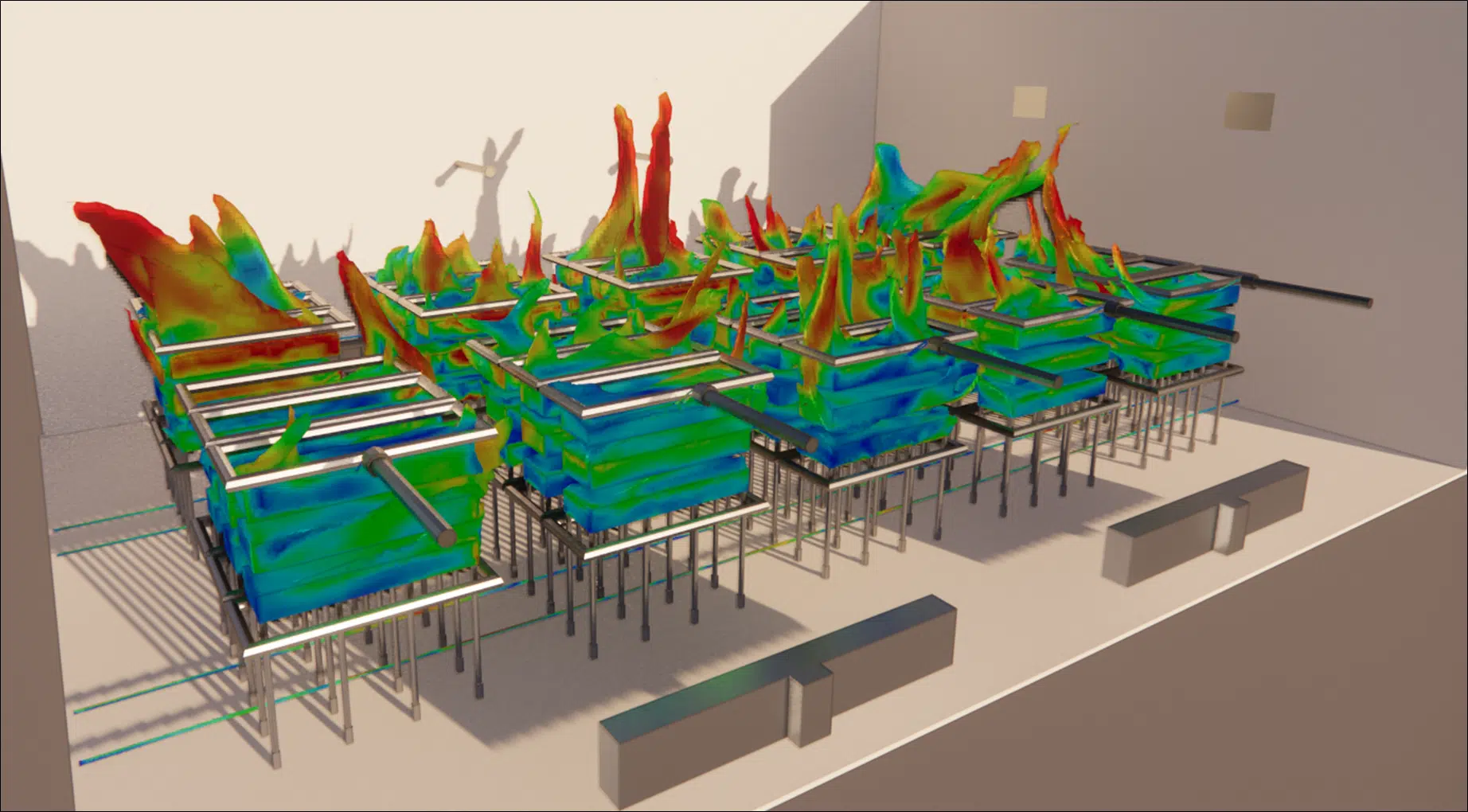
In addition, we model through CFD the fire-start scenarios and their spread: thermal behaviour and smoke dispersion, to develop the fire prevention and management systems. Our studies incorporate the effectiveness of the smoke-control systems (removal of toxic smoke and heat, safe visibility and evacuation), the optimal distribution of smoke detectors and the analysis of fire spread to identify the weak points and propose structural improvements or resistant materials.
Impact on equipment performance and safety
The converter-hall study demonstrates the relevance of CFD for diagnosing and optimising ventilation systems in an industrial environment: optimal equipment performance, a safe working environment and energy efficiency. We offer tailor-made solutions ensuring performance, safety and energy efficiency.