How is CFD used for generator-set rooms?
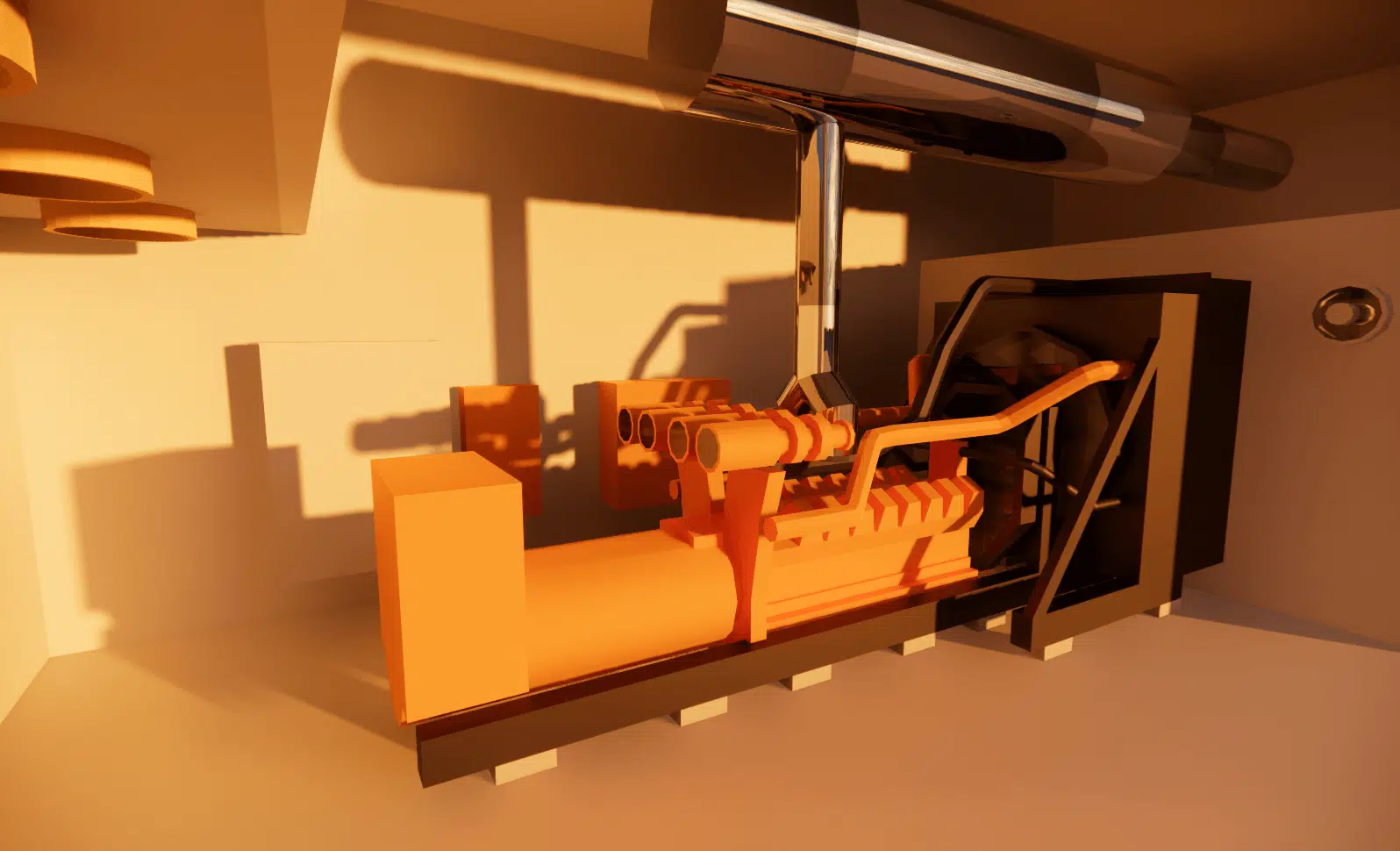
Generator sets dissipate heat during power generation: a sufficiently ventilated room is needed to keep the temperature within the operating threshold. The heat is removed by an induced airflow around the engine.
Study
- Pressure losses
- Natural ventilation
- NOx dispersion
Secure
- Extreme weather conditions
- Critical failure scenarios
- Bypass flows & recirculation
Optimise
- Grille layout
- Air-treatment systems
- Containerisation
Ventilation that is vital for engine rooms
These diesel or gas engines — propelling ships or generating electricity — are exposed to varying climatic conditions, from arctic cold to tropical heat, and must operate in all environments. The ventilation of these rooms makes it possible to:
- supply combustion air to the engines;
- supply fresh air to remove the unwanted heat;
- keep the room temperature within a range compatible with personnel work and components.
The airflow is generally calculated using the average ambient temperature, without accounting for extreme climatic conditions. We support manufacturers by advising on the amount of combustion air and the cooling flow rate, and offer assistance on the overall ventilation, the impact study of the exhausts and the calculation of the pressure losses of the acoustic systems.
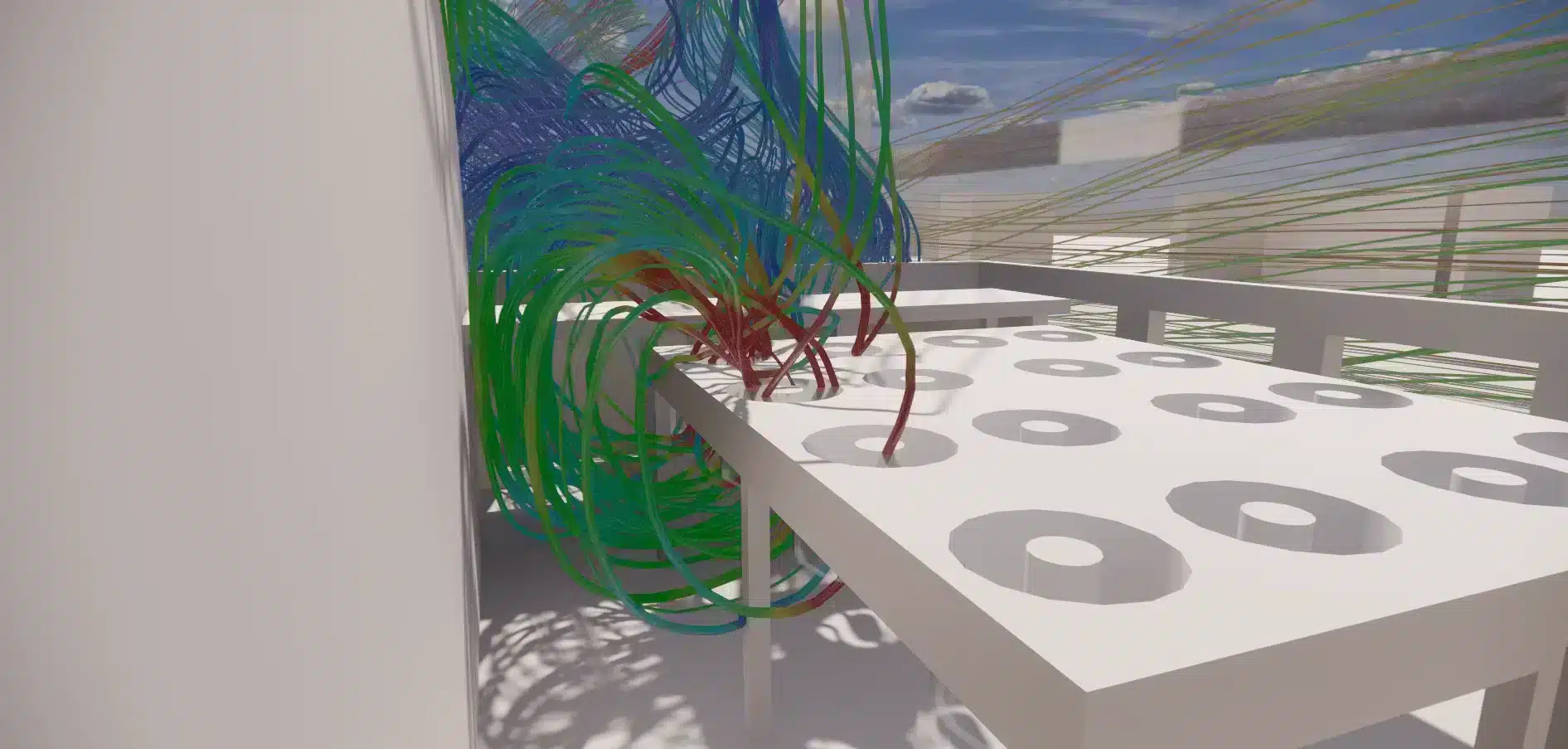
The steps of a CFD simulation applied to the systems
CFD enables a thermal analysis of technical rooms that is difficult to achieve experimentally. The building geometry is first slightly simplified — removing gaps and small edges that generate too many finite elements in the mesh. The model then establishes the thermal profiles for certain extreme climates, the aim being to analyse the air inlets and outlets, generally channelled to direct the flow around the components and improve the engine efficiency (genset). Several variants are then precisely compared, yielding pressure, maximum intake temperature, air and pollutant movements…
Pressure losses & fan sizing
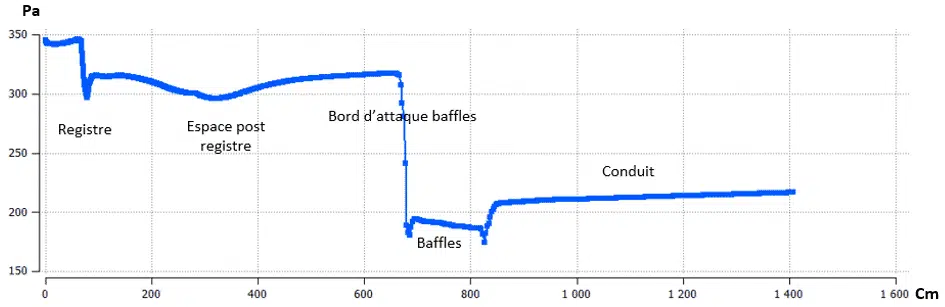
We carry out the pressure-loss studies of the acoustic baffles and the sizing of the fans. Depending on the air velocities, the pressure losses become exponential. The elements disturbing the flow are the diesel engine and the generator; the louvres and acoustic baffles near the exhaust and upstream are a major source of pressure loss, while battery banks, fuel tanks, intake pipes and the exhaust stack offer minor resistance.
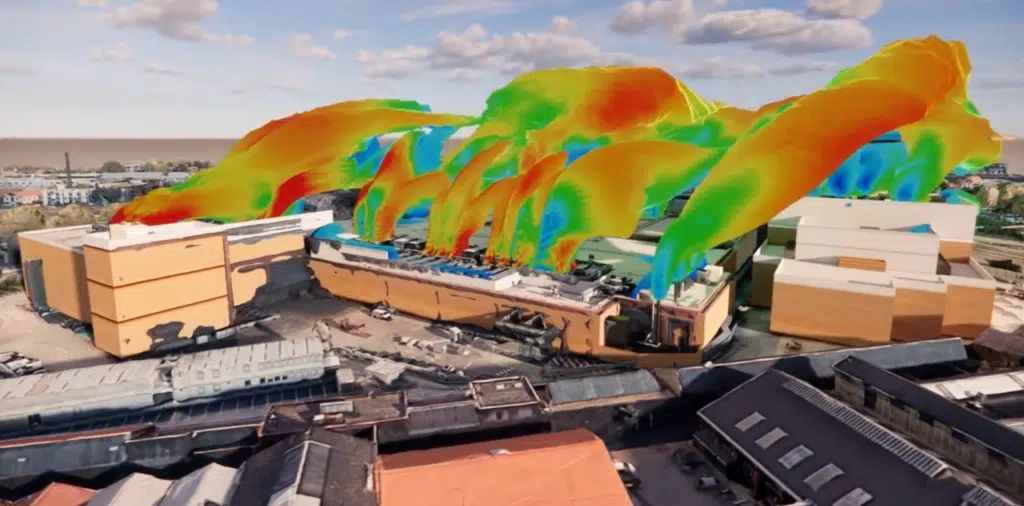
To the internal flow is added the wind flow over the building: the wind blowing on the room can increase the pressure loss and, above all, cause the overheated exhaust gases to recirculate towards the engine inlet.
Contamination of HVAC systems by exhaust gases
The generator set compensates for power outages, but its engine releases polluting substances — carbon dioxide, sulphur, nitrogen oxides (NOx). Running on petrol, gas or diesel, it can heavily pollute the nearby atmosphere, especially in intensive use. Our analyses include tracking the dispersion of the exhaust gases: we study the dissipation of the pollutants from the exhausts and verify the absence of direct recirculation onto the fresh-air handling systems (AHU) of neighbouring rooms.