Thermal optimisation of technical rooms
Thermal optimisation is a major challenge in the technical rooms of data centers: managing the heat generated by the equipment well is essential to ensure its proper operation and extend its lifespan. EOLIOS designs bespoke solutions for UPS, MSB, transformer and skid rooms.
Diagnosis
- Study of thermal plumes
- Max inlet air temperature at the equipment
- Selection of suitable equipment
Analysis
- Critical failure scenarios
- Bypass & recirculation flows
- Energy optimisation
Design
- Validation of the layout
- Placement & control of the AHUs
- Bespoke solution
Our fluid-mechanics experts analyse your existing infrastructure and propose solutions to improve energy efficiency, reduce cooling costs and guarantee reliable, secure operation.
CFD for effective thermal management
In data centers, the halls are organised into hot and cold aisles to optimise cooling. But for the technical rooms, the situation is different: each installation is unique, with its own constraints and configurations, which makes standardised solutions often insufficient.
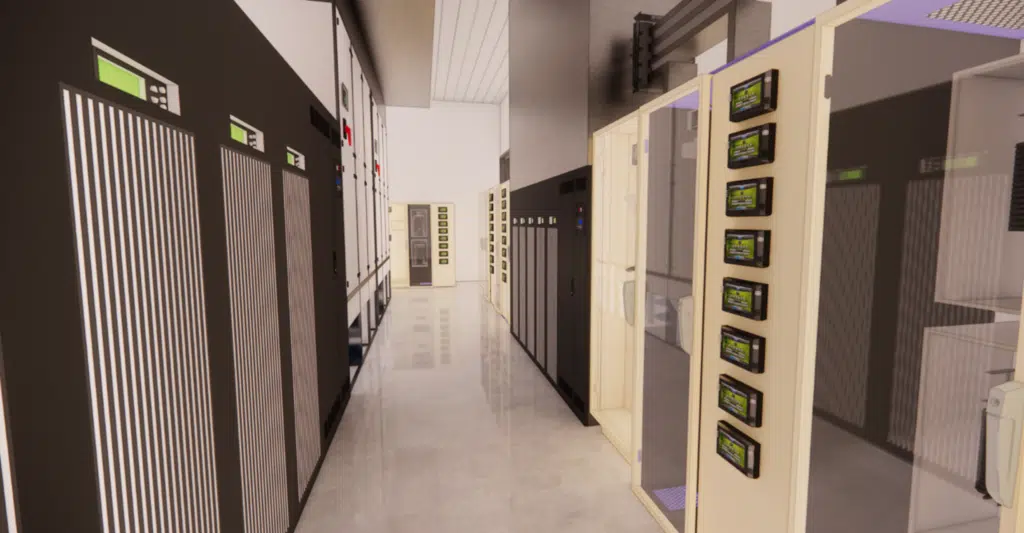
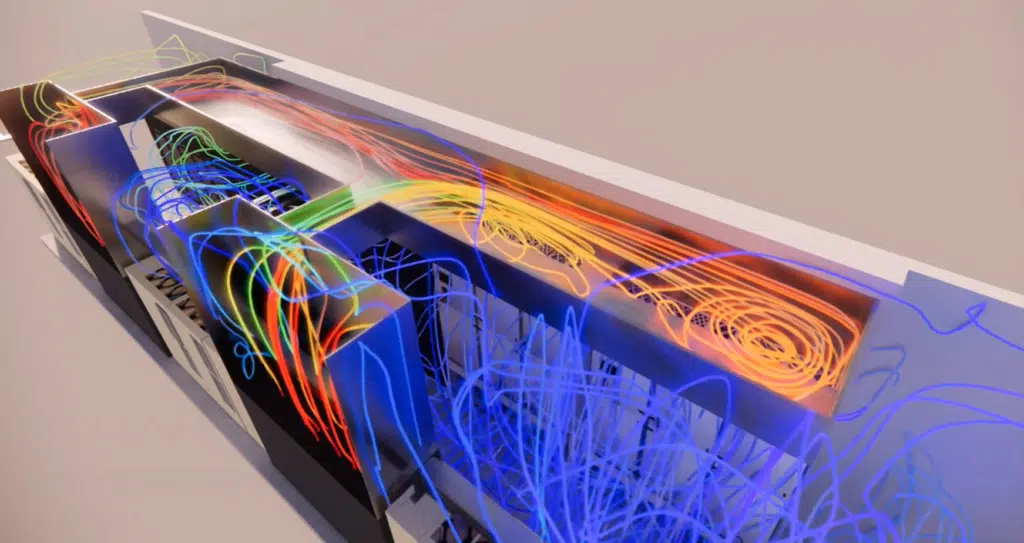
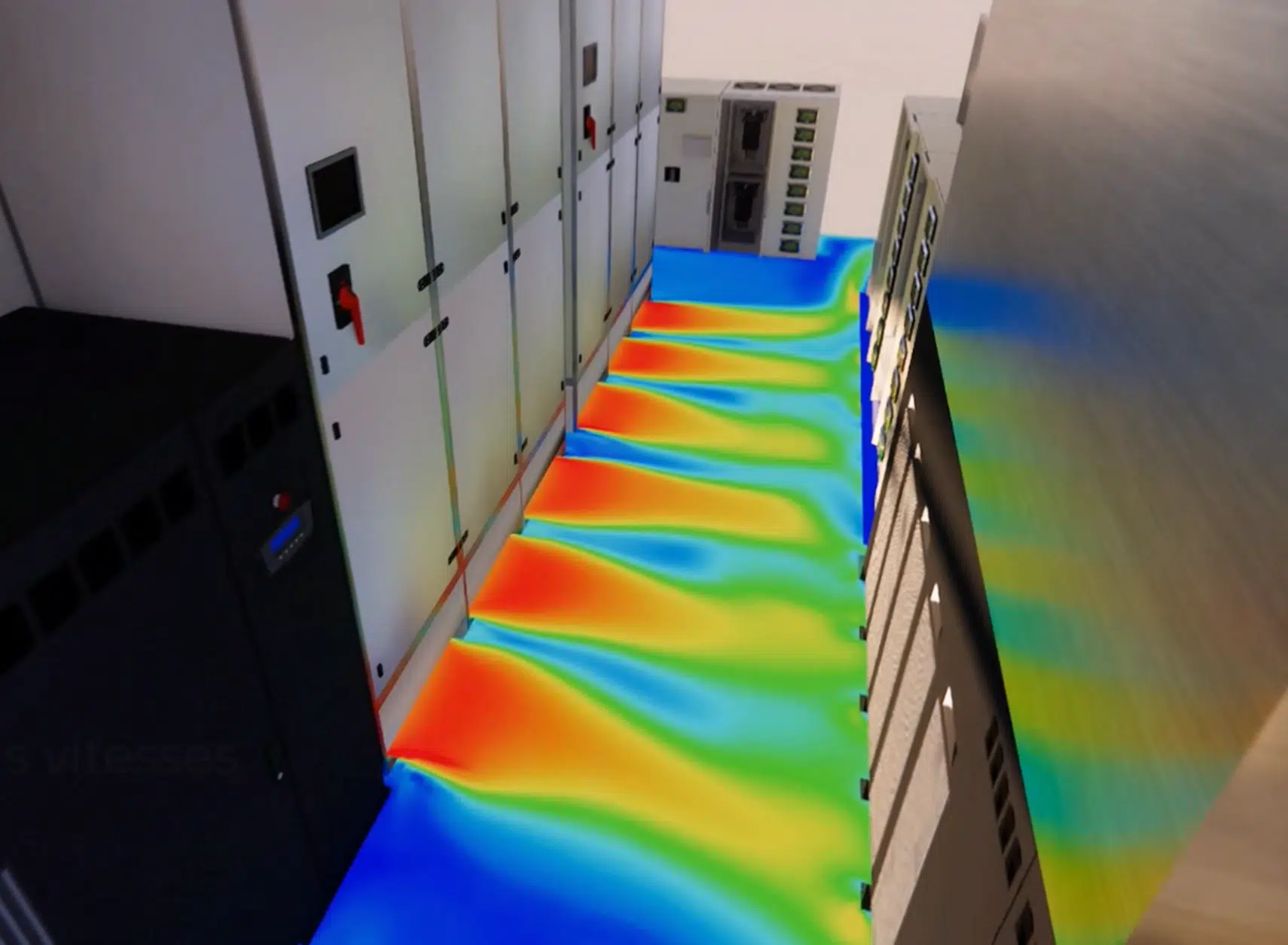
Without established measurements or predefined solutions, the use of advanced modelling tools (CFD) is essential to understand and optimise the air circulation, the heat dissipation and the temperature distribution — for maximum energy efficiency and increased reliability.
Bespoke, innovative thermal studies
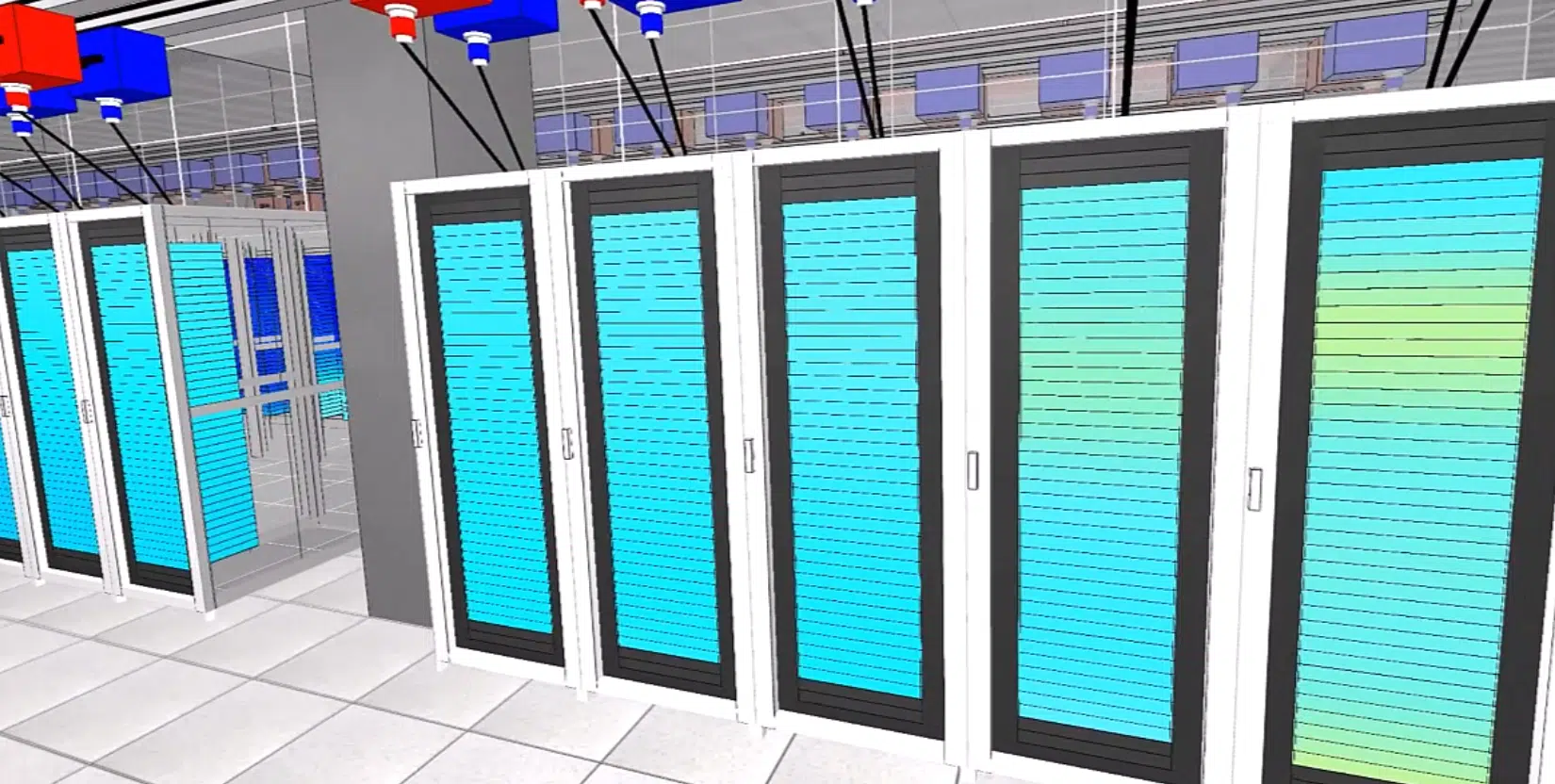
Analysis of hot spots and overheating
A hot spot is an abnormally hot zone that can cause failures, reduce equipment lifespan and increase cooling costs. By analysing the airflows and the temperature gradients, we precisely locate the at-risk zones and propose strategies to eliminate them, in order to maintain a uniform temperature throughout the room.
Analysis of short-circuiting phenomena
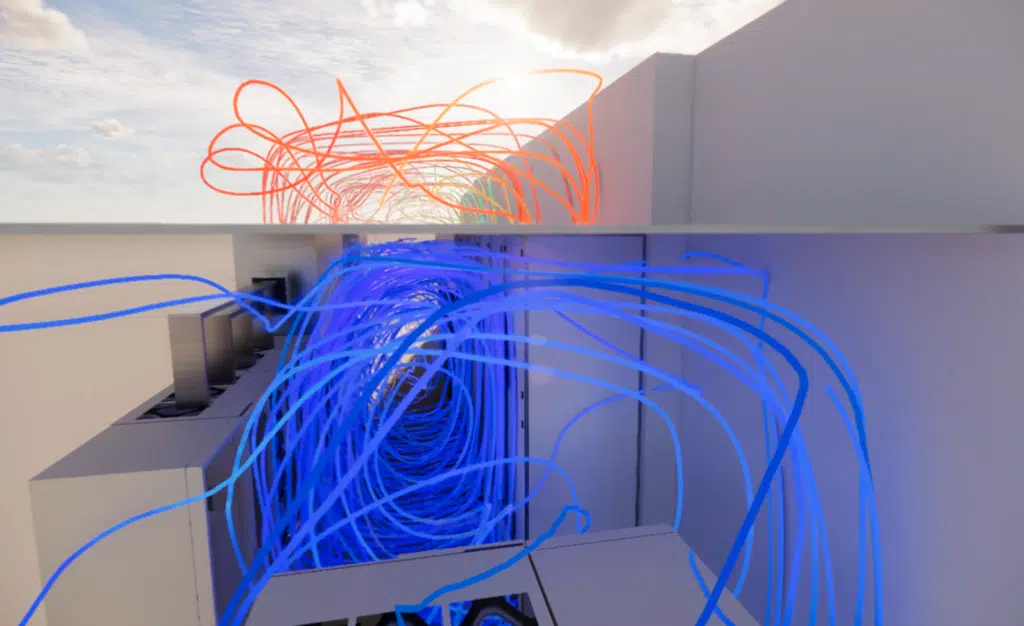
Short-circuiting occurs when a hot airflow recycles through the cooling system, creating localised overheating zones. By analysing the circulation patterns, we propose design and configuration solutions to prevent short-circuiting, avoid recirculation and ensure effective heat dissipation.
Study of system redundancy (CRAH)
Cooling-system redundancy (CRAH) — backup or duplicate systems — is essential to guarantee continuity of operations in the event of a failure. By analysing the air distribution and the thermal distribution, our thermal-airflow studies identify the sensitive zones and design effective redundancy solutions for optimal resilience.
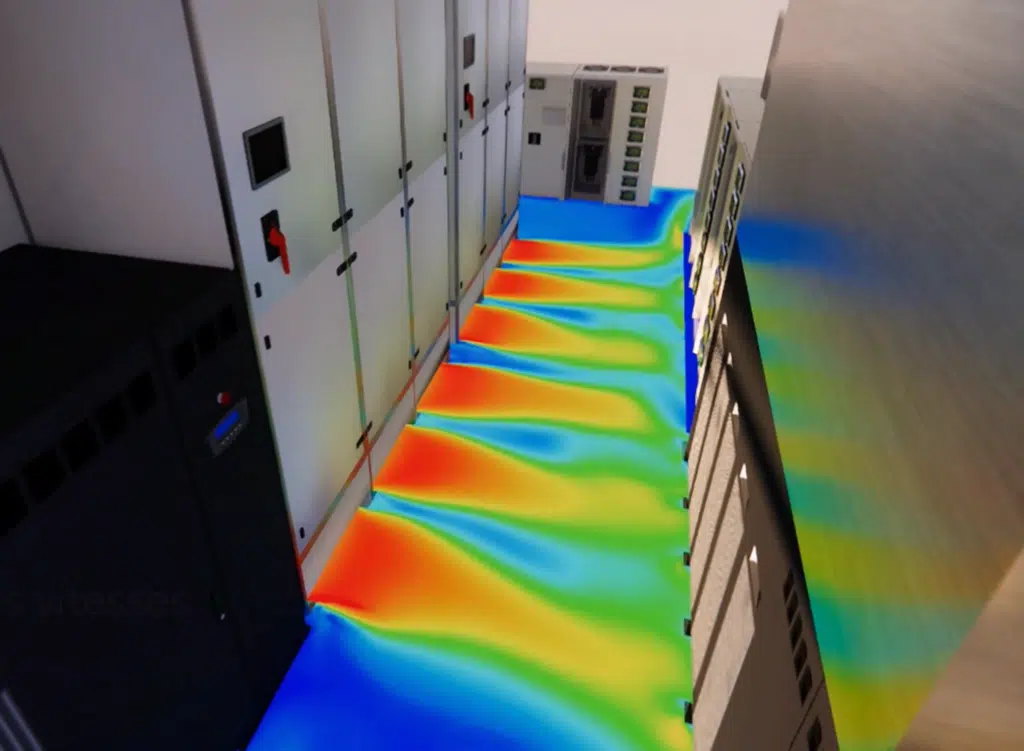
“Is your data center protected against the failure of its cooling systems during a heatwave?”
Design support
We support the design of your technical rooms: air-conditioning systems, locations, overall layout and smoke control. Our CFD simulations identify the overheating-risk zones, determine the optimal locations of the air-conditioning systems and design an appropriate compartmentalisation of the air masses at different temperatures — for an even distribution of cool air and minimal energy losses.
Smoke control, fire systems & detection
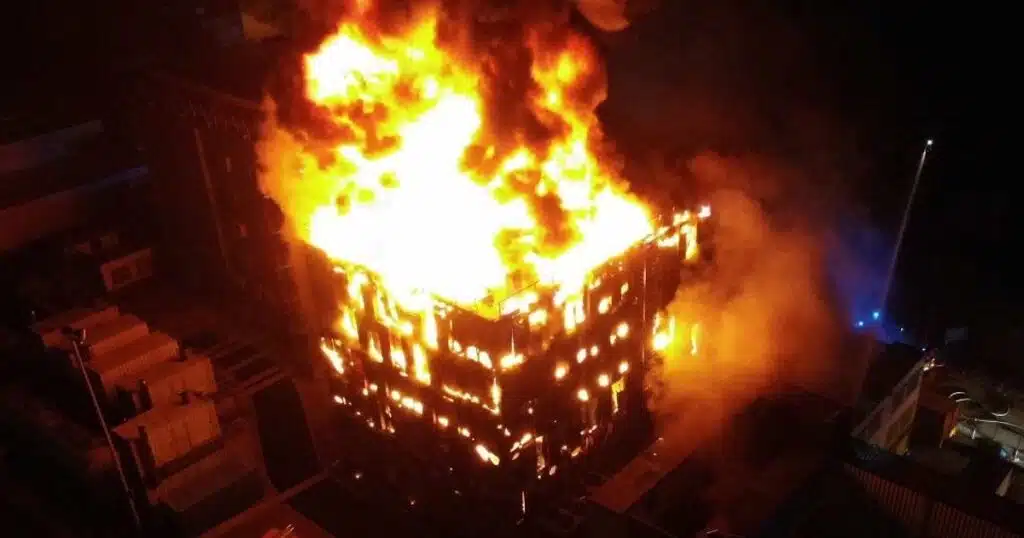
The study of smoke control, fire systems and detection determines the site's specific needs — size, equipment density, rack layout, materials, airflows. Carried out by fire-safety experts and compliant with the standards in force, it precisely sizes the fire-fighting and fire-prevention installations.
In the event of a fire, it is crucial to detect smoke quickly. With CFD models, we predict the smoke spread, check the correct positioning of the detection and size the fire-fighting systems. We thus optimise the placement of the smoke vents, extractors and fans for a rapid evacuation while minimising the infiltration of smoke into the sensitive zones.
Expertise: data center fire simulation (gas extinguishing)