Thermo-airflow audit: the smoke test
EOLIOS carries out the on-site analysis of air and heat movements in your workshops, to understand the real behaviour of the installations before any optimisation.
Understand
- Real air movements
- Identification of dead zones
- Calibration of CFD models
Measure
- Thermo-airflow comfort
- Parasitic air inlets
- Tracking of thermal plumes
Check
- Recirculation issues
- Removal of pollutants
- Fire-safety systems
Why carry out smoke tests in a thermo-airflow study?
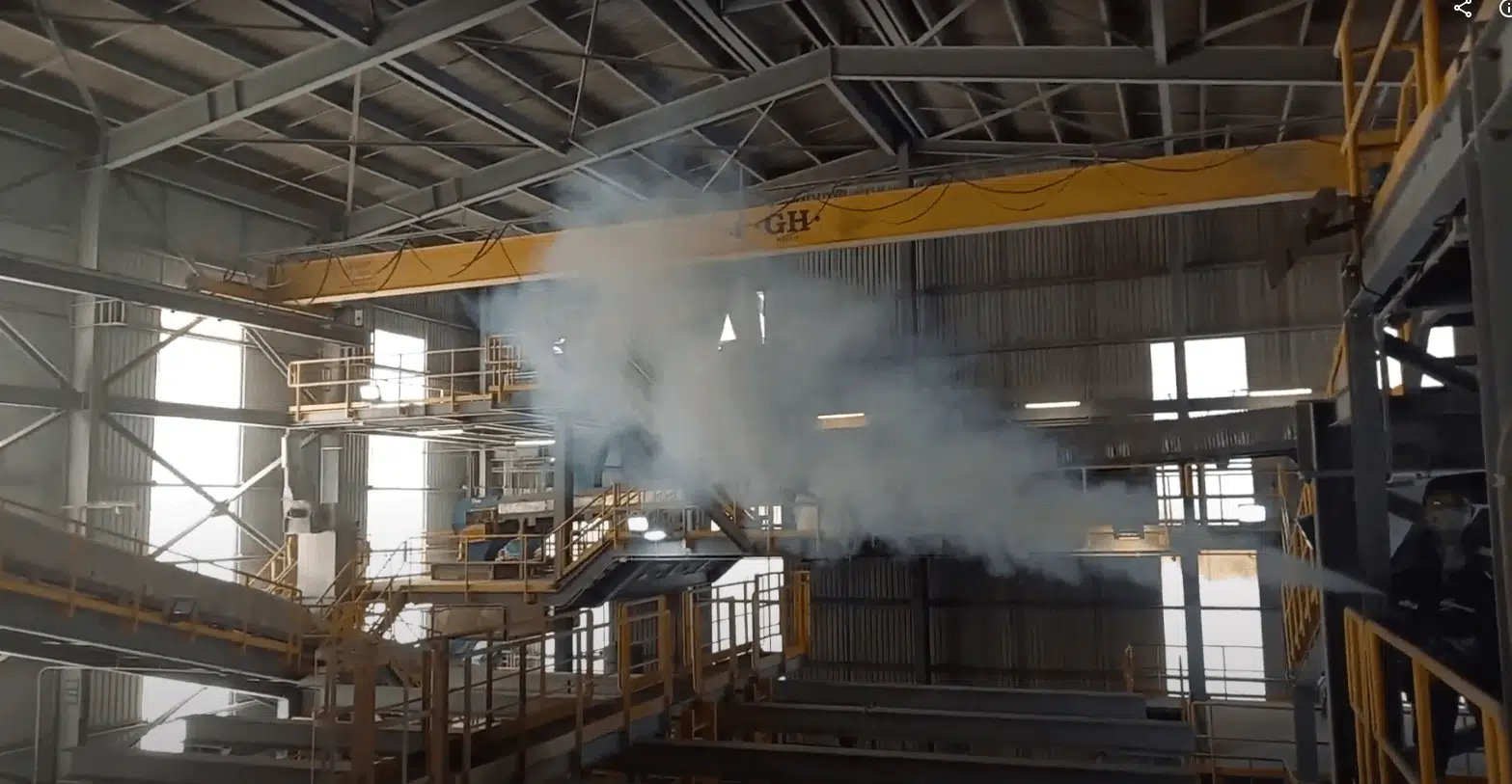
Smoke tests make it possible to visualise and understand the air and heat flows in a given space: determining the dispersion of pollutants, analysing the airflows, detecting unwanted draughts, validating the numerical simulation models and optimising the design of ventilation installations. The use of artificial smoke makes it easier to visualise the air movements: easily spotted, they highlight the mixing zones, the air inlets and outlets, the recirculations, the leaks and the dead zones.
These tests help optimise the thermal and airflow performance of buildings, ventilation systems and industrial environments, improving occupant comfort, ensuring indoor air quality, optimising energy efficiency and reducing fire risks. In short, they provide valuable visual information on the airflows and the dispersion of pollutants, and make it possible to validate the numerical simulations.
Smoke-audit videos
A video edit, in the form of a few-minute film, is produced. The videos of the various phenomena are commented live, these explanations being completed in the measurement report. Particularly effective for understanding the thermo-airflow mechanisms on site, these videos detail the smoke protocol and explain the observed phenomena simply.
Measurement campaign
Objective and protocol
The objective is to take stock of the systems in place, to measure the indoor temperature conditions and to characterise the main thermo-airflow conditions of the space. In industry, we carry out smoke audits to calibrate the numerical simulations against the real phenomena. The audit includes taking temperature and air-velocity measurements, analysing the smoke movements, producing a video and a report providing feedback for all the stakeholders.
Preparation
Before the campaign, the weather data (temperature, wind speed and direction) are recorded in an open area and at the enclosure; two standalone temperature and humidity sensors ensure the continuous recording of the outdoor conditions. For sites in production, the measurement phase is overseen by the site teams, to whom the protocol is explained beforehand in order to avoid any incident during the release of the test smoke.
Airflow measurements
The tests are carried out with a so-called “warm” smoke machine, which generates a large amount of smoke to grasp the macroscopic movements. The smoke comes from a water-and-glycol liquid that is non-polluting and authorised in public-access buildings. We proceed in successive steps, from the air inlets to the extraction. A series of air-velocity readings defines the broad airflow trends and the infiltration flow rates (basement, louvres, windows…). Each measurement point is characterised by:
- its location (marked on a plan and photographed);
- the average air velocity (over at least 15 s): vane anemometer above 1 m/s, omnidirectional ambient anemometer below;
- the air temperature;
- the flow direction.
A mapping of the phenomena schematically traces the observed air circulations; the arrows indicate the modifications tested (opening of doors, louvres…) and the discomfort zones are identified. The tests can also be carried out in the pollutant-emitting zones to check their proper removal or to explain the recirculations.
Study by infrared thermography
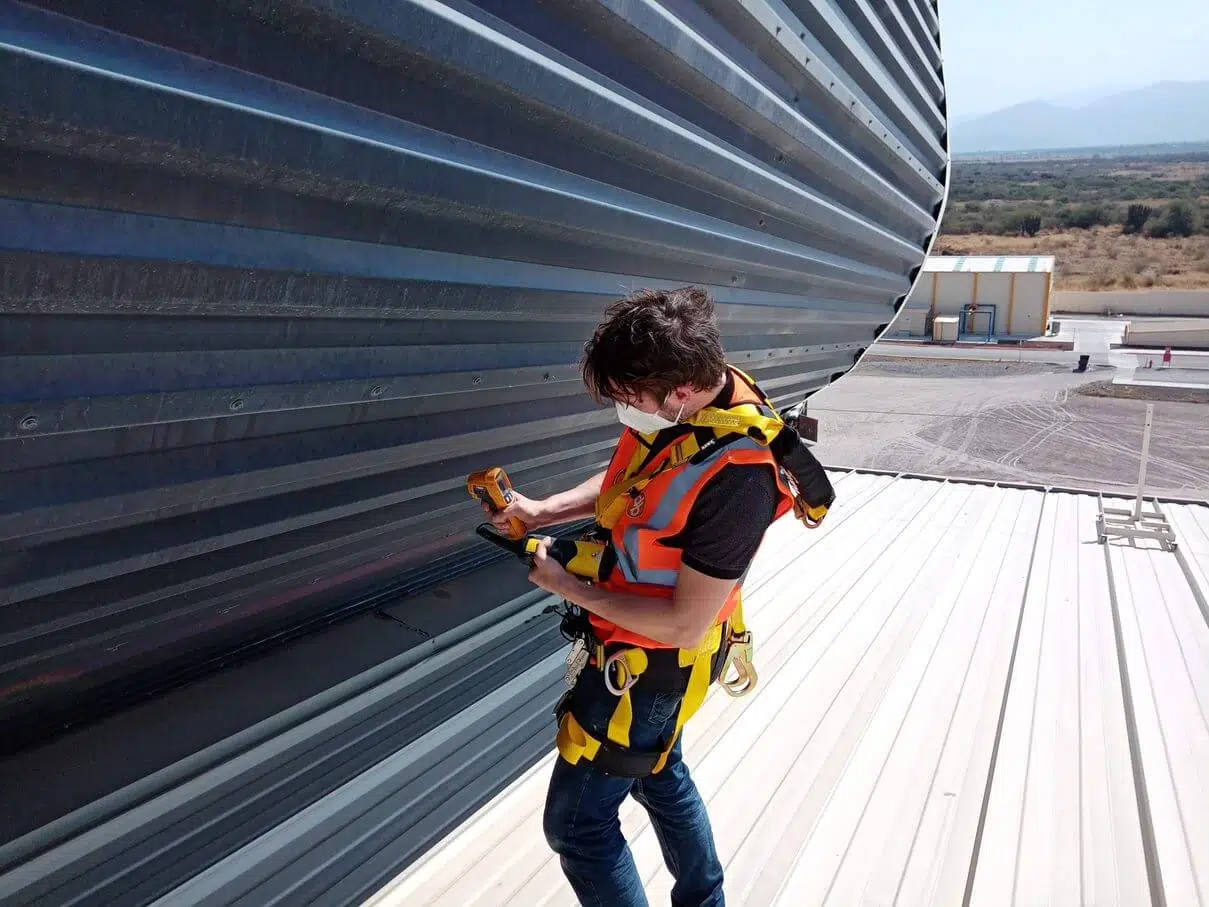
In parallel, particularly for sites with strong heat generation and very hot surfaces influencing the airflow, a study phase with a thermal camera is planned. Infrared photos and videos identify the temperatures of all the surfaces: useful for spotting intense radiative exchanges (near the envelope of a furnace, stagnation of hot air…) and for calibrating the input parameters of the simulations.
Sharing the results: report, airflow diagrams, videos
The audit report summarises all the measurements and observations. The temperature and air-velocity levels at the workstations are clearly presented, as are the sources of discomfort and their origins. It includes all the smoke, thermal-camera and measurement videos, as well as usage recommendations formulated in light of the engineers' expertise and the on-site findings.
Finally, a critical review of the numerical simulations carried out in design is performed: the aim is to identify the discrepancies between the numerical analysis and reality in order to determine their causes (input conditions, specific phenomena…).