EOLIOS, a fire safety engineering firm
As a fire safety engineering firm, we make our expertise and experience available to guarantee the safety of your facilities and their occupants. At EOLIOS, we understand the crucial importance of fire safety in every project.
Support
- Project management assistance
- SSI works supervision
- SSI coordination
Studies
- Regulatory calculations
- Project management
- Diagnosis
Domains
- ERP, IGH & ICPE
- Smoke-extraction engineering
- Workplaces — Labour Code
Our team of highly qualified engineers specialises in the design, planning and implementation of state-of-the-art fire safety solutions. We work closely with you to understand your specific needs and develop tailored strategies that meet your requirements while complying with the strictest standards and regulations.
Our fire safety engineering skills
- In-depth knowledge of standards: command of fire safety codes and regulations — building codes, ISO standards and local regulations;
- Risk assessment: identification of potential fire sources, weak points and corrective measures;
- Planning: prevention, detection, alarm and suppression plans suited to the identified risks;
- System design: fire detection, automatic extinguishing, smoke control, alarm and emergency lighting;
- Analysis of construction plans: verifying that materials, structure and technical systems meet the standards;
- Stakeholder coordination: architects, civil engineers, contractors and regulatory authorities;
- Project management: planning, monitoring, meeting deadlines and budget, coordinating teams;
- Awareness: training of occupants and emergency-response teams;
- Technology watch & R&D: tracking advanced techniques and industry best practices.
Our fire safety engineering assignments
Meeting your needs: EOLIOS by your side
EOLIOS is a specialised firm and expert in fire safety engineering (SDSI, COSSI, ATEX explosion, RCCI), smoke-extraction engineering, asbestos risk, industrial risk analysis (MOSAR, SADT) and security. Our engineers are trainers and consultants at the CNPP, which allows us to maintain a permanent technology and regulatory watch. We support all types of establishments or activities: all types of ERP, IGH, ICPE, workplaces (Labour Code) and data centers.
Project management assistance (AMO & AMOT)
EOLIOS supports you in your safety or security projects as a private or public client. We carry out the design and estimate the costs of construction, renovation or refurbishment works relating to fire safety, SDSI, explosion, smoke control and security, following the various study phases (Diagnosis, Feasibility, APS, APD, PRO/DCE, ACT). We organise and supervise the works during the execution phase, and assist the client during the handover operations and throughout the defects-liability period. We act in works supervision and project management assistance on new projects as well as on the refurbishment of existing establishments.
COSSI & SSI coordination
Our COSSI assignments develop the fire safety concept and the functional specification of the SSI, then take charge of monitoring the implementation and the technical acceptance. Our SSI coordination (CSSI) assignments ensure the technical and functional consistency of the fire safety systems, in application of the NFS 61-931, NFS 61-932 and NFS 61-970 standards and of all the regulatory texts, in particular the fire safety regulation relating to ERP. They include:
- Analysis of the operator's needs (synopsis, concept);
- Drafting of the functional note and the functional specification (CCF);
- Analysis of the safety commission's report;
- Drafting of the safety documents (APS, APD, PRO, DCE) intended for the control offices and safety services, up to the opening-authorisation opinion;
- Preparation of the fire safety notice attached to the building permit or the works-authorisation request;
- Studies and sizing of the smoke-control installations compliant with IT246;
- Studies of the emergency means (MS articles);
- Participation in the coordination meetings with the control office;
- Collection and analysis of the execution drawings, delivery of the SSI identity file (appendix B of NF S 61-970);
- Verification of the correct execution of the works and participation in site meetings;
- Acceptance of the SSI works (acceptance with tests — RRT);
- Monitoring the clearance of reservations and drawing up the SSI acceptance report.
Fire safety engineering and smoke-extraction engineering
Smoke audit and smoke control
EOLIOS carries out audits and assessments of smoke-control systems (natural, mechanical) in ERP, IGH, workplaces and ICPE. We assess the performance of the existing devices to ensure their correct operation and their compliance with the standards: identification of malfunctions, corrective measures and optimisation of effectiveness. Our multidisciplinary teams bring together senior fire-risk engineers, former firefighters and fluid-mechanics engineers applied to fires.
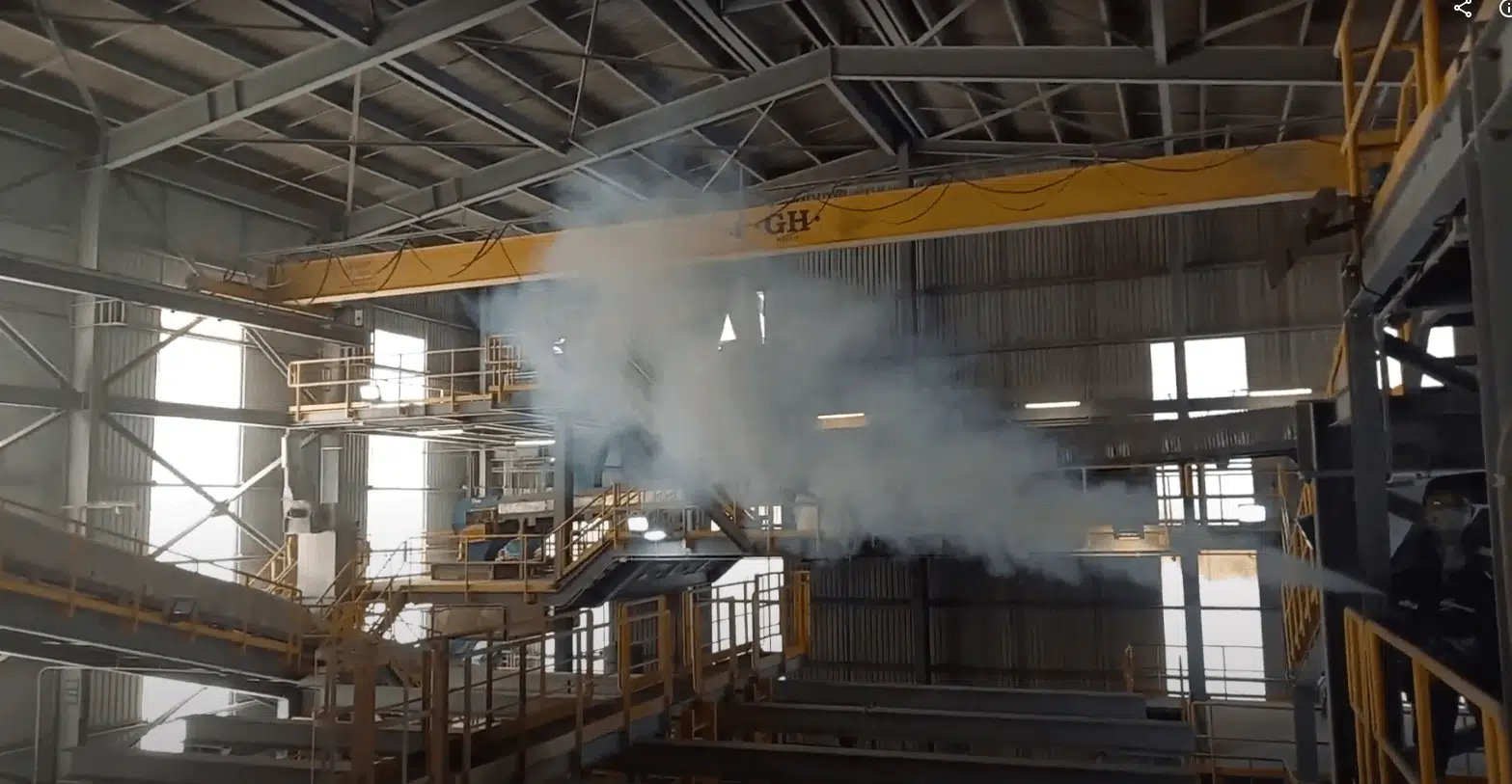
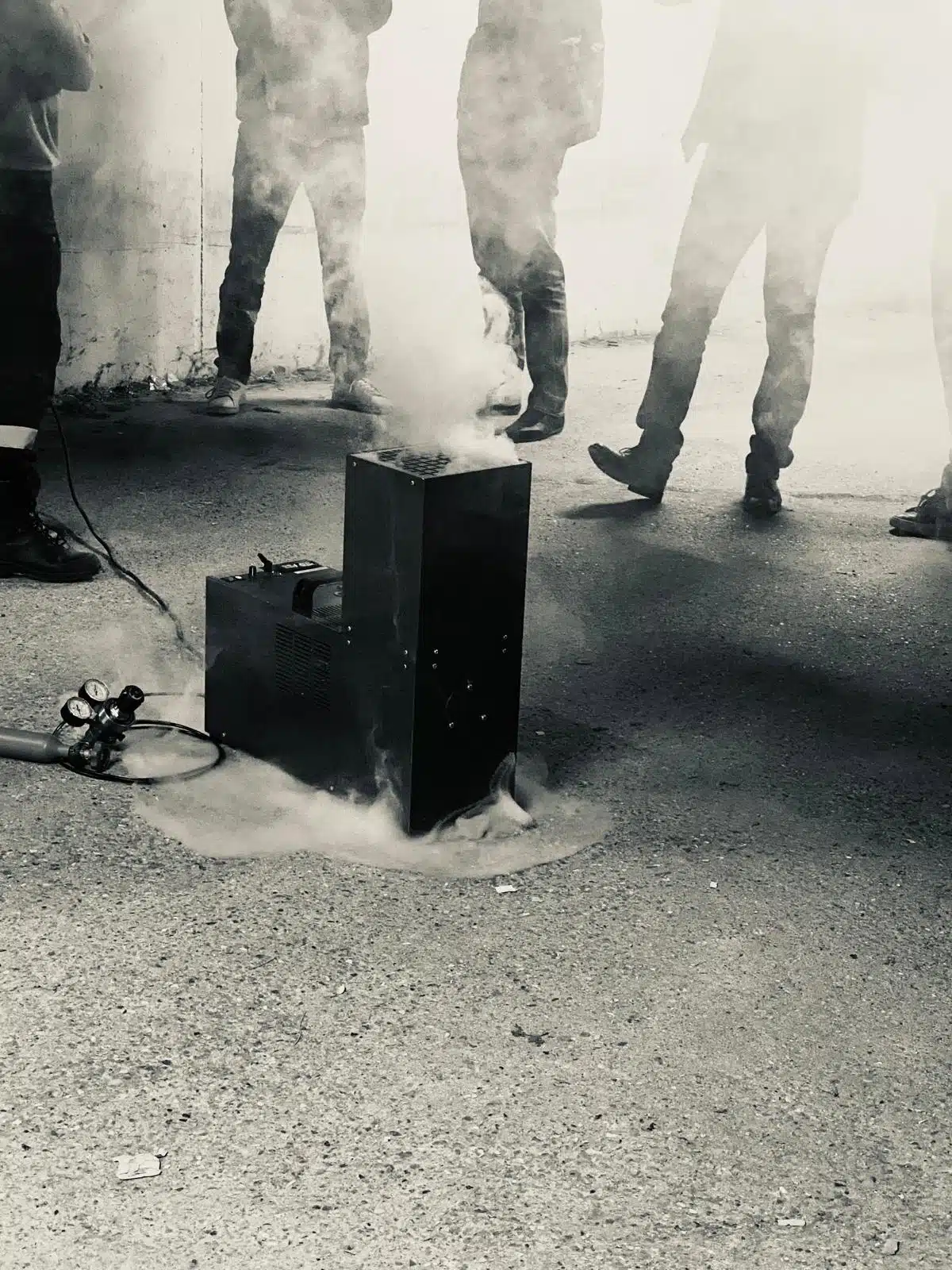
Page dedicated to hot smoke tests
Smoke-extraction engineering
It is imperative to design the installations with adequate occupant safety and compliance with fire safety rules. Our studies help architects and engineers to simulate the fire and the spread of smoke in order to design smoke-control systems for buildings, metros and public-access facilities. The aim is to assess the airflow profile and the spread of smoke over time, and to highlight the design improvements: control of airflows, identification of dead-air pockets, mean age of air, fan throw and air velocities. The system's performance is assessed by CFD analysis, studying the movement of smoke, the temperature and the visibility under various fire scenarios.
Page dedicated to smoke-extraction engineering
A change of scene: the ESSOC law
Clients can rely on EOLIOS, as a recognised competent body (ORC), to propose equivalent-effect solutions (SEE) and to compile a file requesting an attestation of compliance with the fire safety objectives: the ORC analyses the file, validates the SEE and issues an attestation; once the works are completed, the verifier certifies compliance with the objectives. EOLIOS thus supports its clients on fire safety engineering studies of smoke control and RCCI, and on fire safety master plans in ERP (types U, J, O, R, L, P, S…), in IGH, in ICPE and in industry, relying on several recognised tools:
- MOSAR & SADT (ENVISION software, from the aerospace sector);
- INSSI (CNPP tools and reference standards — R6, R8, 6011);
- AGR (global risk analysis) and functional analysis (CentraleSupélec school).
Regulatory supporting documents
Regulatory requirements: the legal texts
The regulatory requirements must be applied without fail; the aim is to protect the worker. Any deviation from the regulation entails legal risks for the operator, and compliance with each requirement must be justifiable on request. From experience, it is complex but possible, in industry, to adjust certain requirements through a solid and legitimate argument — the agreement of the competent authorities remaining imperative.
The Labour Code
The Labour Code sets out the framework for employees' working conditions. With regard to safety, a simple principle is generalised: the employer is required to take all necessary measures to ensure the safety and protect the health of their employees. Its requirements constitute a minimum to be met in order to limit the employer's liability in the event of an accident.
The Environmental Code
The Environmental Code sets out the rules for the design and operation of industrial sites. The general rule concerning fire is that any incident must be contained within the site. Its requirements relate to the ICPE classification (facilities classified for environmental protection): each activity is regulated by its own requirements, sometimes more stringent for smoke control.
Prefectural decrees
Prefectural decrees are often a crossover between the Environmental Code, the Labour Code and the operating-permit application. They must be systematically incorporated into the studies wherever they exist.
ERP texts affecting industrial buildings
- Decree of 25 June 1980 — general provisions of the safety regulation against fire and panic risks in ERP, to be taken into account in visitor routes or car parks;
- IT246 & IT263 — smoke-control rules from the decree of 5 August 1992.
Standards
Standards, which are fundamental in ERP, are less prominent in workplaces and ICPE; they become mandatory as soon as a legal text refers to them. AFNOR publishes the French standards; most fire safety standards are non-binding, with the exception of the SSI coordination applicable to ERP. It is recommended to use the standards whenever the regulation requires it, and to favour the insurer reference standards (APSAD, NFPA) in other cases.
- NF S 61-931 — general provisions;
- NF S 61-932 — installation rules for the fire safety system (SMSI);
- NF S 61-970 — installation rules for fire detection systems (SDI).
EOLIOS supports you in managing your fire risks
EOLIOS offers fire safety engineering services to support companies in protecting their facilities and preventing fire risks. Our team of experts carries out a complete study of your premises in order to determine the safety measures needed to prevent fires and protect people and property.