Optimising operator thermal comfort and energy efficiency at the Verallia Cognac plant, in the context of switching from a gas furnace to an electric furnace.
The main objective of the study is to implement solutions to optimise the operators' thermal comfort around their workstations, in both the cold end and the hot end of the plant. It also includes optimising the energy consumption tied to the plant's climate management. Particular attention is paid to the design of specific air intakes for the replacement of a gas furnace with an electric furnace.
A secondary objective is to limit the effects of draughts in the sensitive process areas, which can negatively impact production operations and cause recurring defects.
The complexity of the thermo-aeraulic phenomena in the sizing stems from many factors such as the radiant temperatures of the walls, the thermal draught, wind pressure, the internal resistance to vertical air flow, the characteristics of the building-envelope openings, the local terrain and wind protection. In this environment where the building is not thermally regulated, ambient control is achieved mainly by the supply of fresh air through natural draught towards the roof-mounted static aerators and by forced ventilation (extraction or supply).
The essentials. EOLIOS optimises the operators' thermal comfort and the energy efficiency of the Verallia Cognac glassworks, in the context of switching from a gas furnace to an electric furnace. An on-site audit (smoke tests, thermal camera) and a 3D CFD model showed that shutting down the gas furnace reverses the static aerator into an air inlet. Regulating the louvres and partitioning the hot end from the cold end restore winter comfort and cut the energy bill.
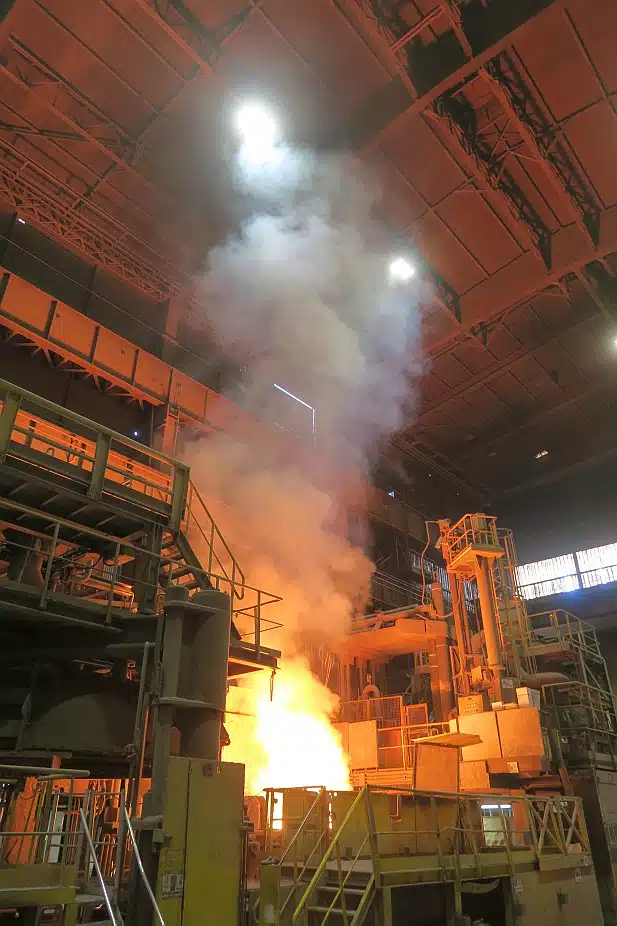
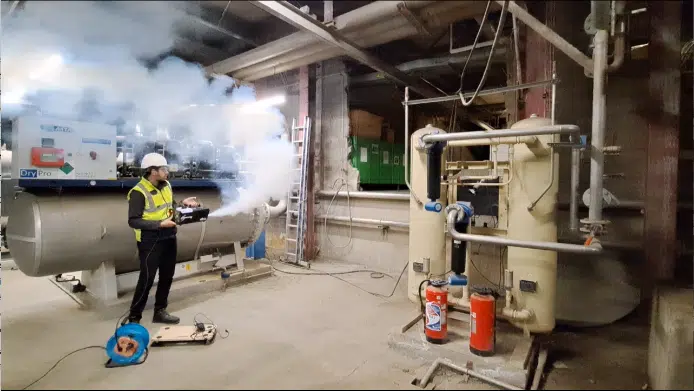
To assess the air movements, smoke tests were carried out to visualise the air paths and identify any areas of stagnation or poor ventilation that could lead to poor air quality in those zones.
A smoke test releases a non-polluting tracer smoke to make the real air trajectories visible. It reveals stagnation zones and parasitic circulations between the different areas of the plant, imperceptible to the naked eye.
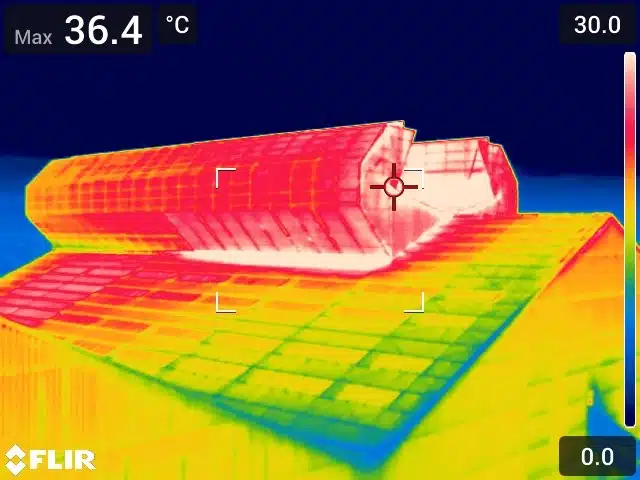
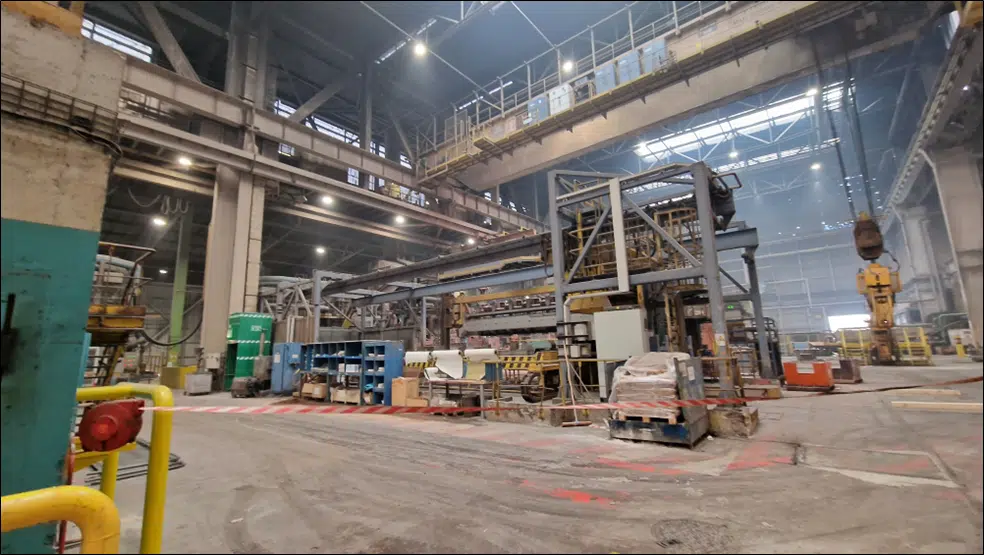
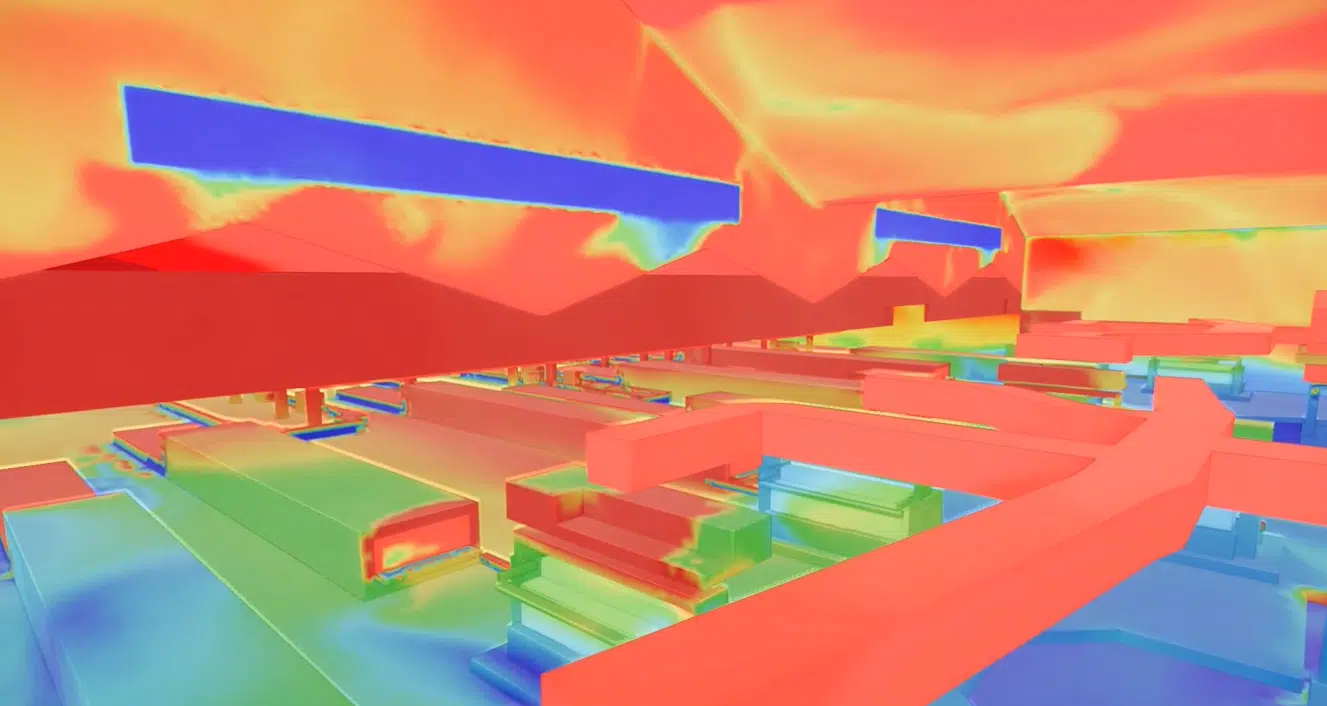
In addition, thermal cameras were used to visualise the wall temperatures and to identify the areas of high thermal gain or loss. This information was used to quantify the thermal phenomena and the areas showing hot spots and cold spots.
The aeraulic audit highlighted the areas where improvements are needed to optimise ventilation, temperature and air quality in the plant. Recommendations were made to remedy the issues detected and thus improve the operators' working conditions and the energy efficiency of the facilities.
The climate data from the Cognac-Châteaubernard weather station are used to define the external climate conditions needed for the study of the plant's ventilation.
The wind speed and direction, as well as the average minimum temperature in winter and the average maximum temperature in summer, were recorded, along with the most extreme temperature peaks reached.
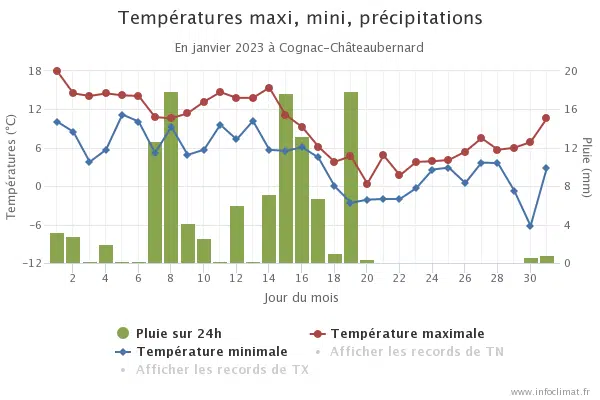
These data are essential to determine the actual climate conditions and adapt the ventilation and air-conditioning strategies so as to ensure operator comfort in the plant throughout the year.
Computational fluid dynamics (CFD) covers the set of numerical methods used to study fluid flows in a given environment. As the equations governing these flows cannot be solved analytically, the finite-element method makes it possible to solve them numerically.
In the building sector, a CFD study can give designers precise information on the air velocities, pressures and temperatures that will occur inside and around the systems studied. This type of study is particularly useful for examining the design of ventilation and air-conditioning systems in large spaces. It makes it possible to optimise indoor comfort by verifying that the air inlets and outlets provide adequate ventilation of the volume, thereby ensuring optimal comfort for occupants. These simulations are essential to ensure an efficient design, thus helping to improve energy efficiency and user well-being.
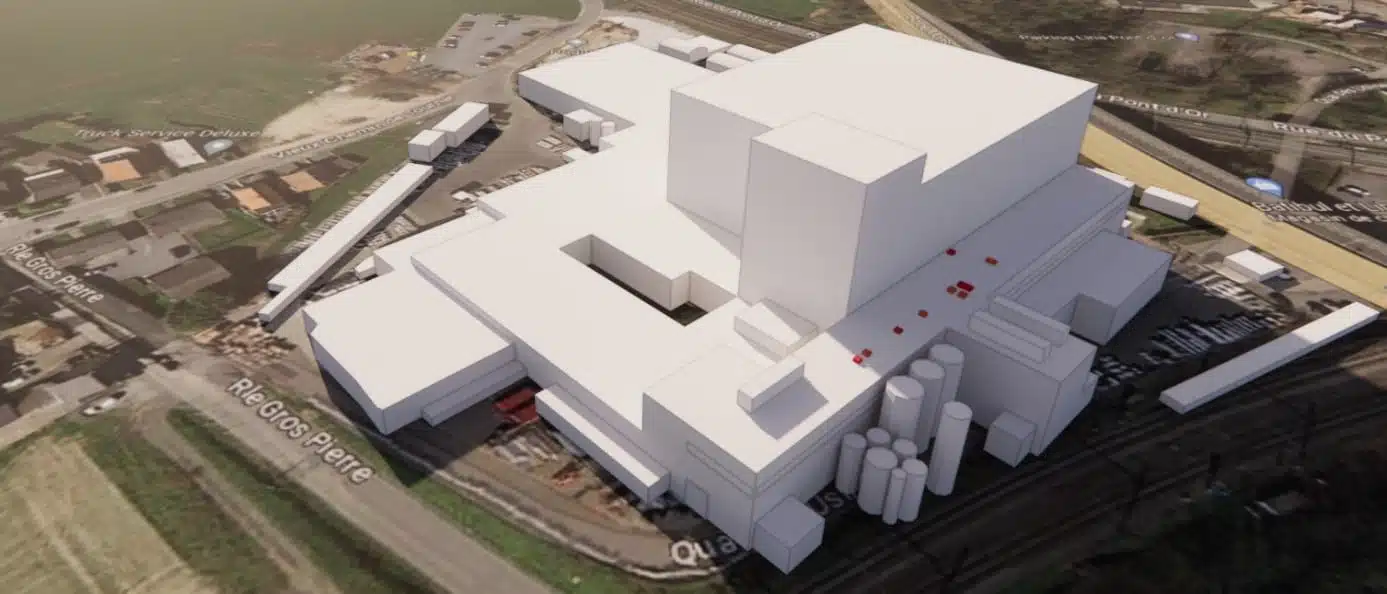
As part of the study, a 3D model was created from the drawings and sections provided, including the geometry of the site and its surroundings within a 300-metre radius. For this study, the wall types, the surfaces open to the outside, the supply points, the return points and any system releasing heat into the space, identified during the audit, are modelled and accounted for precisely.
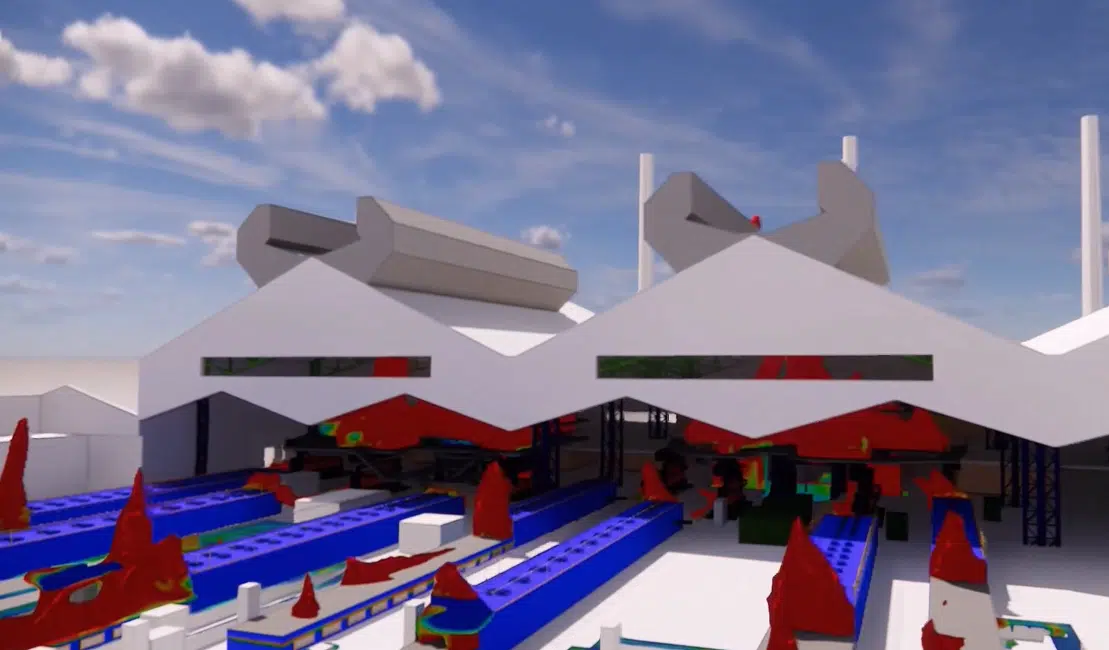
A static aerator (or roof ventilator) discharges hot air by thermal draught, without a motor. Its direction of operation depends on the draught: with the furnace off, it can reverse into an air inlet. Its study is part of the sizing of static aerators.
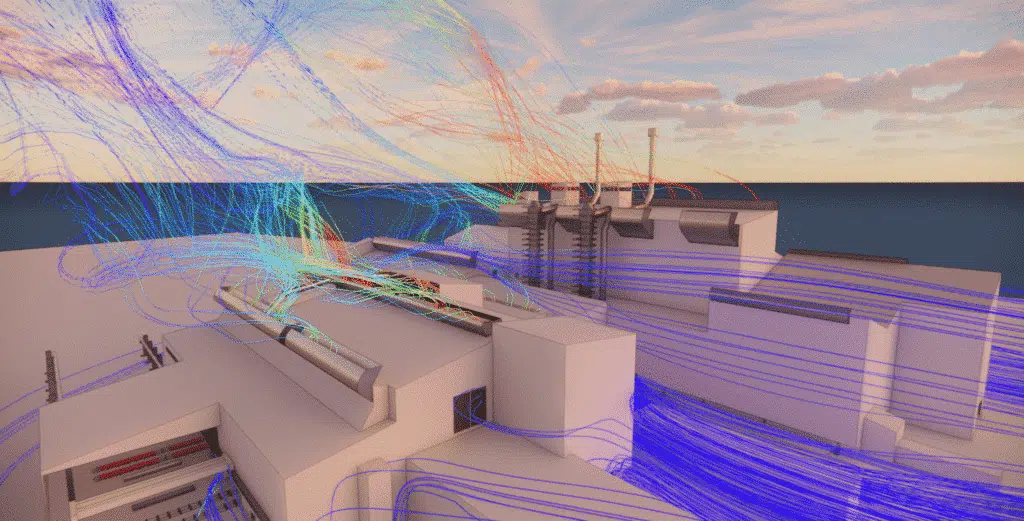
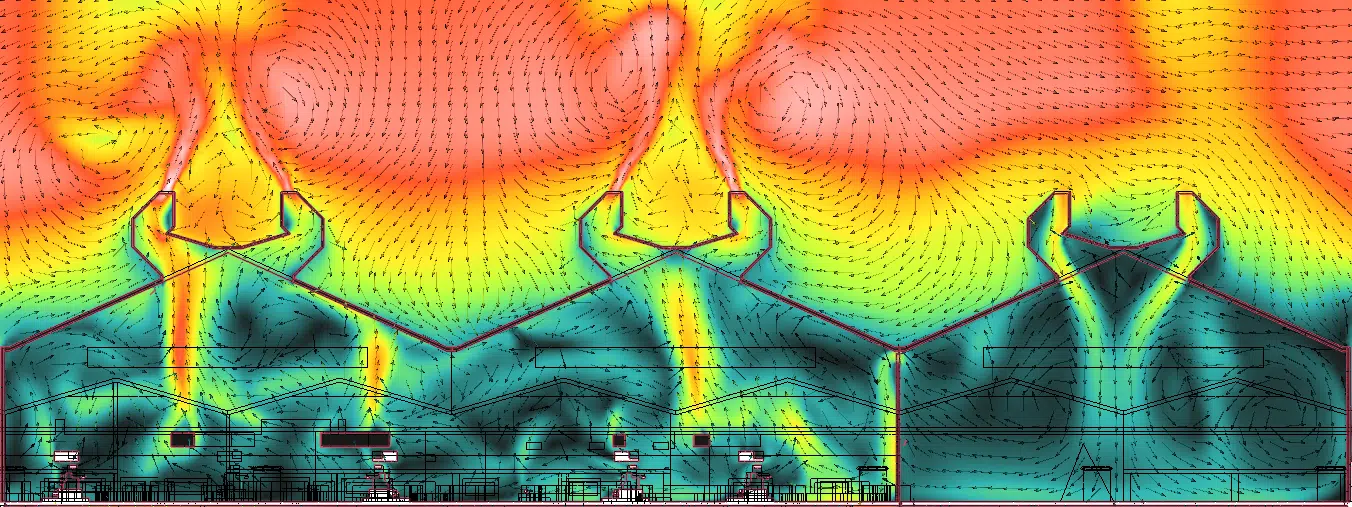
After verifying the accuracy and effectiveness of the simulation model used for the CFD study by comparing the first results with the measurements taken on site during the audit, simulations are run on the plant's current configuration in winter conditions. It appears that shutting down the gas furnace reduces the thermal draught, so the static aerator switches to acting as an air inlet and brings in fresh air along with pollutants, on top of disturbing the airflow in the plant.
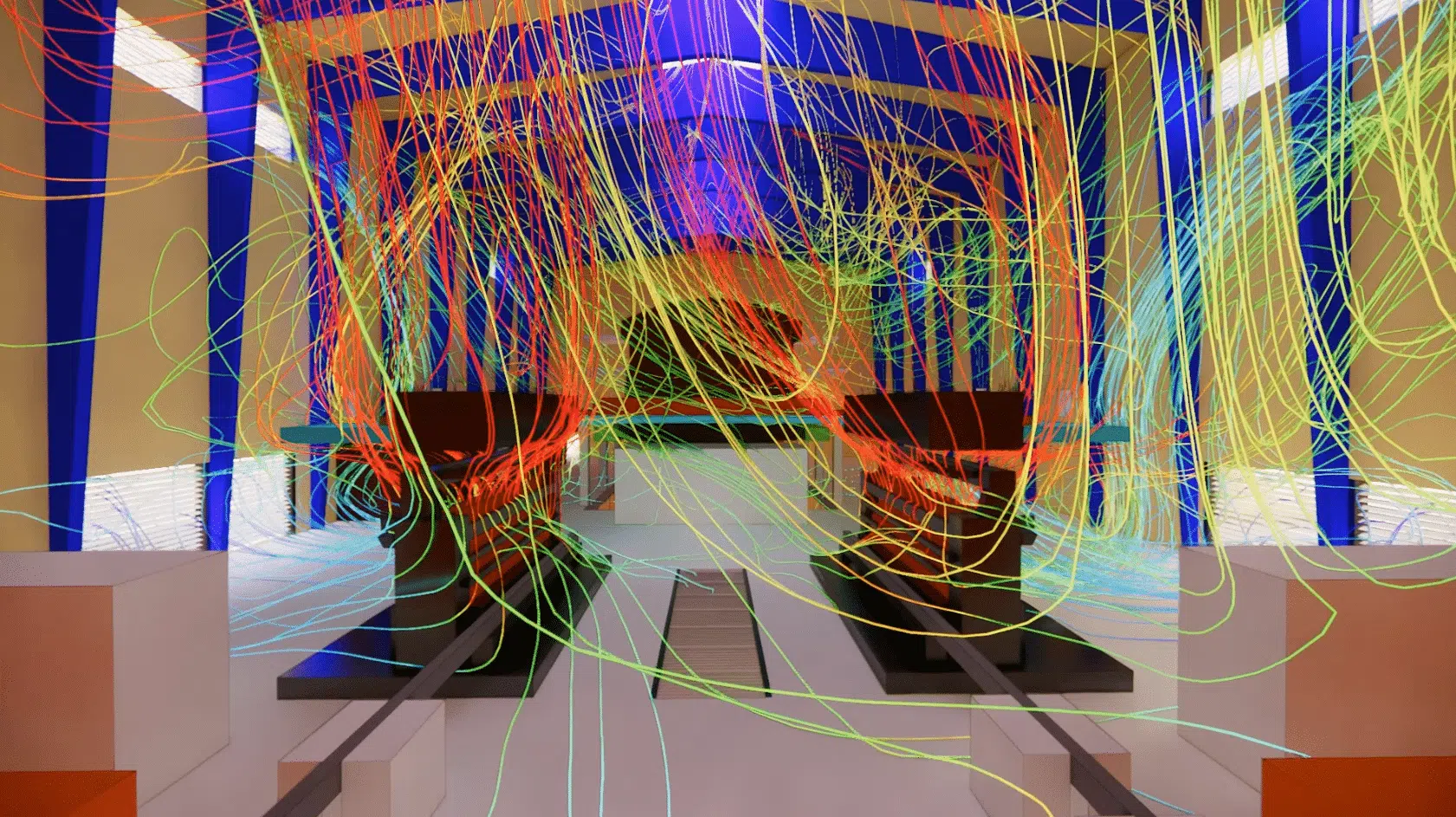
Our studies also showed that the operators' main thermal-comfort issues came first from the lack of regulation on the louvres, generating unwanted air inlets in winter. Another cause of these issues is the considerable opening between the hot end and the cold end, creating significant air movements between the two that greatly disturb the airflow of the cold-end heating systems, generating dead zones and resulting in a zone of discomfort for the operators.
A new winter simulation was carried out involving the addition of solutions to block the spread of fresh air coming in through the louvres, as well as partitioning to separate the hot end from the cold end more effectively. This simulation demonstrates a clear improvement in the effectiveness of the heating systems in the area where the operators work, thanks to the proposed technical solutions.
In a glassworks, the hot end designates the furnace and the forming of molten glass; the cold end, the annealing, inspection and packaging. Managing the air exchanges between these two zones with opposite thermal needs is one of the study's key challenges.
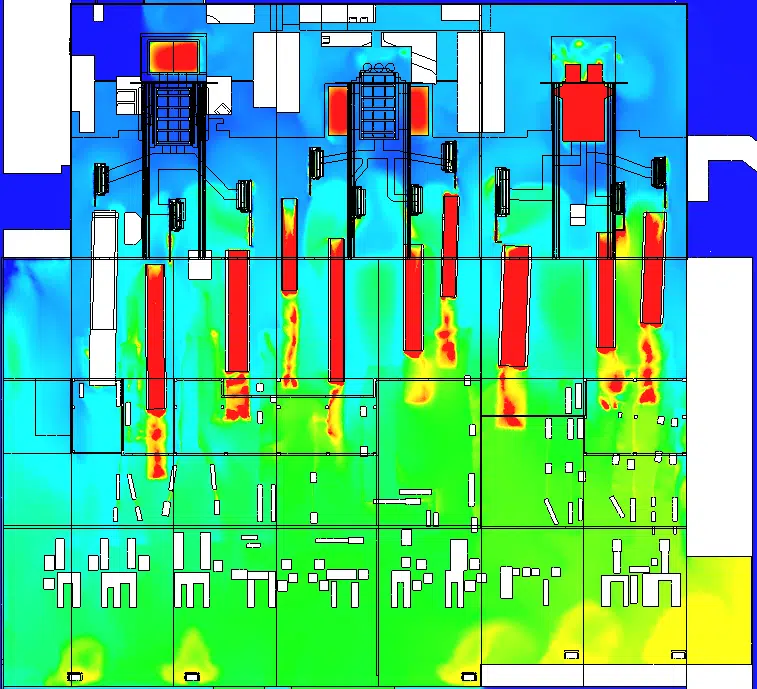
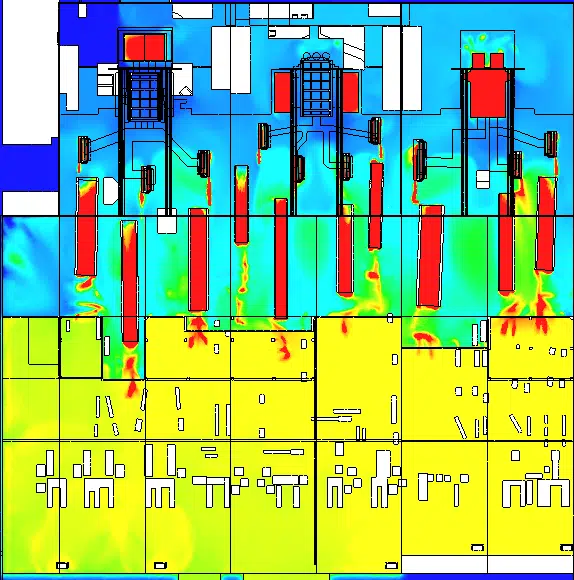
Moreover, another simulation showed that with the new electric furnace in operation, the thermal draught is sufficient for the static aerator to work properly in air-extraction mode, removing the parasitic airflow previously generated in the work area.
The climate data from the Dunkirk weather station are of vital importance to define the external climate conditions needed for the study of the plant's ventilation. The information collected includes the wind speed and direction, as well as the average minimum temperature in winter and the average maximum temperature in summer.
In addition, the most extreme recorded temperature peaks are also taken into account. These data play a crucial role in adapting the ventilation and air-conditioning strategies to guarantee optimal comfort for the plant's operators throughout the year.
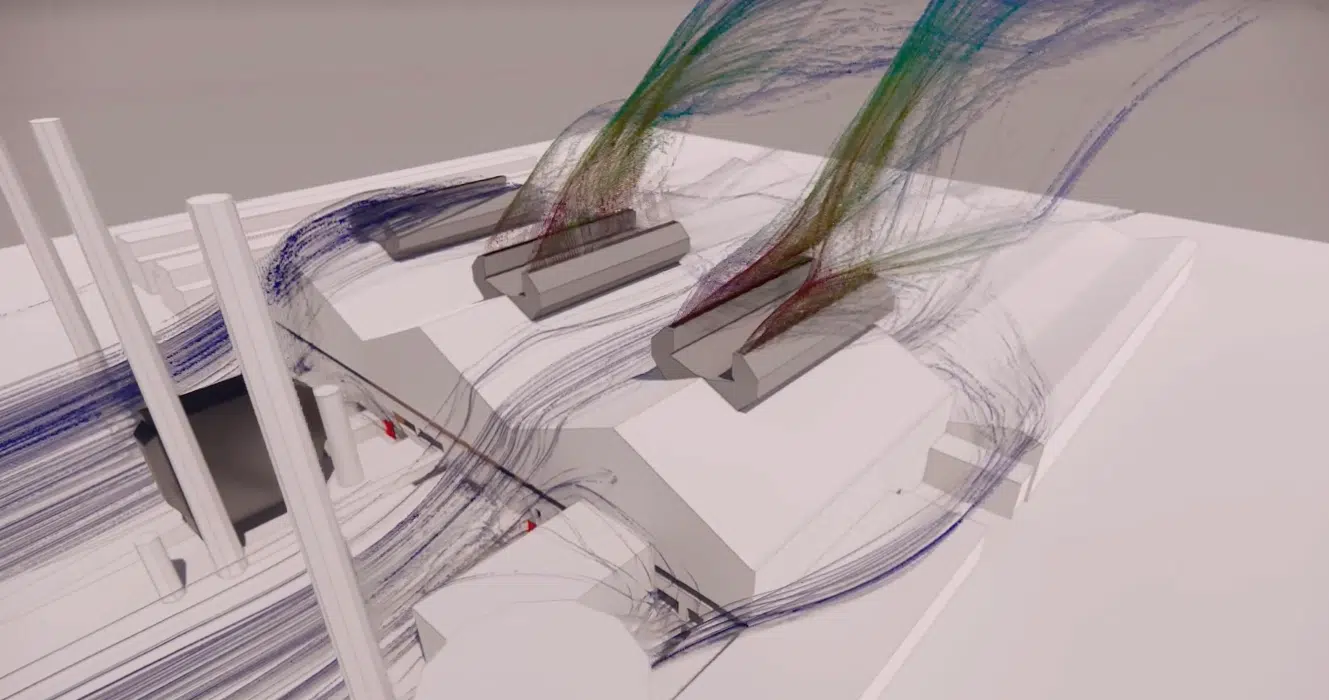
This type of CFD study on building thermo-aeraulics greatly improves energy efficiency by minimising energy losses and maximising the use of the heat generated, which improves the overall energy performance of the production process. Energy optimisation of a glassworks-type building thus offers many benefits. First, it makes it possible to reduce energy costs by optimising the facilities, the heating processes and the heat exchanges between the hot end and the cold end, leading to savings on the energy bill tied to heating the cold end.
Furthermore, energy optimisation contributes to reducing greenhouse-gas emissions by lowering energy demand and limiting CO₂ emissions and other pollutants from the combustion of fossil fuels. Finally, improving the company's environmental sustainability through energy-optimisation measures helps meet the expectations of customers and stakeholders regarding sustainable practices, thereby strengthening the company's image. Energy optimisation of a glassworks therefore offers significant benefits both economically and environmentally.
Key takeaway. In a glassworks, changing the furnace reshuffles the aeraulic balance: it is the regulation of the louvres and the partitioning between hot end and cold end, more than backup heating, that restore operator comfort while cutting energy consumption.
Natural ventilation, gas/electric furnace transition and thermal comfort in a glassworks.
As the building is not thermally regulated, natural ventilation by draught towards the roof aerators provides most of the air renewal, supplemented by forced ventilation where draught alone is not enough. A similar approach was carried out on our project natural ventilation of a steel plant.
A gas furnace releases a lot of heat and sustains a strong thermal draught. When shut down, the static aerator reverses into an air inlet and brings in fresh air and pollutants. The electric furnace restores a draught strong enough for the aerator to return to extraction.
The hot end covers the furnace and the forming of molten glass; the cold end, the annealing, inspection and packaging. An opening that is too wide between the two creates air movements that disturb the heating of the cold end.
The study recommends regulating the louvres to block unwanted air inlets in winter and partitioning the hot end and the cold end, which clearly improves the effectiveness of the heating systems in the work area.
By limiting the heat losses of the cold end and making use of the heat already produced, the optimised ventilation reduces the reliance on backup heating, and therefore the energy consumption and the associated CO2 emissions.
Explore our expertise, projects and technical papers to go further than the FAQ.
The study aims to improve operator thermal comfort while strengthening energy efficiency. The transition from a gas furnace to an electric furnace is planned to optimise thermal conditions. Reducing draughts in the sensitive areas is a complementary objective to avoid disrupting production. The full complexity of the thermo-aeraulic phenomena is studied, accounting for elements such as the wall temperatures, the thermal draught and the wind pressure. In this thermally unregulated context, the supply of fresh air through the roof aerators and forced ventilation are key strategies for regulating the environment.
The easiest way is to talk it through together. Our engineers will reply with an initial technical read.