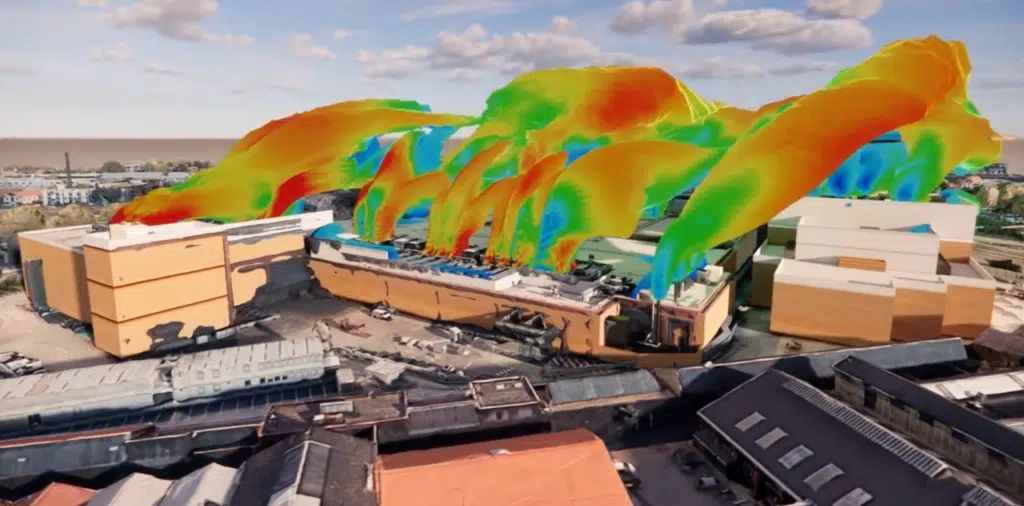
Why carry out an external CFD simulation?
EOLIOS is a leader in external CFD simulation for data centers. Our studies draw on experience from real-condition measurement campaigns and around a hundred sites simulated worldwide.
Diagnosis
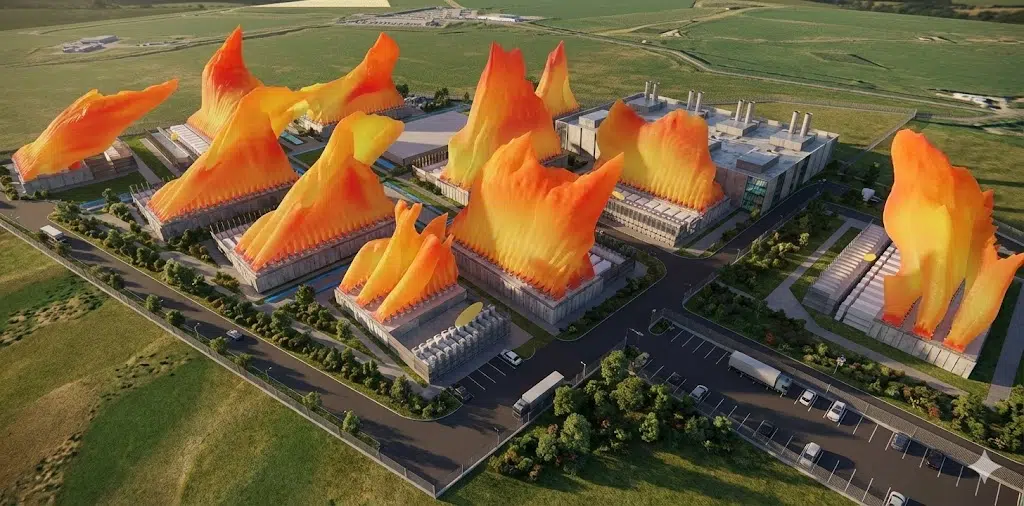
- Study of thermal plumes
- Max inlet air temperature at the equipment
- Selection of suitable equipment
Analysis
- Critical failure scenarios
- Bypass & recirculation flows
- Impact of the generators
Design
- Validation of the layout
- Placement & control of the air systems
- Bespoke solution
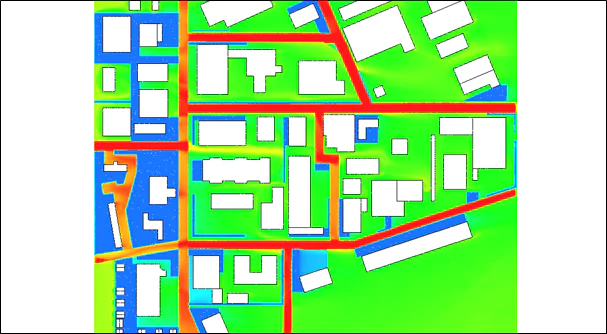
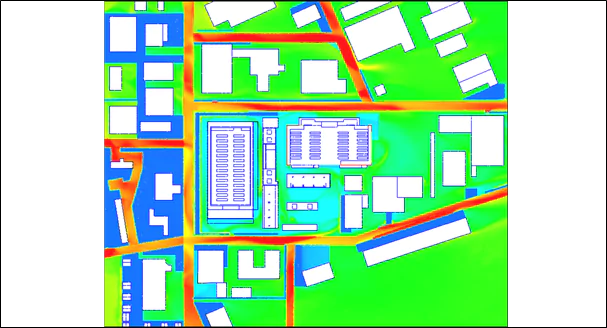
We build a detailed computer model including the surrounding buildings, all the rooftop cooling devices, the exhausts, the fresh-air intakes and the details (windbreaks, louvres, roofs…). This model studies the airflow, temperature distribution and relative humidity across several scenarios, varying with the operating mode (normal, maintenance, emergency) and the weather conditions (temperature, wind speed and direction).
Heat dissipation at roof level
In the yard or on the roof, the mechanical heat-rejection systems — cooling towers and dry coolers (DRY) — share the space with the backup generators. A compact, high-density layout of the cabinets inside translates into a compact layout of the outdoor equipment, a source of significant airflow-management challenges. External CFD studies complete the risk assessment, optimise the design and reduce energy consumption.
Influence of wind and weather
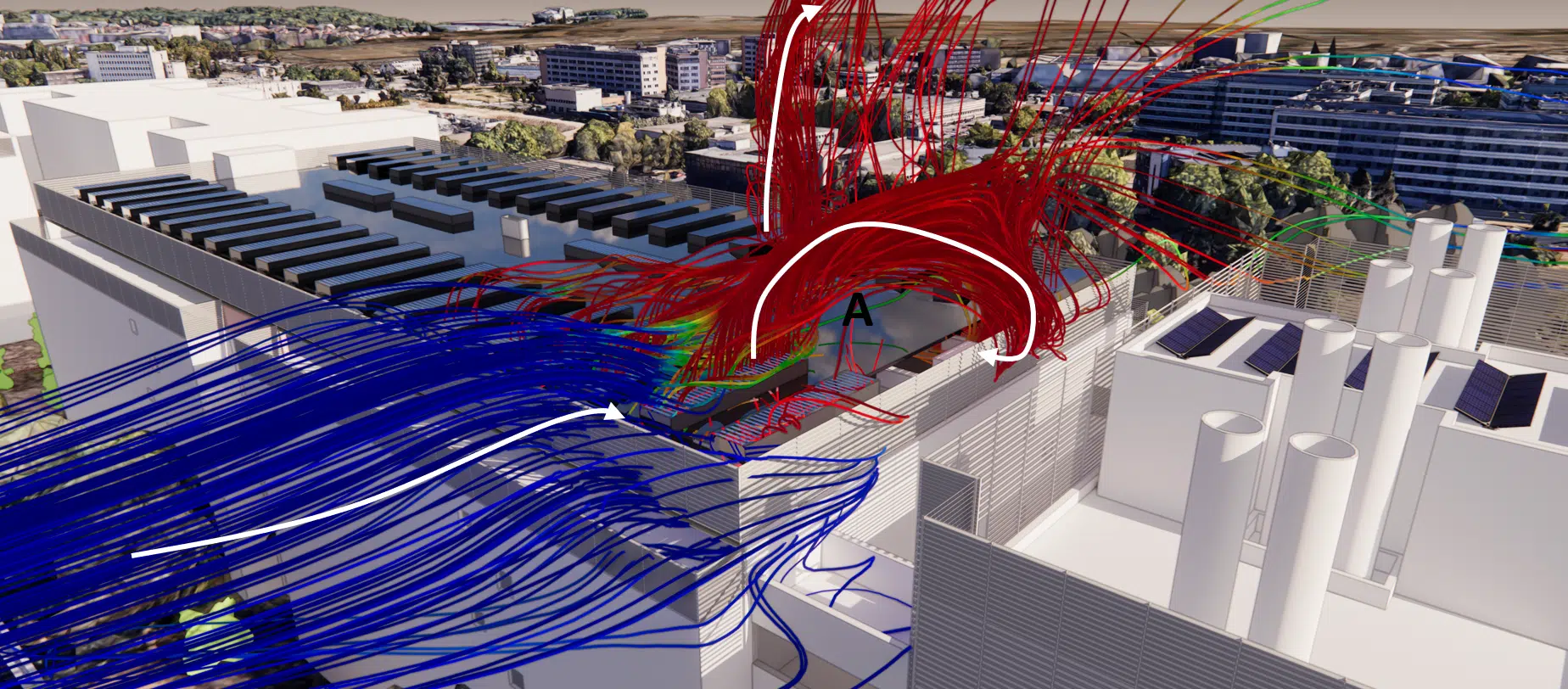
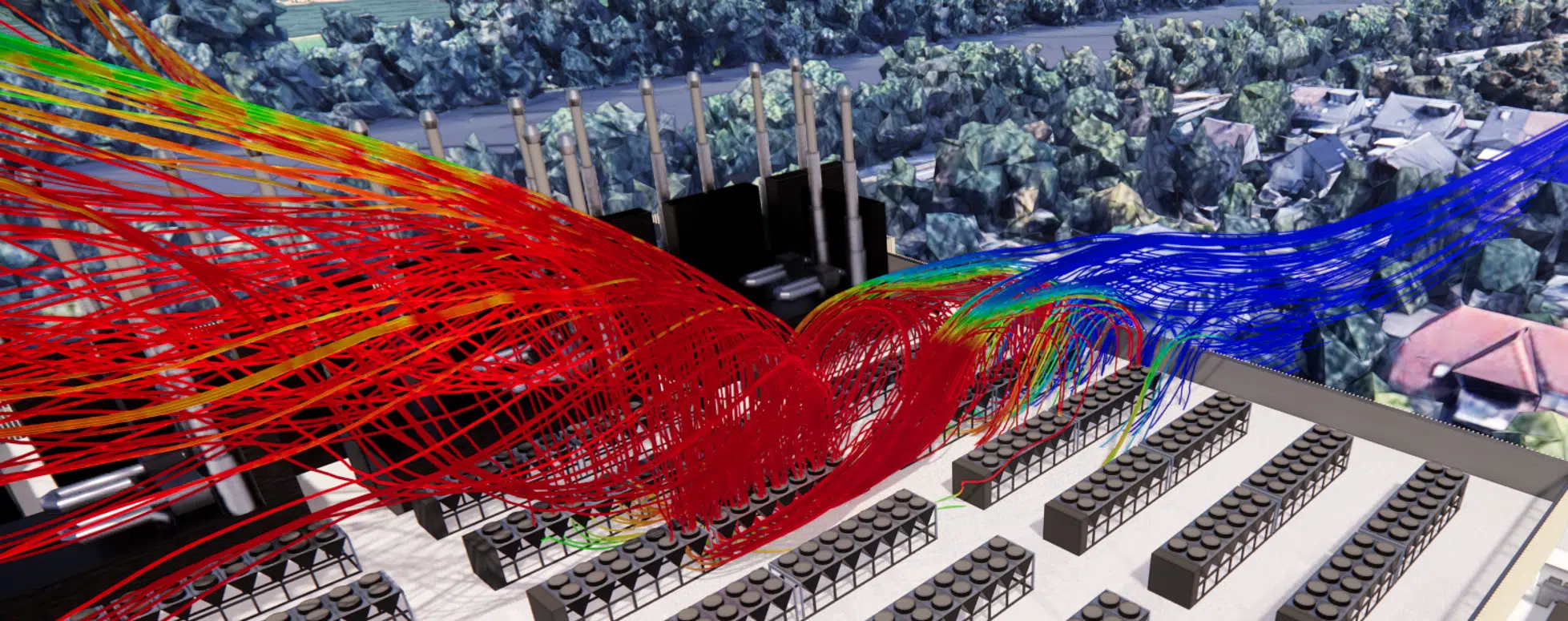
The impact of outdoor thermal plumes is hard to predict because of variables the designers do not control — wind speed and direction, air temperature and humidity, surrounding activities. Yet these phenomena have a direct impact on the performance of the outdoor equipment. EOLIOS supports you in ensuring optimal operation in all circumstances, even the most extreme.
Studying data centers in extreme conditions
Carried out before the design is finalised, CFD analysis helps owners and designers with their decision-making and makes it possible to mitigate the risks linked to design errors — costly changes, construction delays, or even loss of computing capacity in the event of a critical failure during a heatwave.
“Is your data center protected against the failure of its cooling systems during a heatwave?”
Defining power losses in extreme conditions
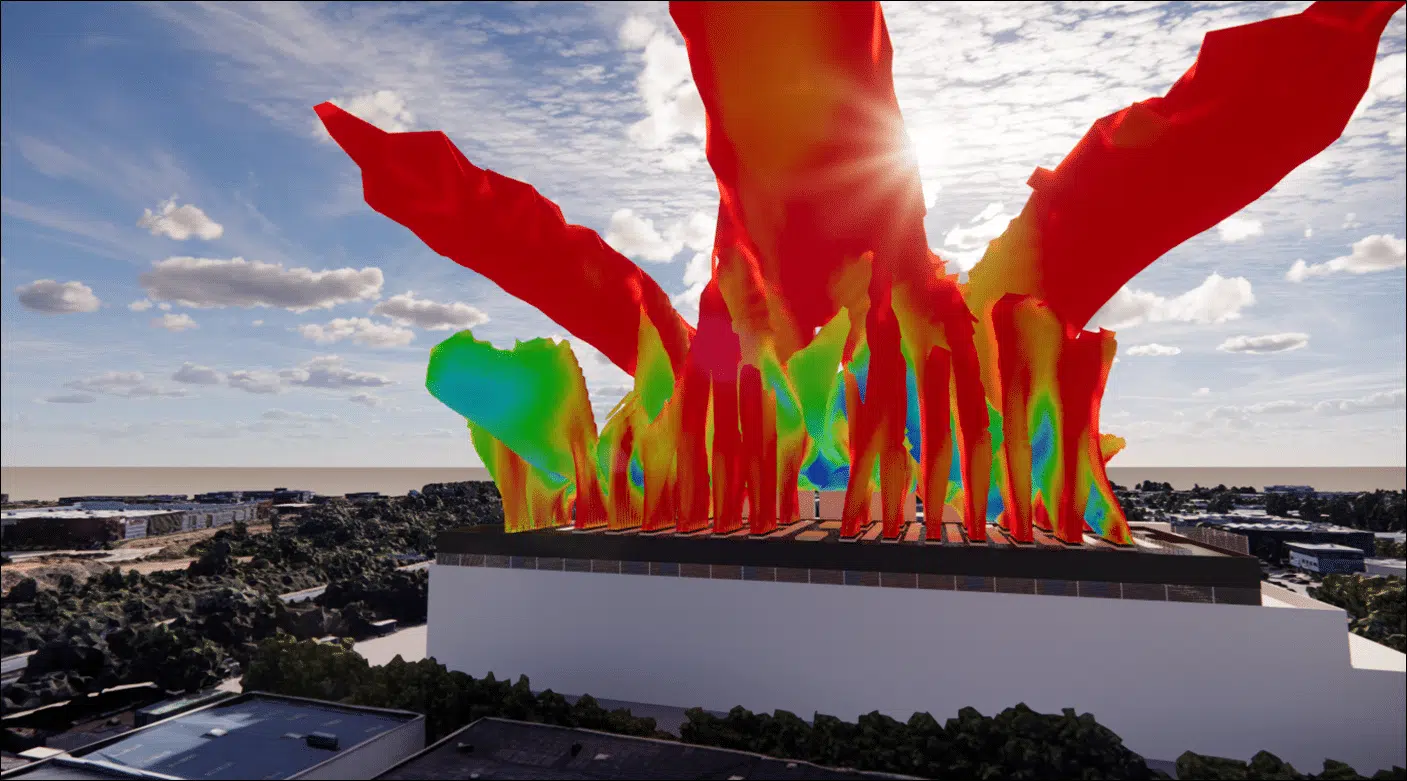
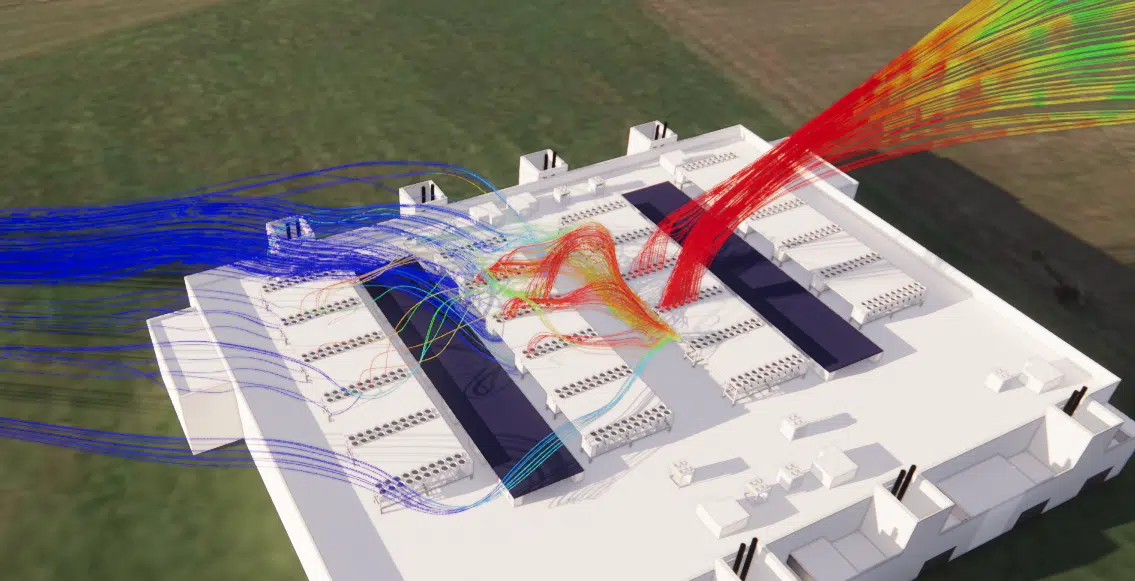
The pooling of systems, the stacking of halls and the continuous increase in rack power lead to extremely high heat dissipation on the roof. As the surface is constrained, the concentration of air-conditioning systems creates a risk of power losses, or even a cascading failure during extreme weather events. In hot weather or during a power cut, plumes of overheated air can cause a cascading shutdown of the rooftop systems. External CFD assesses these risks and optimises the layout of the cooling systems.
Systems suited up to a certain temperature level
Manufacturers' documents provide minimum clearance and maximum operating-temperature requirements. But these guidelines do not account for the ambient air conditions, the wind speed or the nearby built environment: respecting the recommended minimum distances can still lead to undesirable performance, which only simulation reveals.
The various applications of external CFD
Interaction of the rooftop systems with the wind
The hot air discharged by the stacks combines the generator flue gases and the air overheated by the exchange coils. Pushed back towards the building by the wind, these flows cause heat recirculation via the rooftop systems. The temperature range at the equipment inlet can then move outside the recommended operating range — leading to a power loss, or even the shutdown of some equipment.
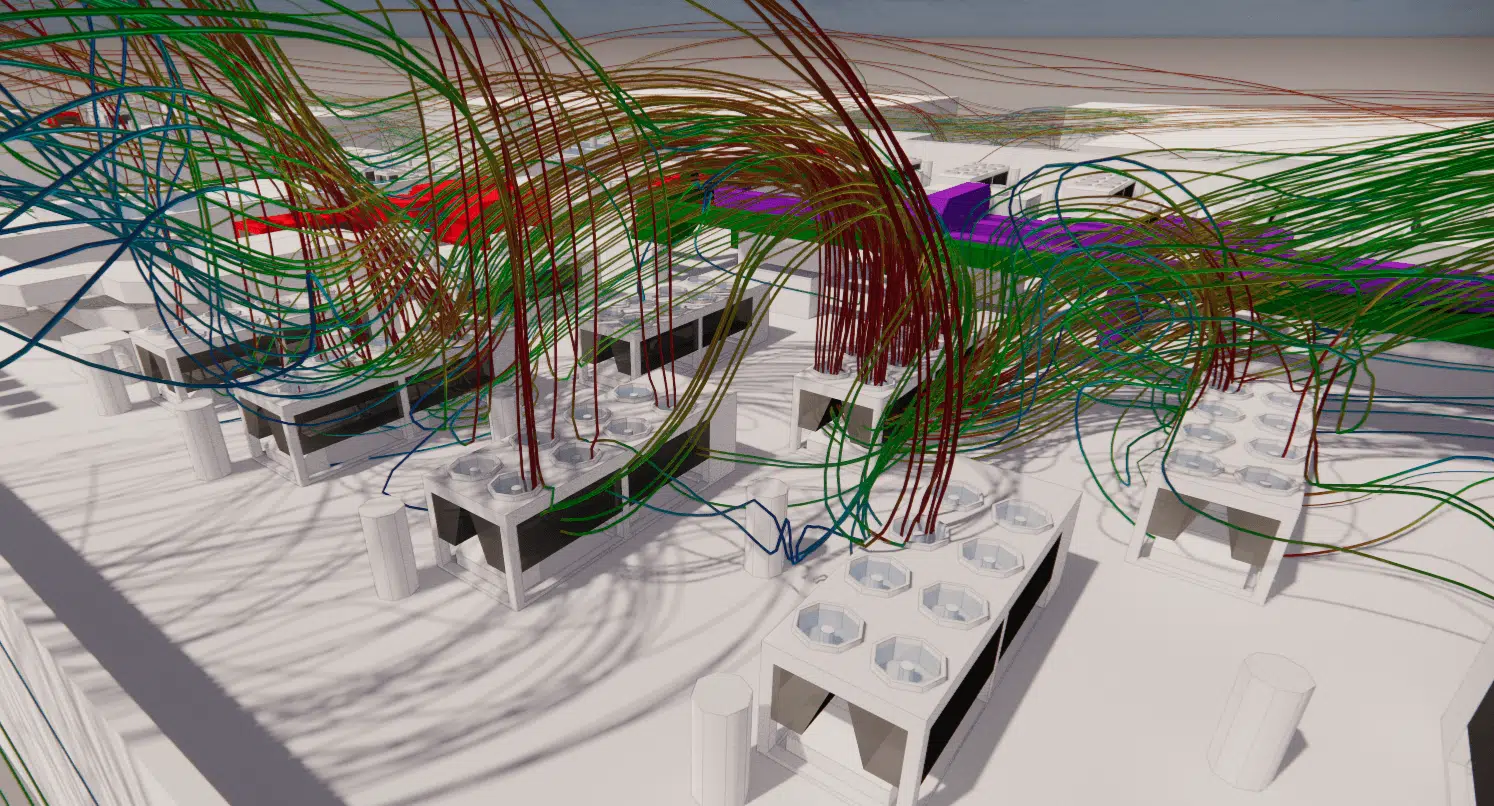
Pollutant emissions — generator NOx
In parallel, we check that the flue gases (NOx) from the generators are not drawn back in by the rooftop AHUs, which would pollute the office air.
Heat islands induced by data centers
Data centers are a significant source of heat in urban areas, accentuating the heat-island effect. CFD characterises the plume dispersion according to the equipment configuration, the urban morphology, the materials and the real weather — and compares different mitigation strategies (siting, vegetation screens, variable-speed dry coolers).