
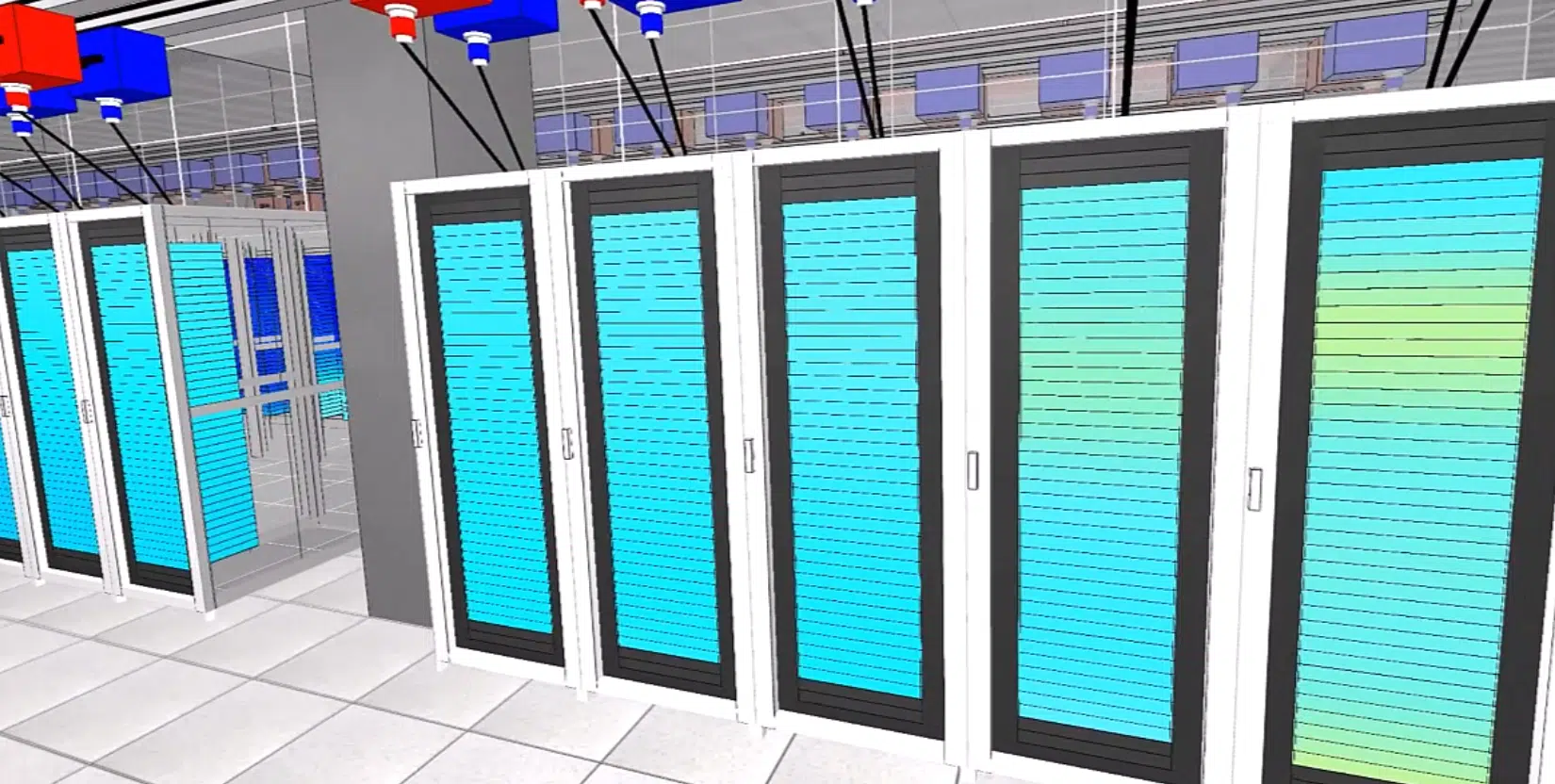
Study of the origins of overheating in the DC28 data center by CFD simulation: stable cooling, reliability and optimised thermal management.
EOLIOS Engineering provides advanced CFD simulation solutions to precisely model the airflow and heat dissipation, identify the zones of inefficiency and optimise the cooling systems of the DC28 data center.
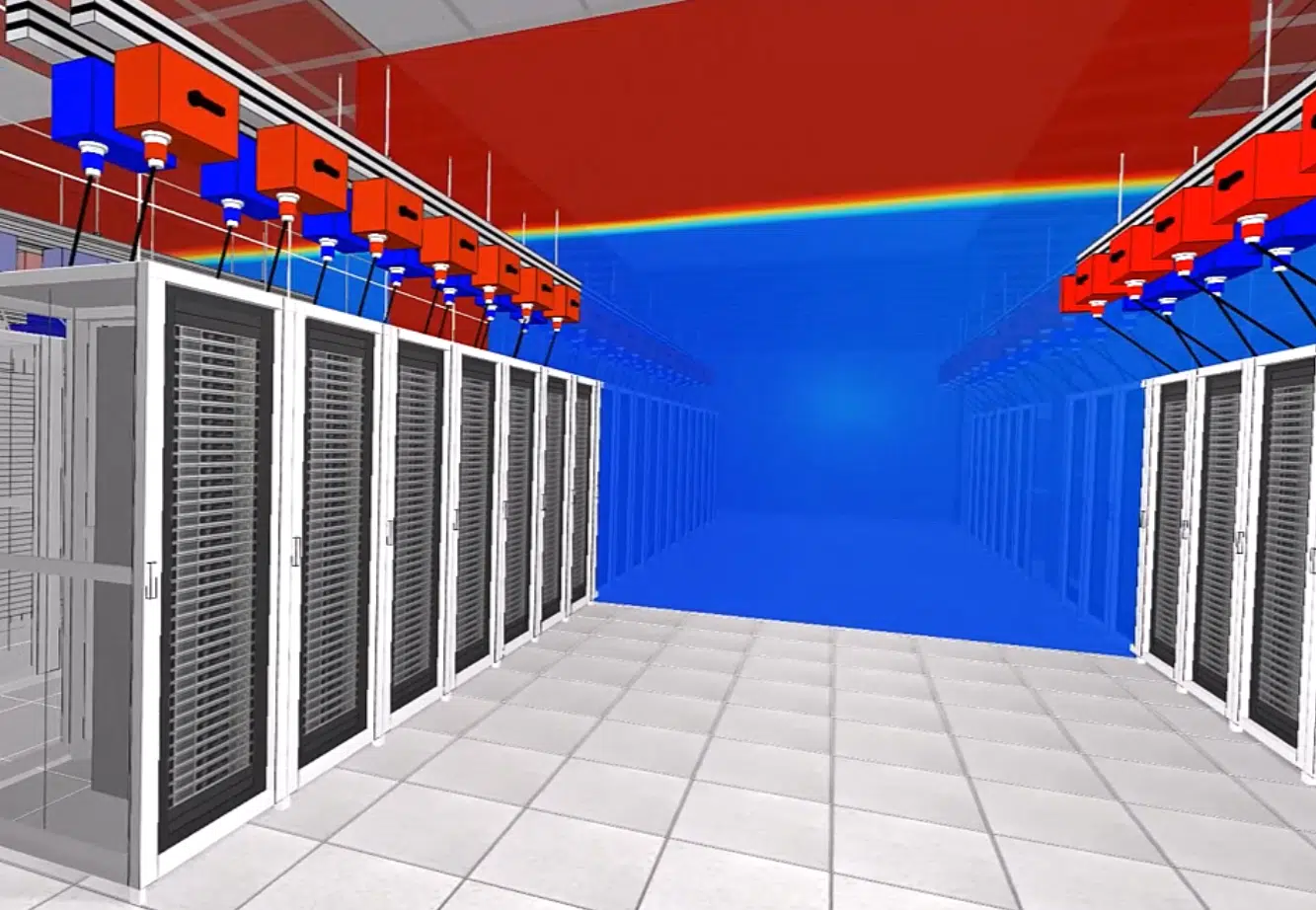
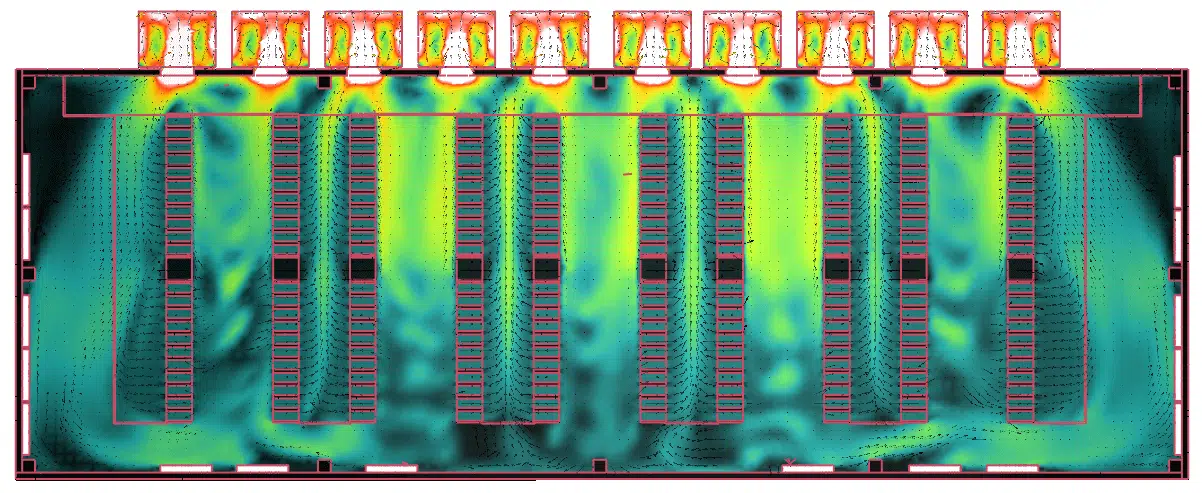
Key point. Internal CFD study of the DC28 data center to understand the origin of overheating. The simulation models the airflows and heat dissipation, reveals hot spots and zones of inefficiency before they appear, then guides the adjustments (airflow rates, equipment rearrangement, temperature setpoints) that make the cooling reliable and reduce energy consumption.
Optimising energy efficiency is a critical challenge for data center operators, given the impact of energy costs and the environmental footprint. Through CFD modelling of the airflow and heat dissipation, EOLIOS identifies the zones of inefficiency and proposes adjustments — equipment rearrangement, precise temperature setting — that reduce consumption without affecting the performance of the critical equipment.
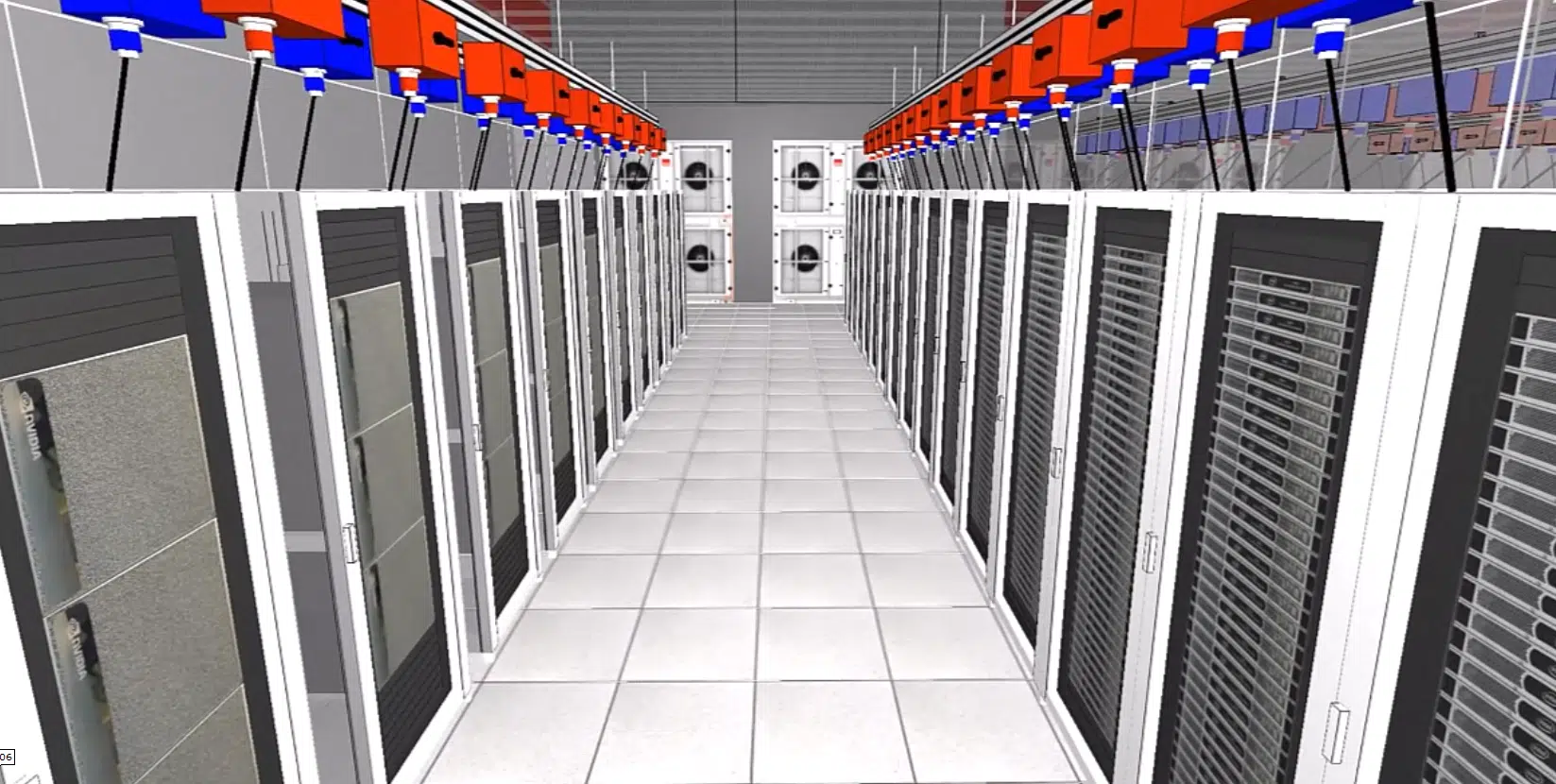
Hot-spot prevention is fundamental to operational continuity and equipment longevity. CFD analysis makes it possible to identify, visualise and resolve these issues before they physically appear, revealing hot spots liable to cause costly failures.
A zone where the air-inlet temperature of the servers exceeds the setpoint, often through recirculation of hot air or insufficient supply airflow. Left untreated, it accelerates hardware wear and can cause shutdowns.
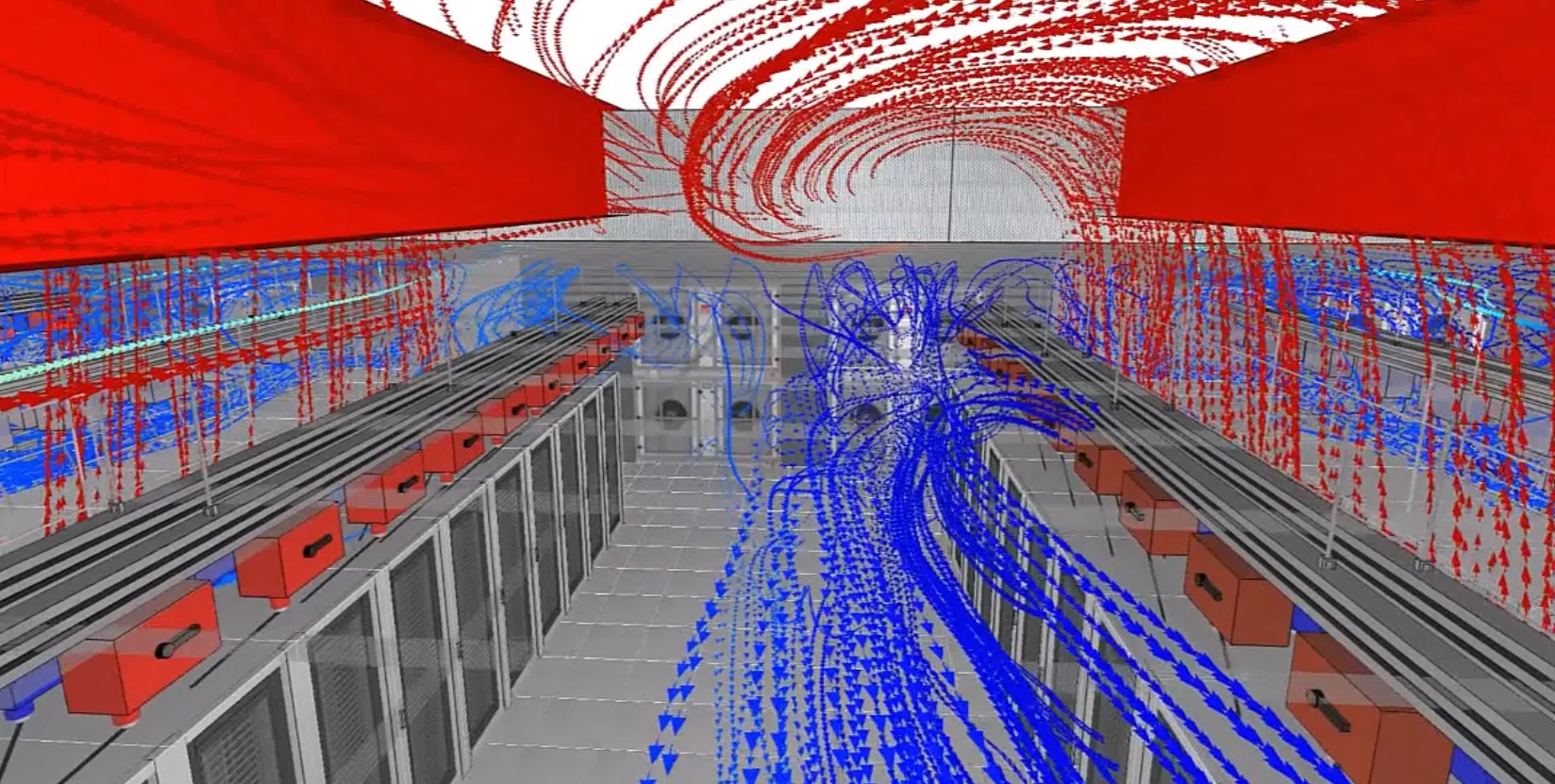
From this information, EOLIOS delivers precise guidance: adjusting the airflow rates, bespoke cooling solutions, to keep each component within its optimal temperature range. This proactive approach based on predictive analysis improves equipment durability and operational resilience.
By exploiting CFD simulations, EOLIOS explores and assesses numerous configurations before physical implementation. The strategic positioning of the hot and cold aisles and the choice of cooling equipment allow optimal use of the space and maximum energy performance, with the flexibility to adapt the infrastructure to future changes.
A server-room layout principle that alternates cold-air intake aisles and hot-air exhaust aisles. It prevents the flows from mixing, limits recirculation and directly conditions cooling efficiency.
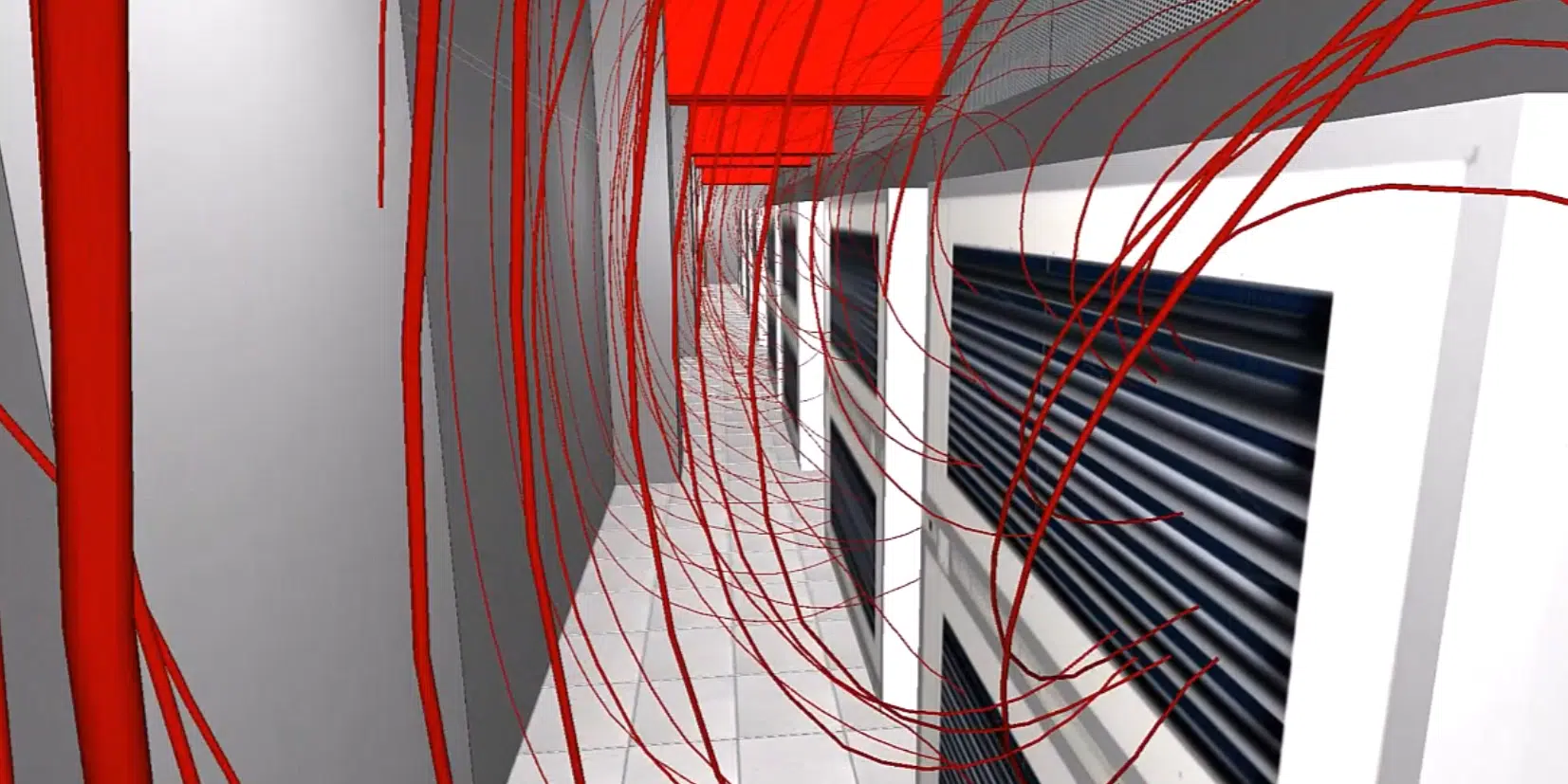
CFD optimisation identifies and corrects inefficiencies: precise analyses revealing the energy losses and the thermal inefficiencies, to draw up optimised action plans before any costly change. This preventive approach avoids expensive post-construction changes and optimises the use of the existing resources.
Key takeaway. Preventive optimisation by CFD reduces energy spending and secures long-term profitability, without immediate hardware investment.
Advanced CFD simulations offer insights into the anticipated behaviour of the infrastructure under various load conditions. Decision-makers can plan the expansion, anticipate the power and cooling needs, and adapt their strategy without compromising the quality of service.
EOLIOS's CFD analyses improve the efficiency of the cooling systems and minimise the ecological footprint, adapting the operations to the energy-consumption and emission-reduction standards. Clients comply with the regulations while optimising their infrastructure.
Know-how: hot spot in data centers, causes and effects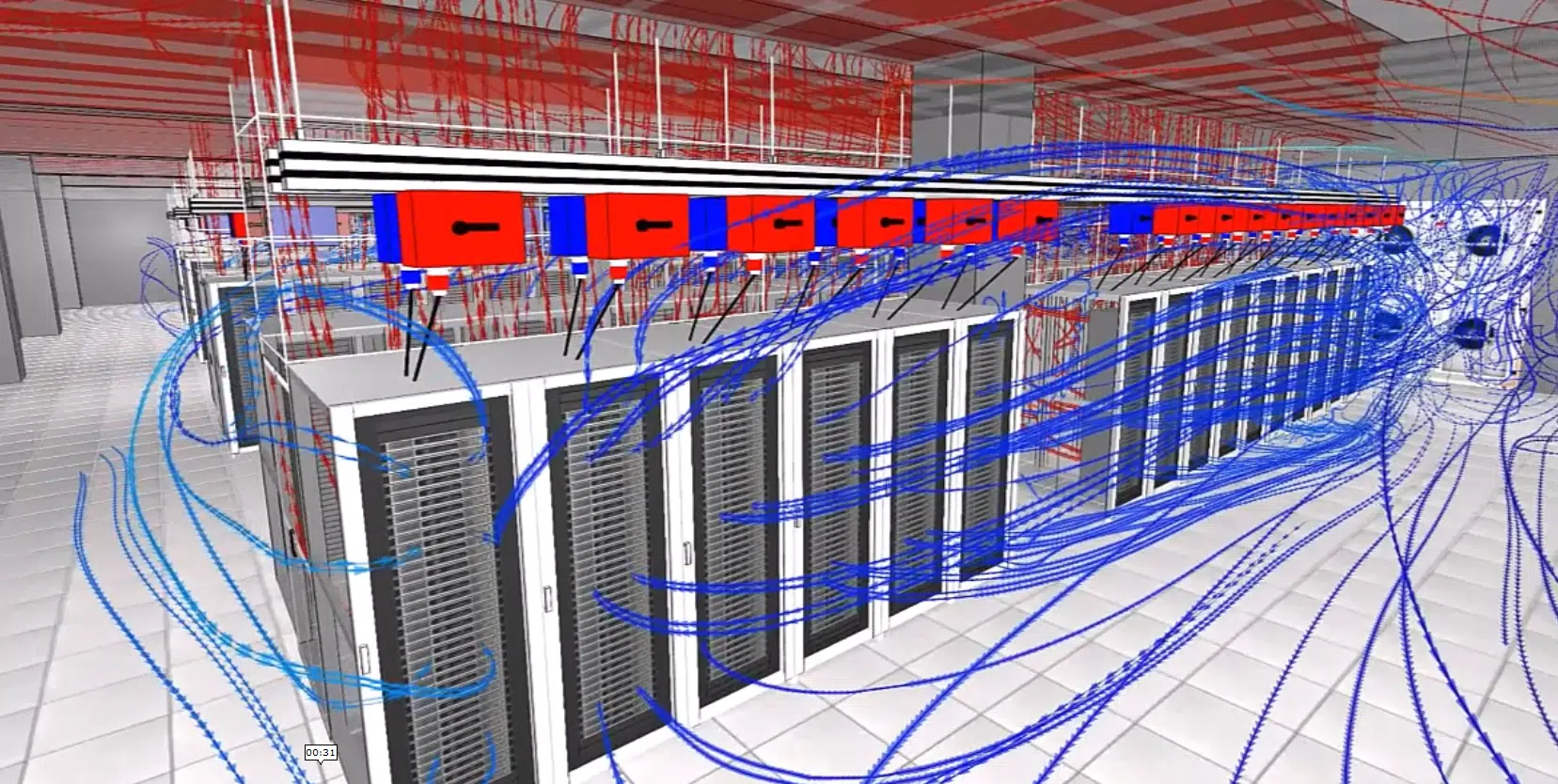
A data center thermal study cannot be judged in the absolute: it is measured against a reference framework. The ASHRAE TC 9.9 recommendations define the admissible temperature and humidity ranges at the server inlet and serve as an objective criterion to validate a cooling configuration. CFD places each rack relative to these ranges and reveals the zones that fall outside them, where the eye only sees a uniform room.
Beyond temperature compliance, the goal is frugality. The PUE (Power Usage Effectiveness) compares the total energy consumed by the site with that actually useful to the servers: the closer it gets to 1, the less the cooling and auxiliaries weigh. By objectifying the airflows and temperatures, the simulation helps raise the supply setpoint as close as possible to the ASHRAE limits, remove recirculation and therefore lower the PUE without risk to the hardware.
Recommendations framing the admissible temperature and humidity ranges at the inlet of IT equipment. They distinguish classes (A1 to A4) and serve as a reference to judge whether a server-room environment is acceptable.
Ratio between the total energy consumed by the data center and the energy useful to the IT equipment. A PUE close to 1 reflects highly efficient cooling and auxiliaries; reducing it is a major operational objective.
Place each rack relative to the ASHRAE air-inlet ranges, to distinguish real discomfort from available margin.
Raise the supply setpoint as close as possible to the admissible limits, without crossing the critical thresholds.
Remove the recirculation that artificially inflates the cooling demand.
Translate the gains into lower PUE and reduced costs and emissions.
Key takeaway. Comparing CFD with the ASHRAE ranges turns thermal control into an efficiency lever: you cool exactly what is needed, where it is needed, which directly improves the PUE.
Hot spots, energy efficiency and predictive analysis: answers to the questions operators and designers ask before an internal CFD study.
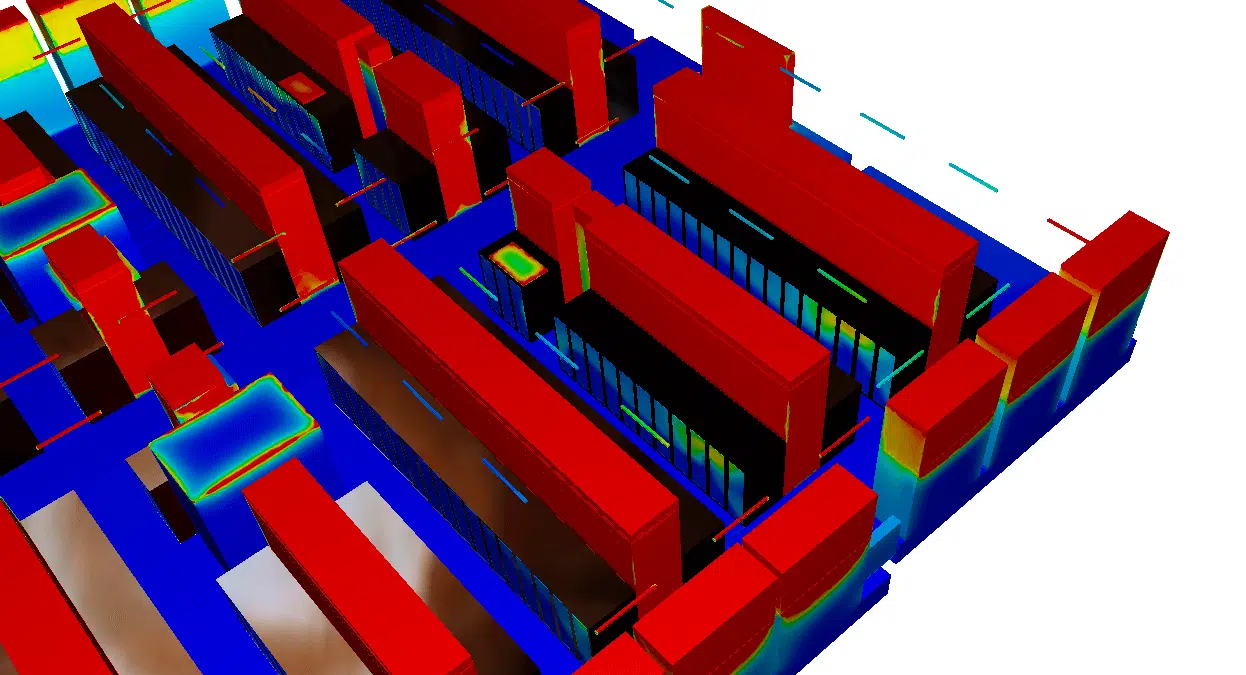
It models the airflows and heat dissipation to identify, visualise and resolve hot spots before they physically appear, as in our internal study of the DC10 data center.
It is a zone where the air-inlet temperature of the servers exceeds the setpoint, often through recirculation of hot air or insufficient supply airflow. Left untreated, it accelerates hardware wear and can cause shutdowns.
By identifying the zones of inefficiency, it enables targeted adjustments (equipment rearrangement, temperature setpoints, airflow rates) that reduce consumption without affecting the performance of the critical equipment.
The simulation explores numerous configurations before physical implementation: positioning of the hot and cold aisles, choice of equipment. This preventive approach avoids expensive post-construction changes.
It anticipates the behaviour of the infrastructure under various load conditions, to plan expansion, forecast power and cooling needs and adapt the strategy without compromising the quality of service.
Explore our expertise, projects and technical papers to go beyond the FAQ.
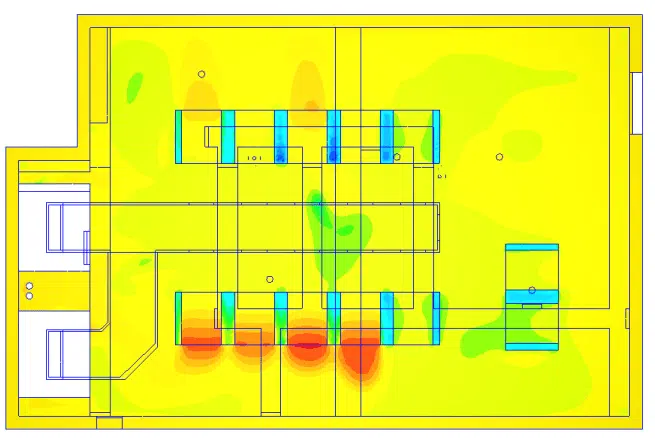
Internal CFD study of the DC28 data center: analysis of the airflows, temperatures and thermal distribution to identify the hot spots and optimise the cooling.
 Digital twinData center study – Data Hall and UPS rooms
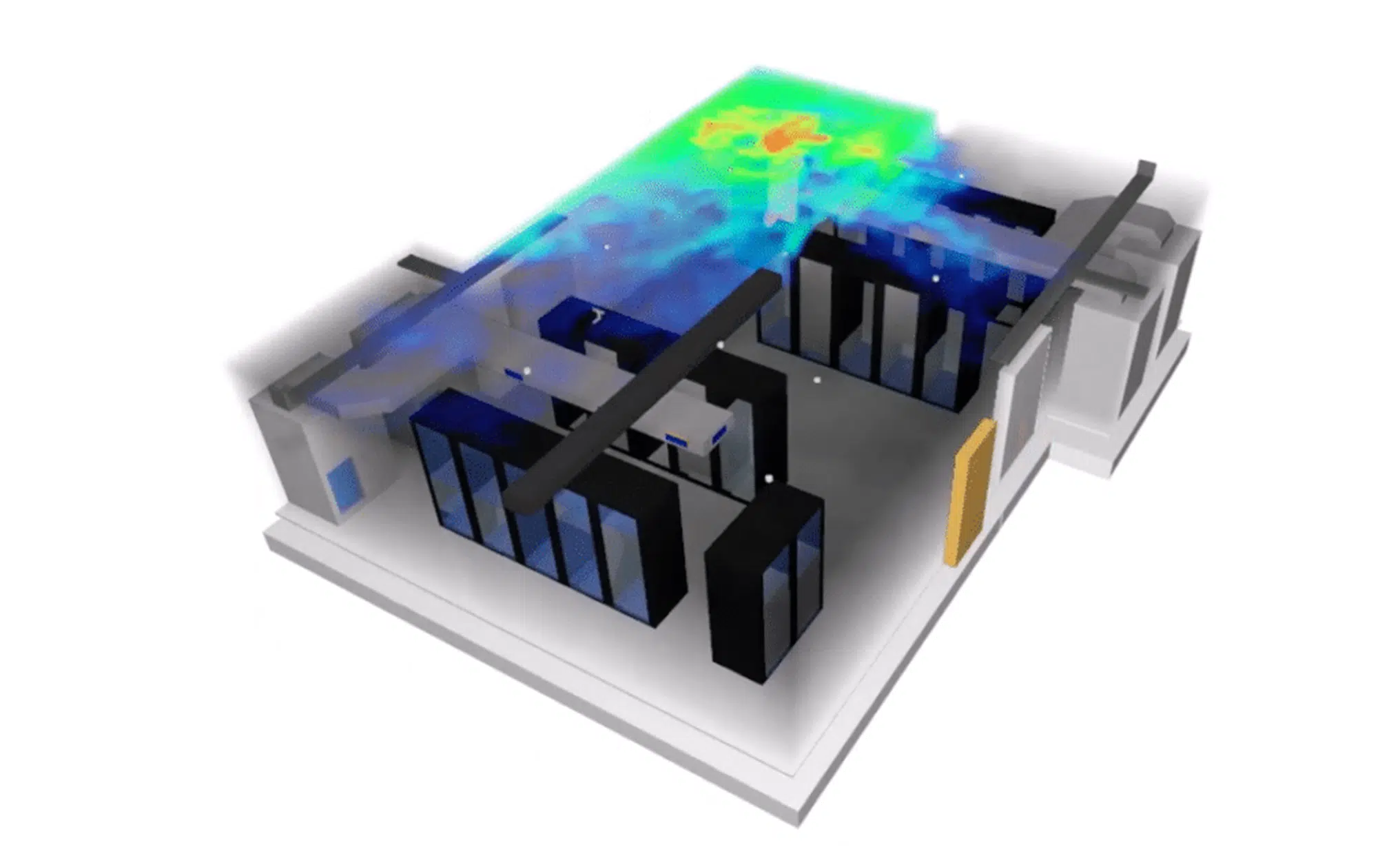 DésenfumageSmoke-control engineering in a data center
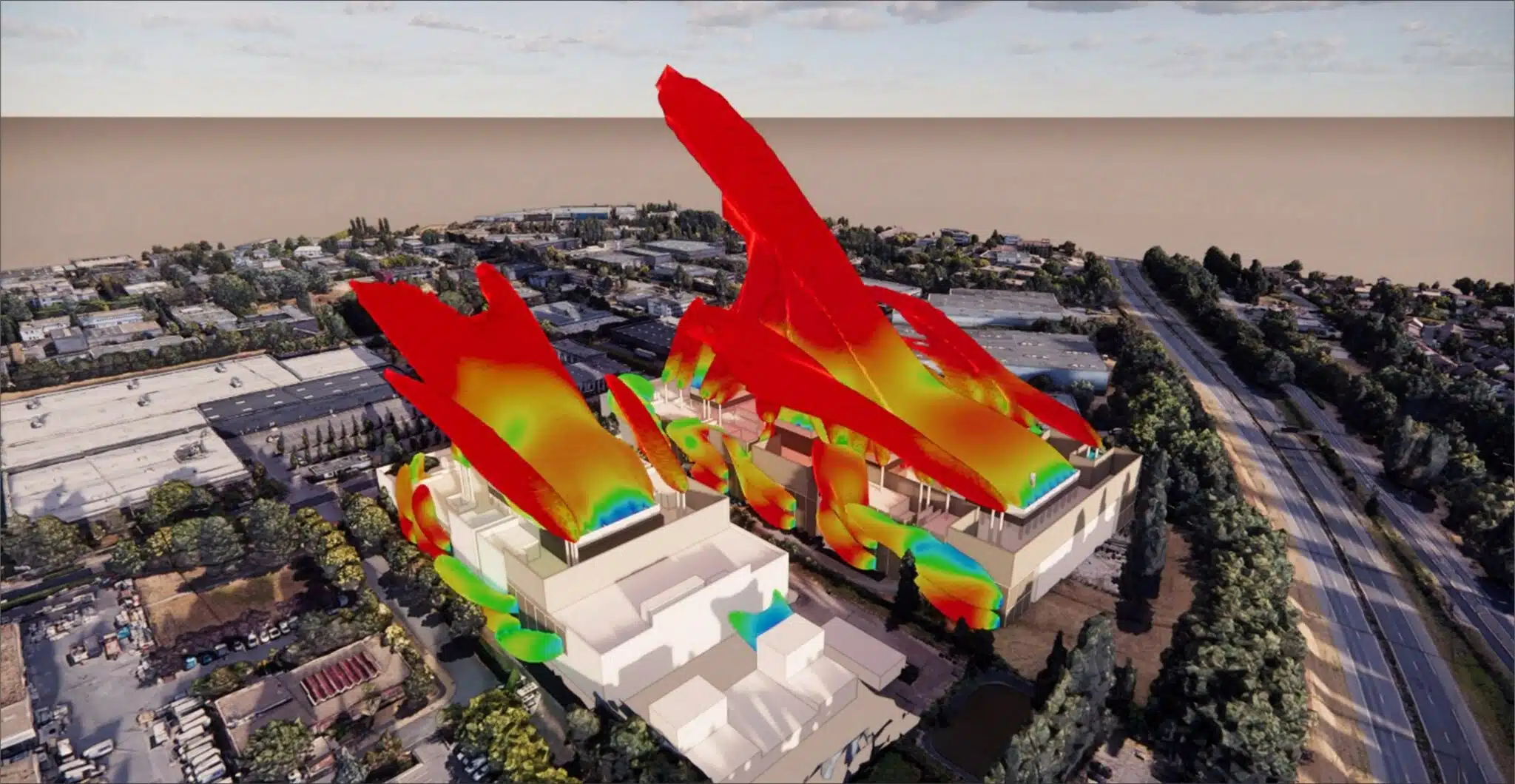
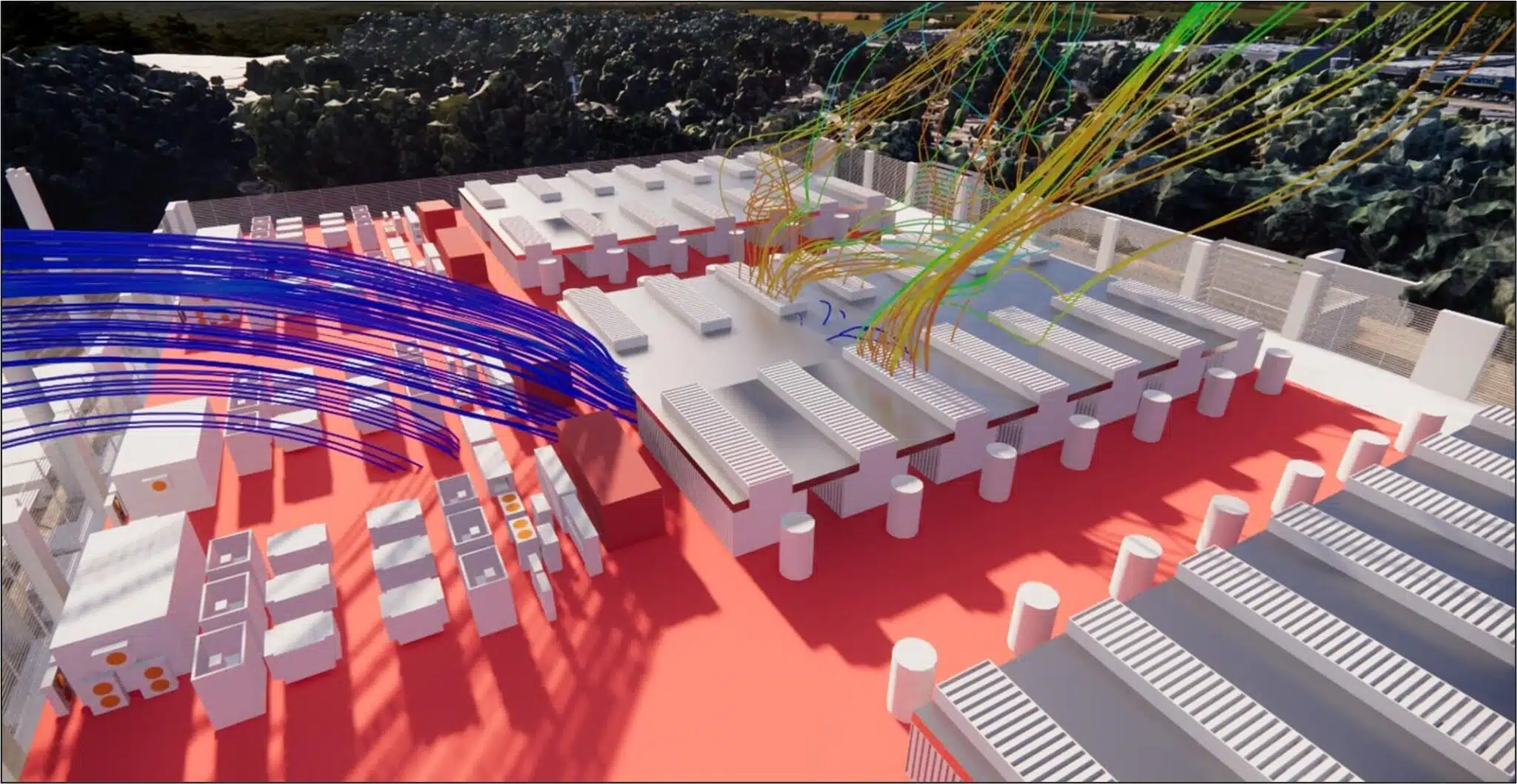 HyperscaleExternal & internal CFD – Hyperscale Data Center
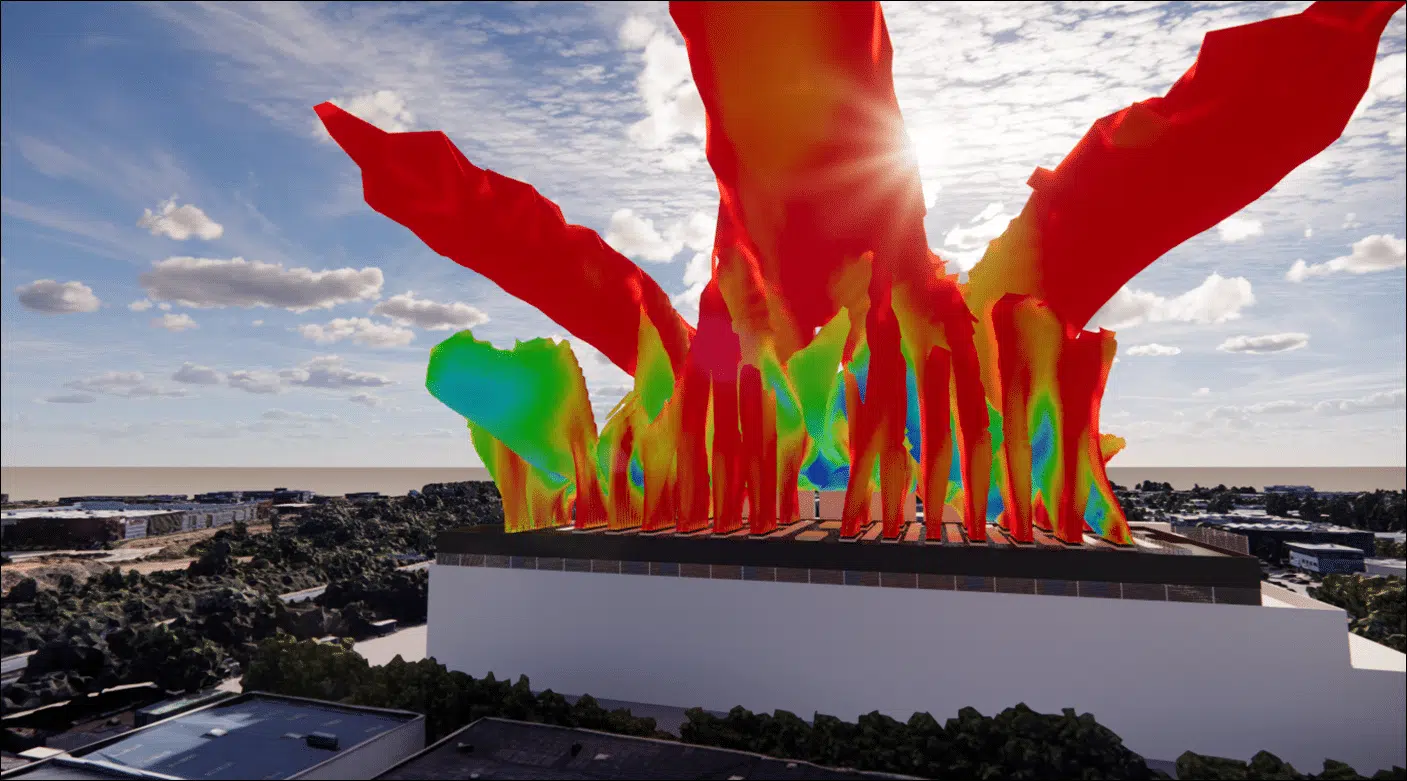 OptimisationCFD optimisation – Data Center
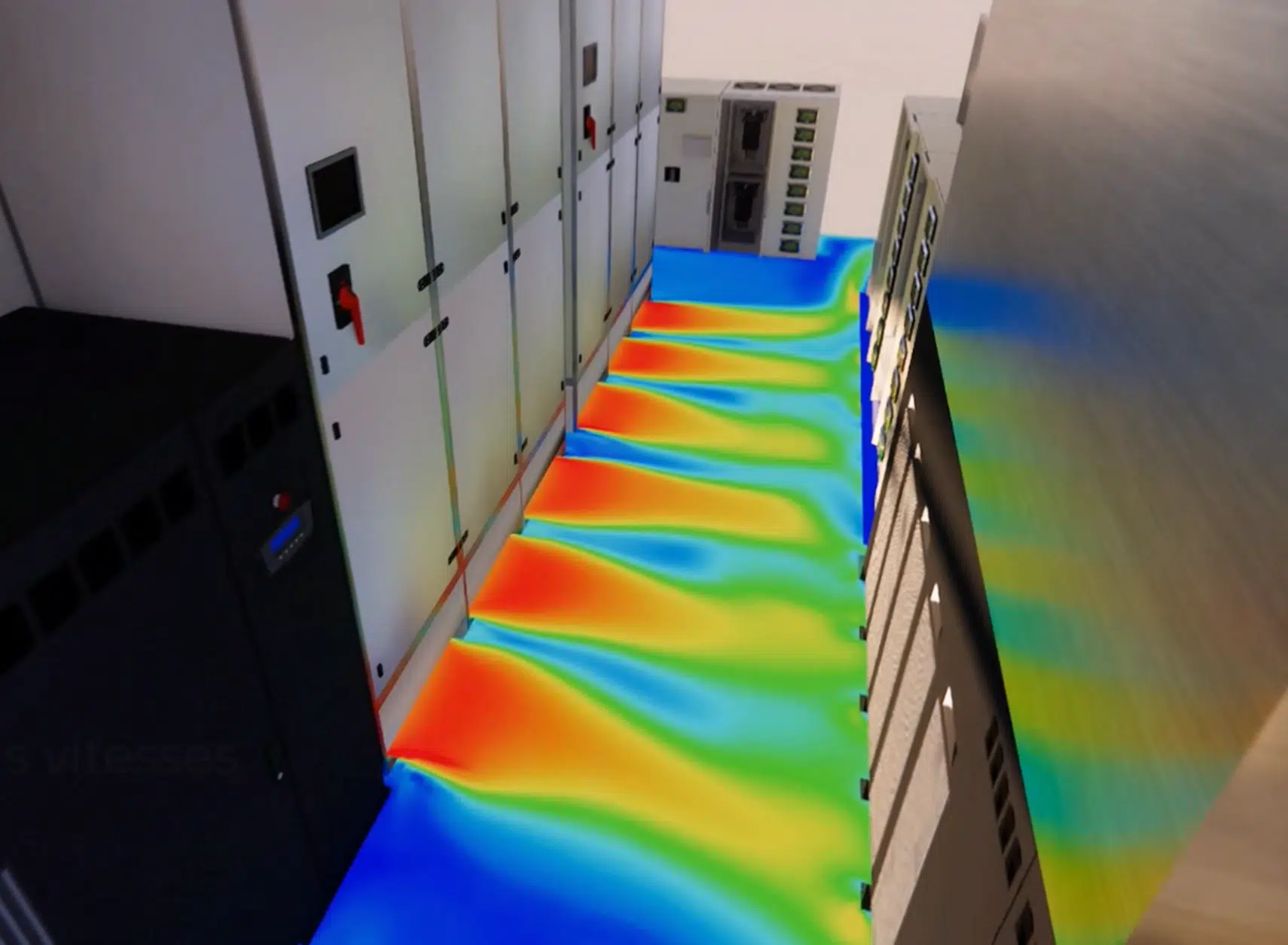 Technical roomsTechnical rooms – Data Center
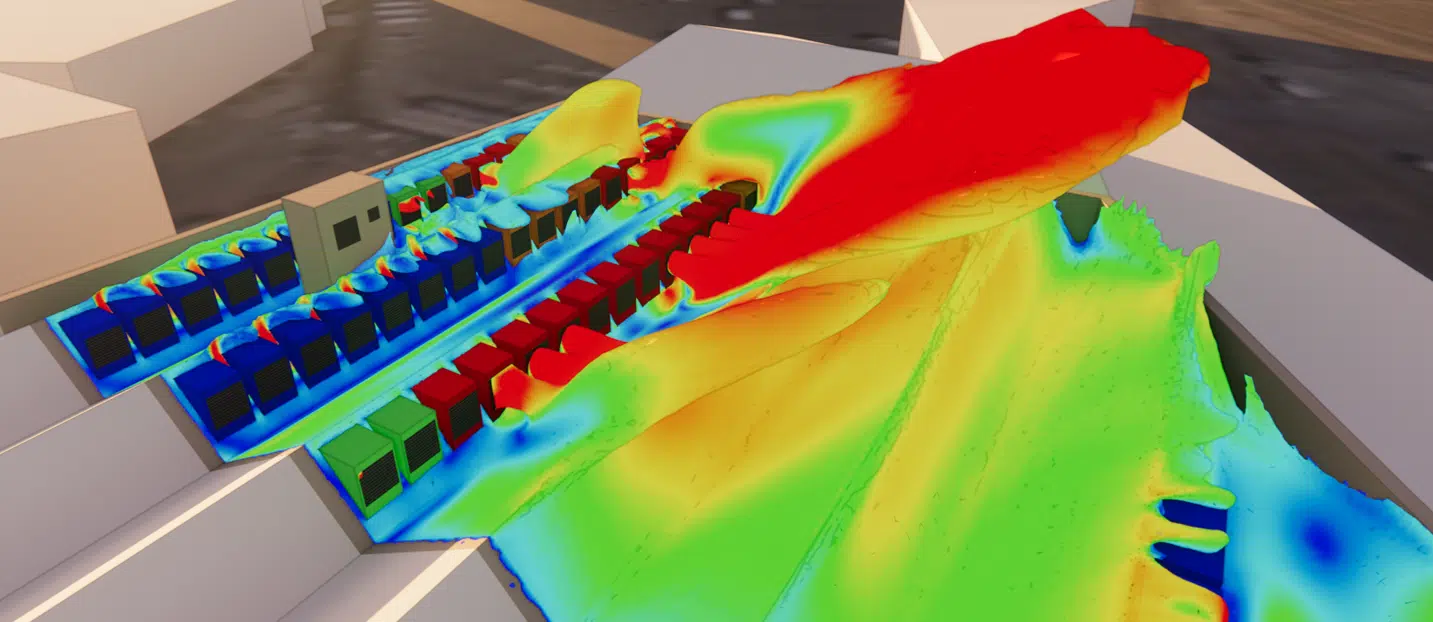 CoolingCooling optimisation – Data Center
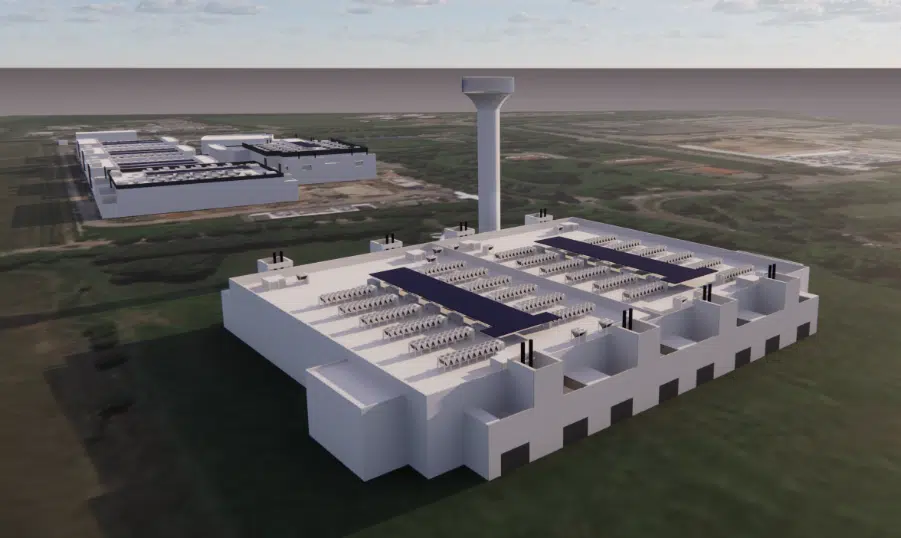 ExterneData Centers – DC15.1 & DC15.2 – External
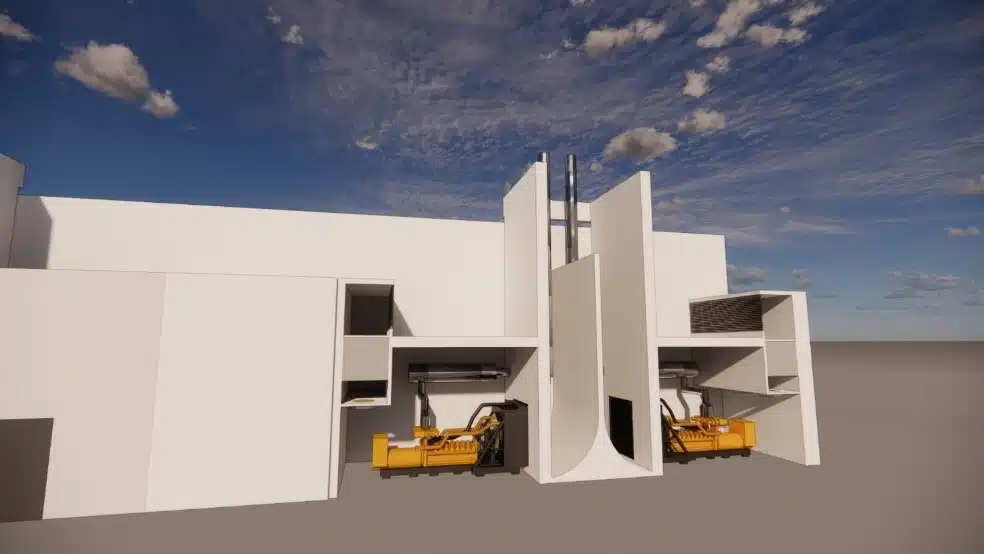 ExterneData Center – PA 22 – External
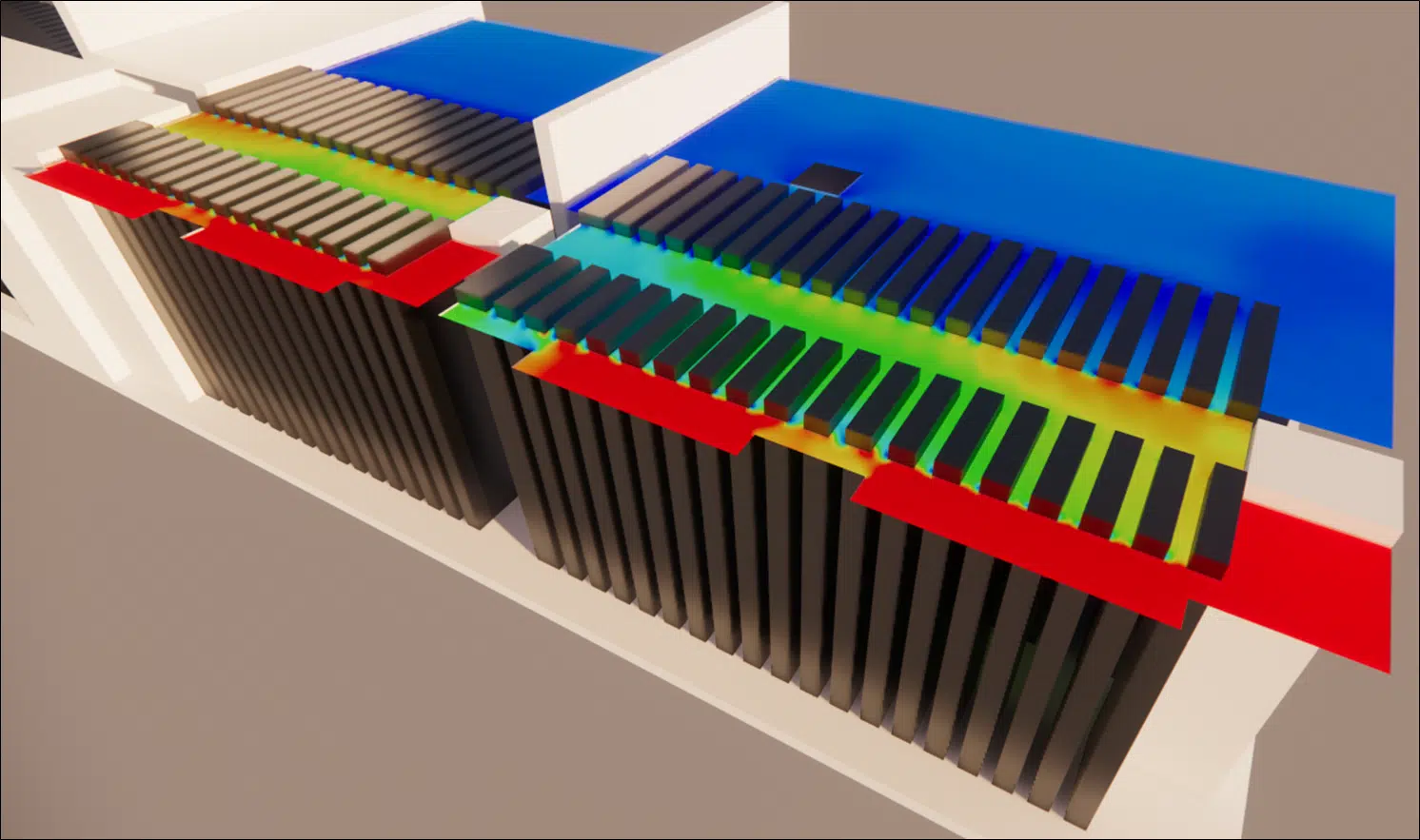 GeneratorPressure-loss study – Generator – Data center
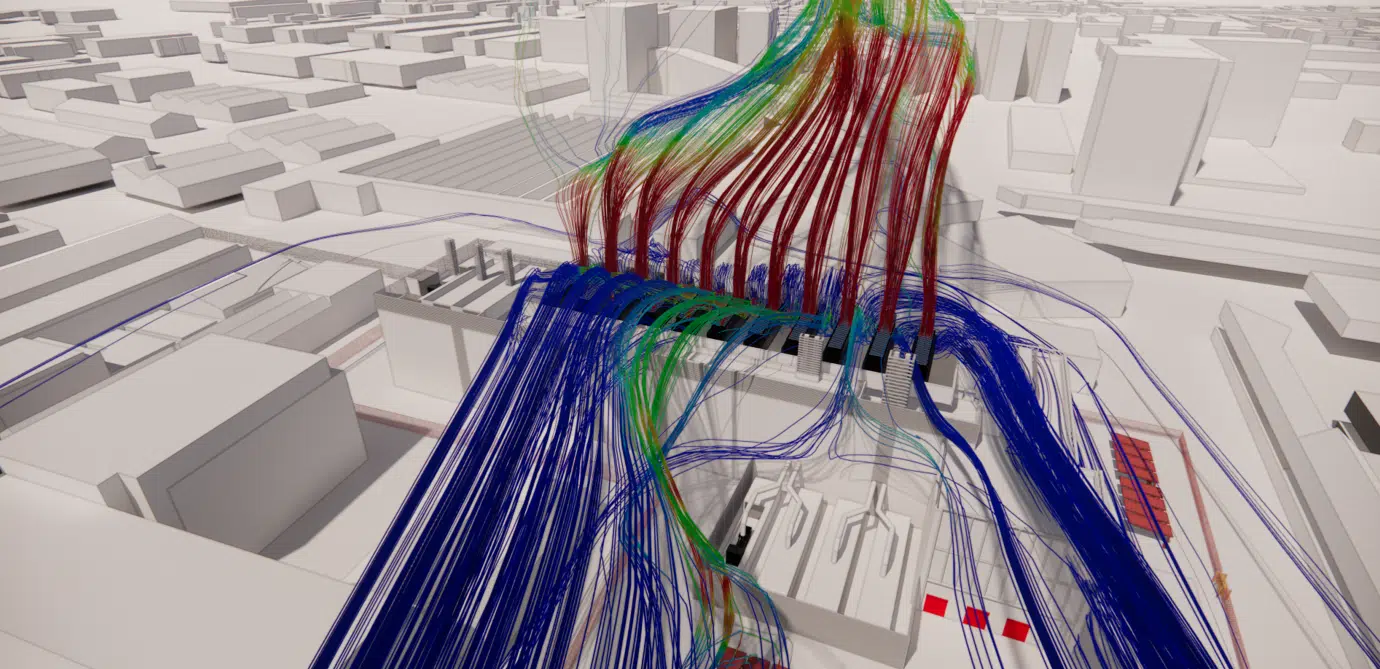 ExterneData Center – Paris
 FireData Center – NOVEC gas
InternalData center – DC17 – Internal
FireData Center – NOVEC gas
InternalData center – DC17 – Internal
 ExterneData center – D14 – External
 ExterneData center – DC25 & DC26 – External
 InternalData Center – DC10 – Internal
 InternalData center – DC25 – Internal
ExterneData Center – DC25 & DC26 – External
InternalData center – DC25 – Internal
ExterneData Center – DC25 & DC26 – External