Expertise for improving pedestrian comfort
In a world where urbanisation is constantly growing, it is crucial to ensure a comfortable and sustainable outdoor environment. At EOLIOS, our expertise in studying airflow and heat — CFD (Computational Fluid Dynamics) — allows us to meet this challenge with precision and innovation.
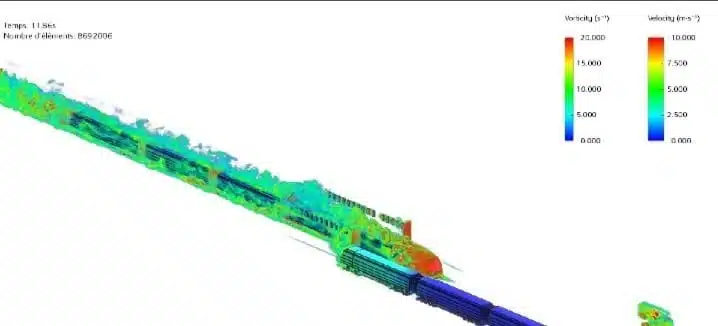
We specialise in studying the airflow and heat related to the simulation of wind. Our expertise allows us to support our clients on all their outdoor aeraulic challenges:
Comfort & pressure
- Checking pedestrian comfort
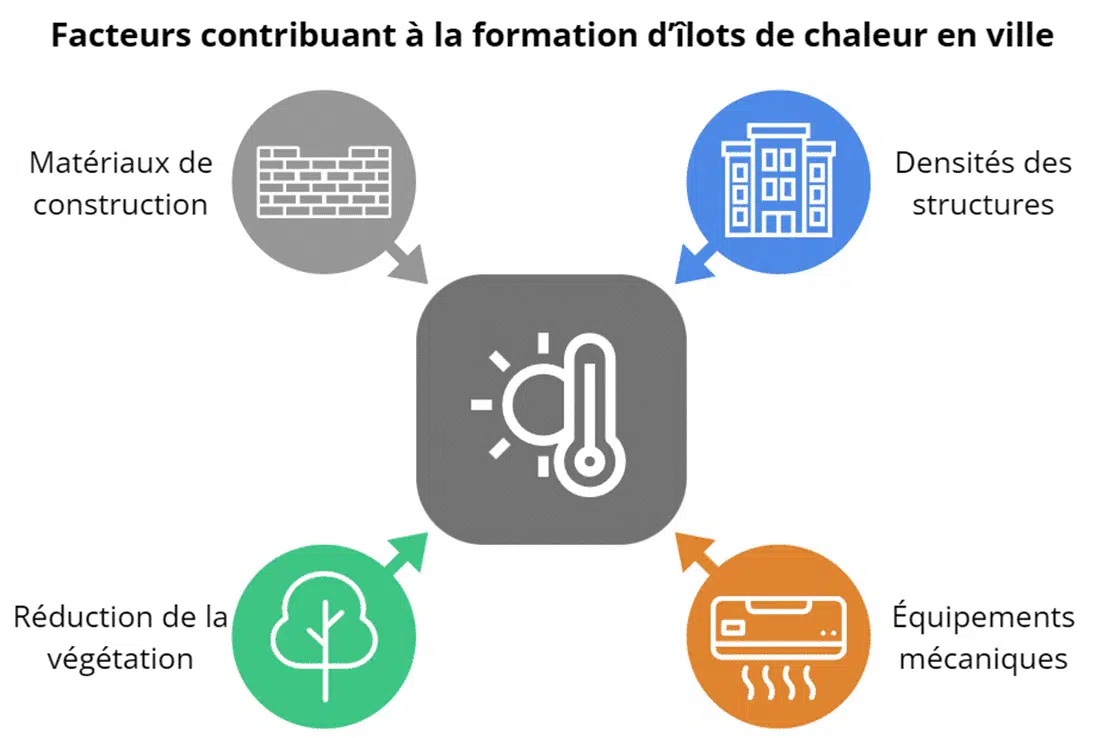
- Study of urban heat-island effects
- Calculation of pressure coefficients
Development
- Wind comfort of outdoor spaces
- Sizing of wind protections
- Urban development master plan
Urban impact
- Urban project impact study
- Optimisation of vegetation
- Study of pollutant dispersion
What is a pedestrian-comfort study at EOLIOS?
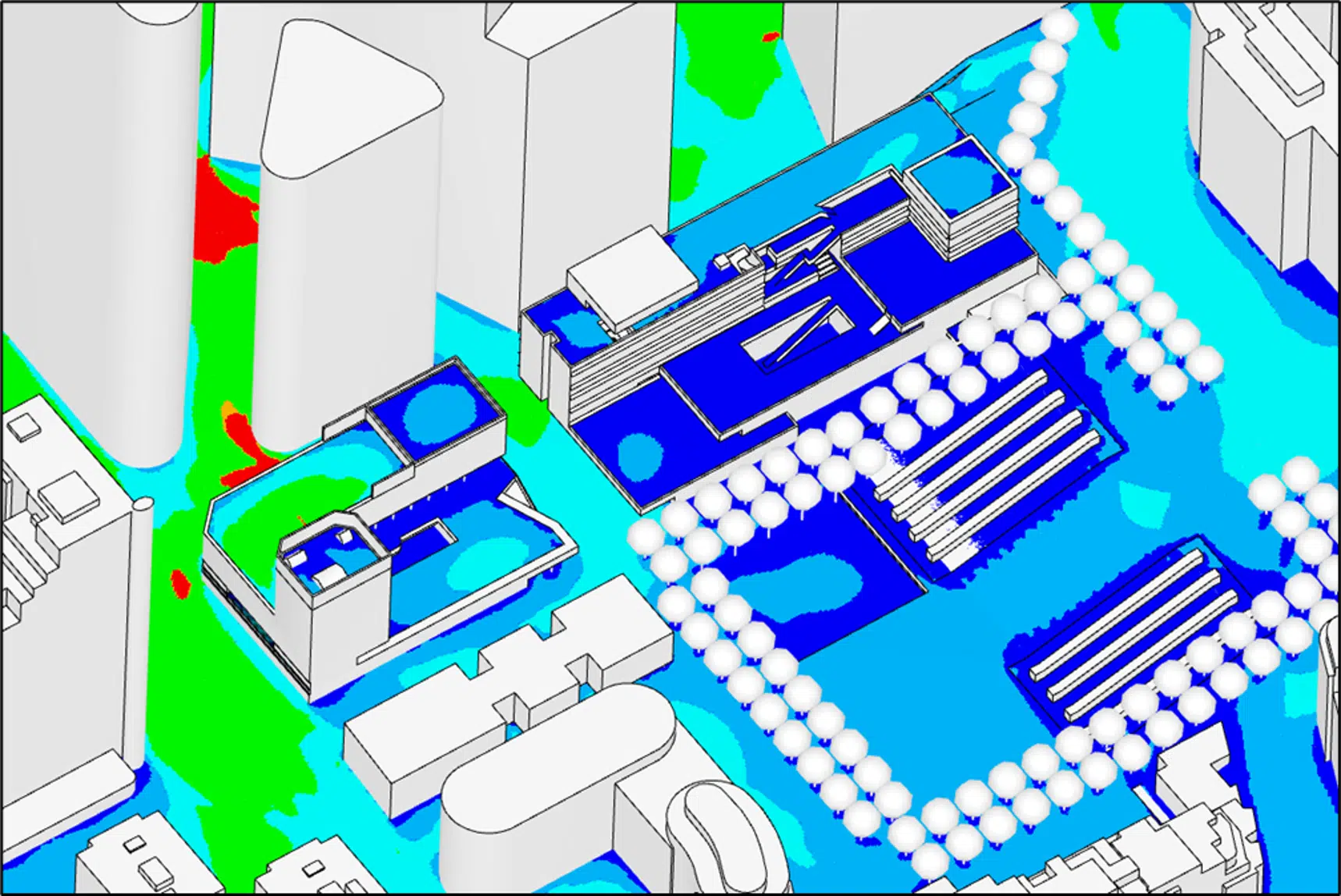
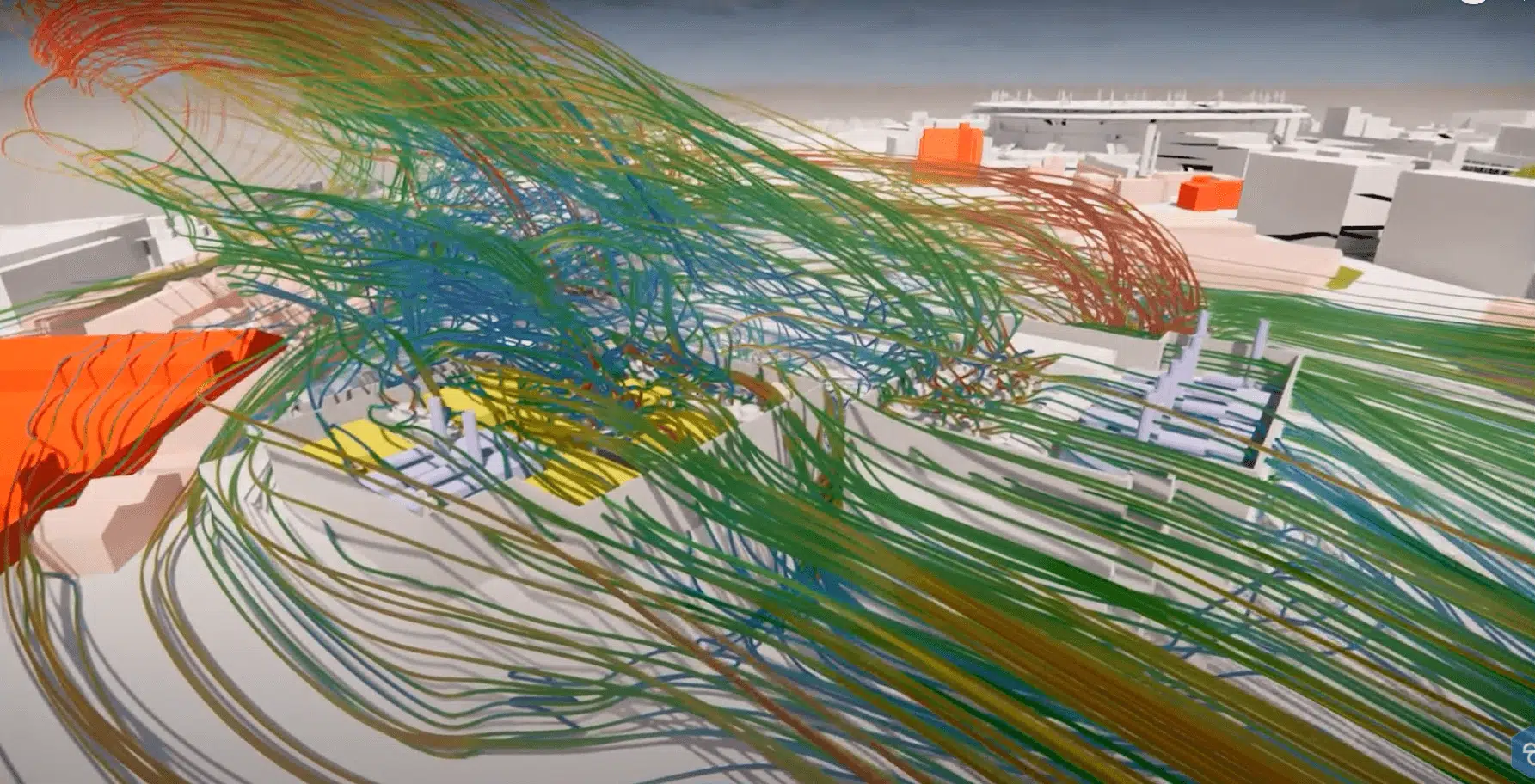
A pedestrian-comfort study is an in-depth analysis intended to understand and improve the complex interaction between climate factors and architectural infrastructure. At EOLIOS, we take a methodical, innovative approach to these studies, incorporating the latest technological advances in numerical simulation. Thanks to our command of CFD, we can recreate virtual environments of remarkable fidelity, making it possible to analyse in detail the airflows and heat exchanges that determine the comfort of outdoor spaces.
Analysis of climate conditions
Analysing the climate conditions plays a crucial role in the design and development of urban and architectural spaces. It makes it possible to anticipate the complex interactions between natural elements and built infrastructure. By gathering accurate data on local temperatures, we can assess the thermal variations throughout the year and their impact on the comfort of occupants. Wind speeds are another essential factor: they influence not only pedestrian comfort, but also the dispersion of pollutants and the natural ventilation of buildings. By identifying the zones prone to turbulence or strong winds, we can guide the choices of building layout, the arrangement of openings or the design of outdoor spaces.
The process begins with the collection of detailed environmental data: temperatures, wind speeds and directions, humidity levels, sunshine. This data feeds our CFD models, which accurately simulate the way the airflows interact with the buildings, how the heat dissipates and how humidity affects perceived comfort. This approach makes it possible to minimise assumptions and maximise performance predictions, guaranteeing reliable, usable results.
Analysis of the CFD data and recommendations
Once the simulations have been run, our experts carefully analyse the results: airflow, heat exchanges, and the influence of the various urban features such as towers, narrow streets or green spaces. This in-depth analysis makes it possible to identify the points for improvement and to optimise the layout and design of the infrastructure.
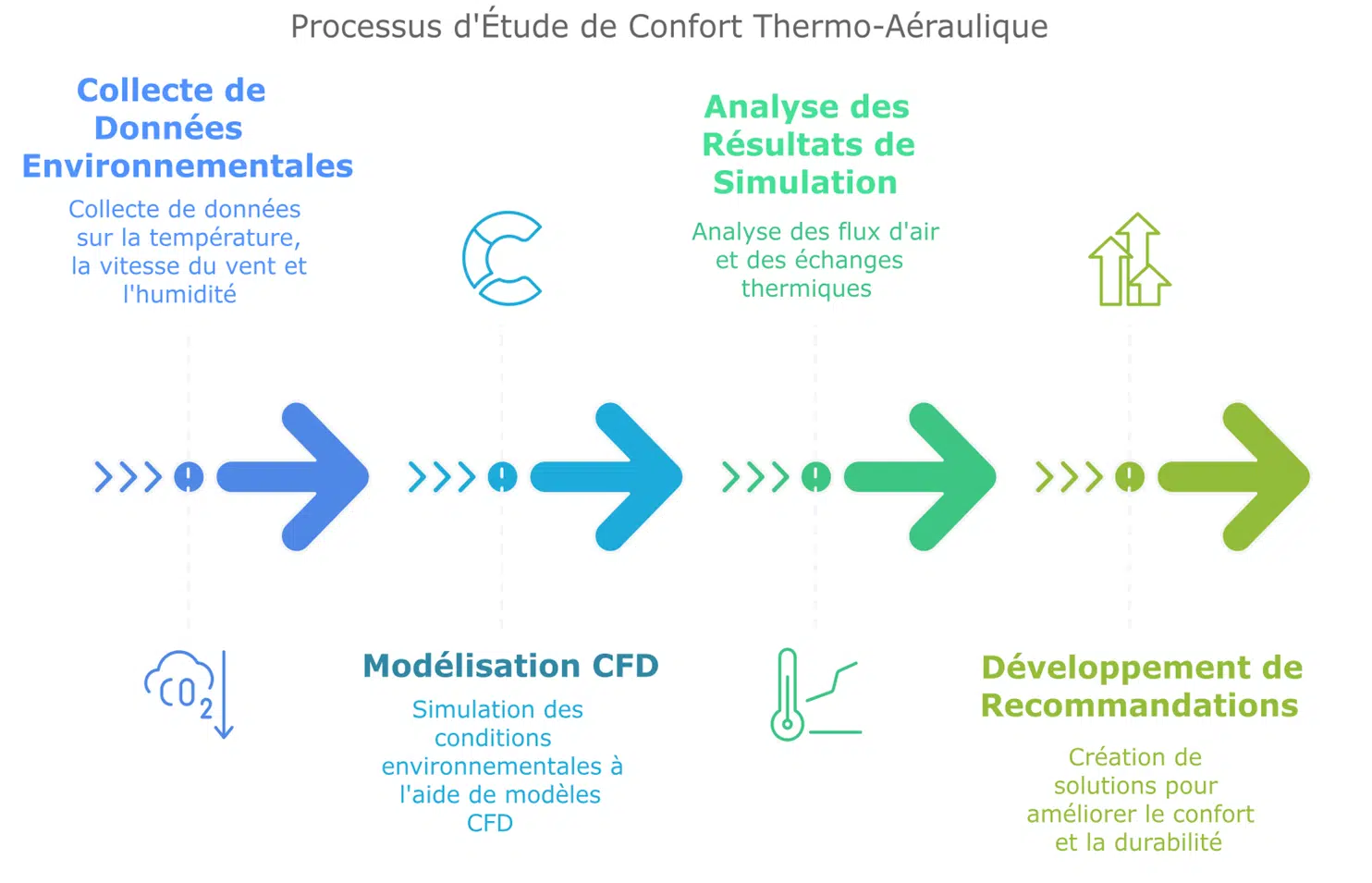
On the basis of these analyses, we draw up specific recommendations tailored to each project, aimed at improving the well-being of city dwellers. These recommendations may include reducing overheating, improving air circulation, or putting in place sustainable solutions focused on energy efficiency. Our goal is to provide bespoke solutions, perfectly suited to the constraints and ambitions of each project.
Why these studies are crucial
Resident comfort & reduced environmental impact
In a context of climate change and growing urbanisation, thermo-aeraulic comfort studies are becoming essential for cities that aspire to be sustainable and resilient. They make it possible to significantly improve resident comfort while reducing the environmental impact of developments. By finely understanding the interactions between climate and architecture, we can design spaces that remain pleasant in every season.
Sustainable solutions to urban challenges
Urban centres face many challenges: heat islands, air pollution, energy management. By promoting better air circulation and reducing reliance on artificial heating and cooling systems, cities can lower their carbon footprint and optimise the use of natural resources such as sunlight and local winds.
Planning resilient cities
Anticipating the climate conditions, including extreme events, from the earliest design phases of a project makes it possible to reduce energy costs, create more comfortable living spaces and strengthen the resilience of cities. These studies thus help to improve the attractiveness and quality of life of urban spaces.
Development paysager rural & impacts du vent
In rural areas, the wind plays a crucial role in the thermo-aeraulic comfort of outdoor spaces. It influences the dispersion of pollutants, the humidity and the perceived temperature. Unlike urban environments, where buildings create obstacles, air circulation in rural areas is generally freer, which can have both beneficial and harmful effects. A light breeze can improve comfort by promoting evaporation and cooling during the summer, but strong winds can accentuate the wind chill in winter, making outdoor spaces uncomfortable.
CFD studies make it possible to model these interactions in order to optimise the landscaping. For example, the strategic placement of hedges, trees or natural barriers can reduce the impact of wind gusts without compromising natural ventilation. Our solutions take into account the seasonal variations and the terrain topography to propose sustainable, suitable developments.
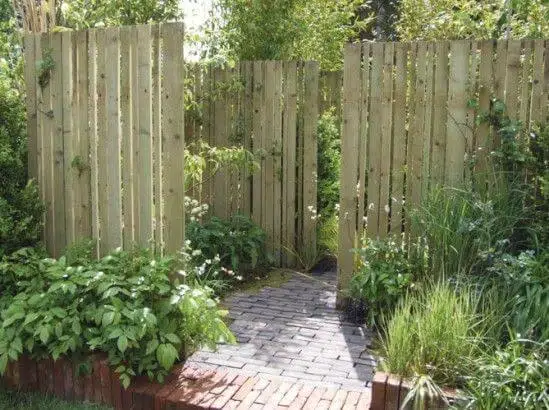
A well-sized windbreak fence channels the flow and creates a sheltered zone at usable height, without generating troublesome wake turbulence downstream.
Mastering air movements in the city
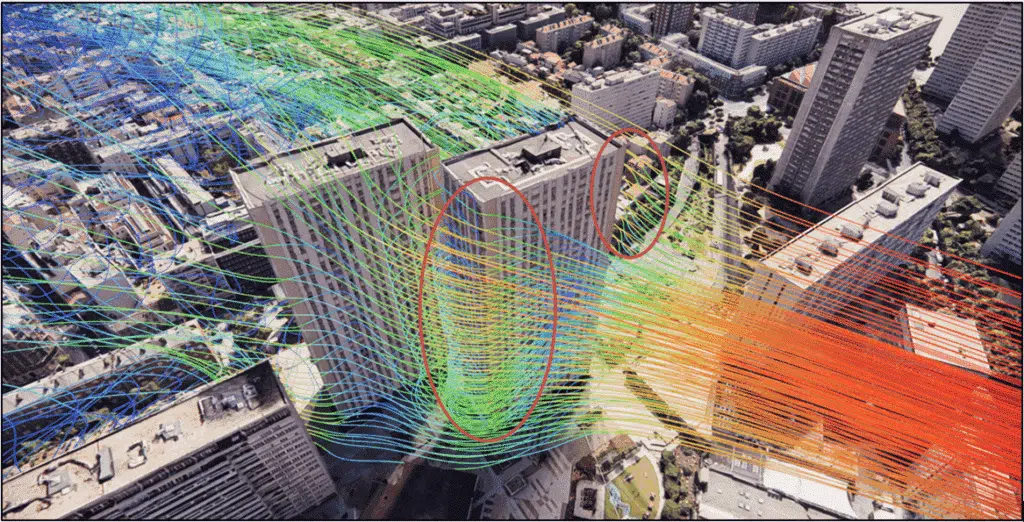
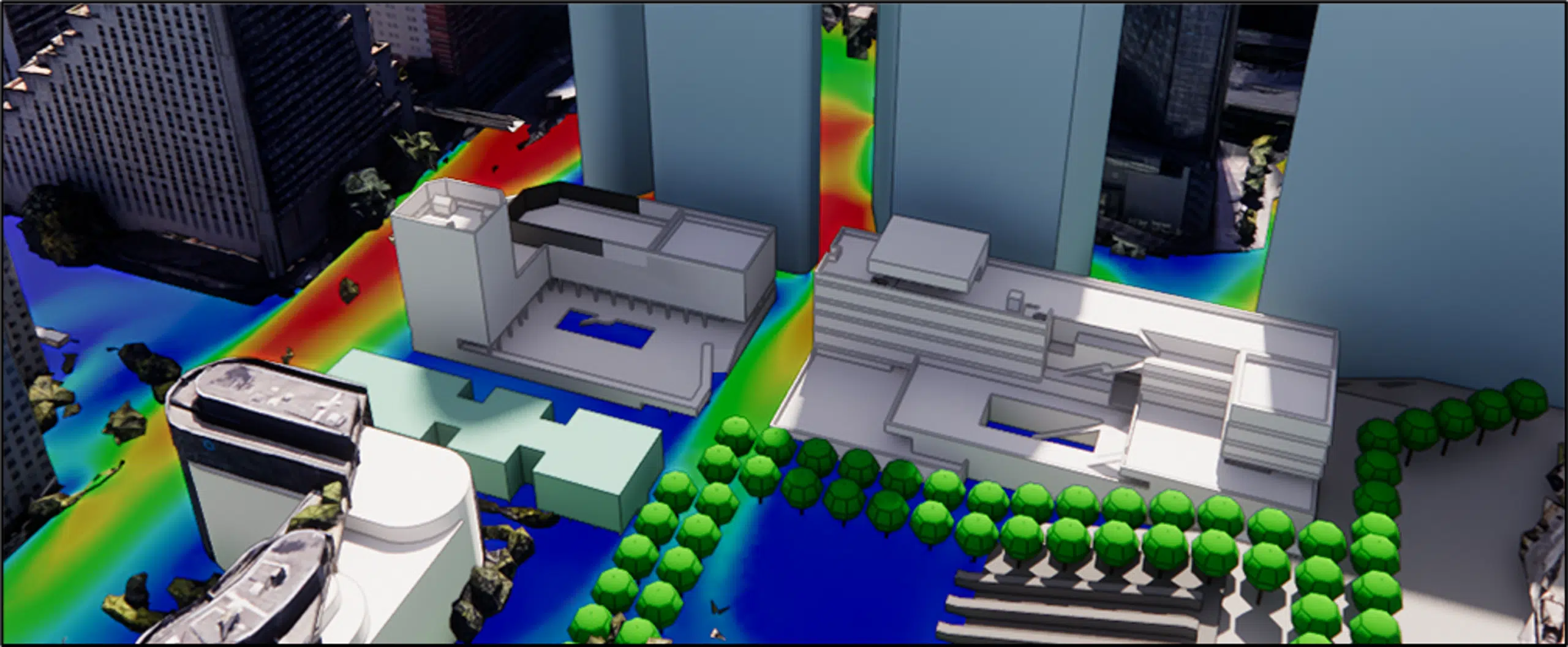
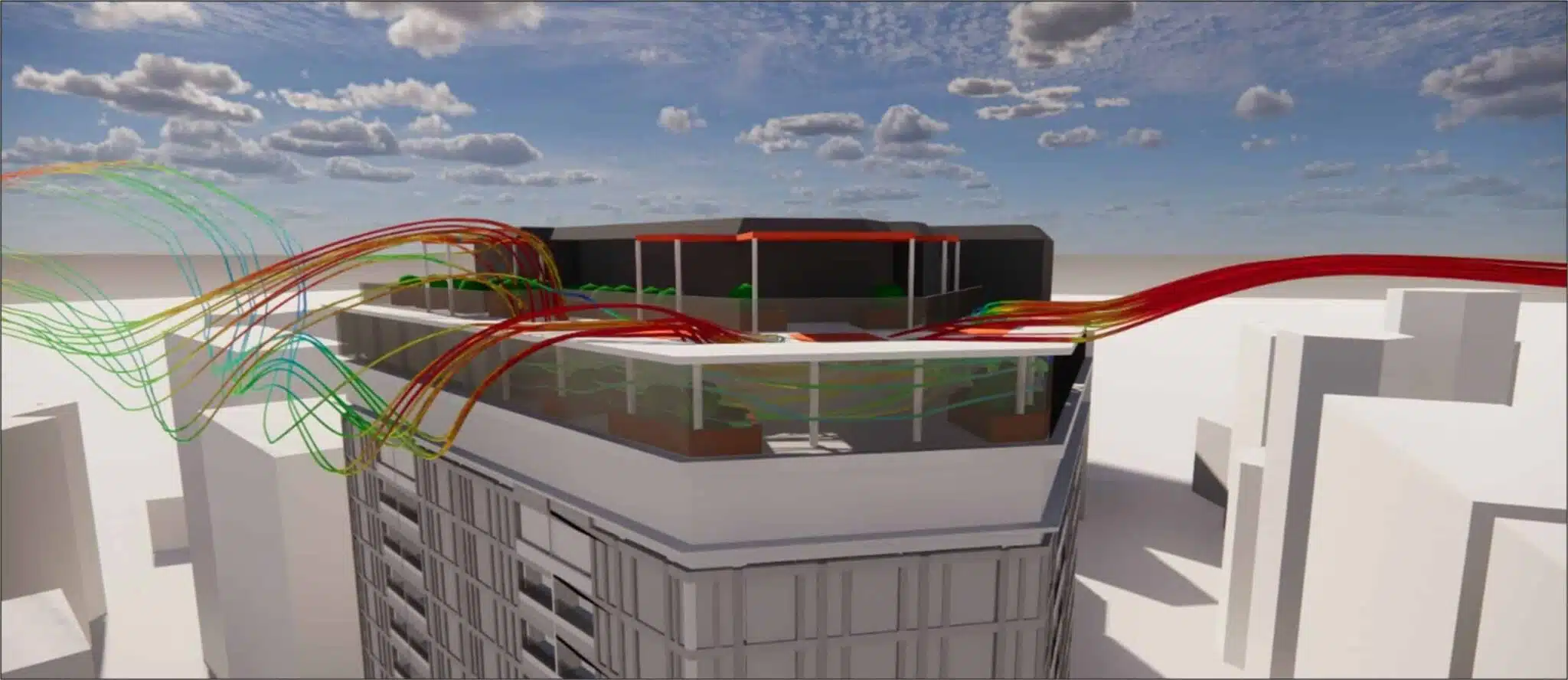
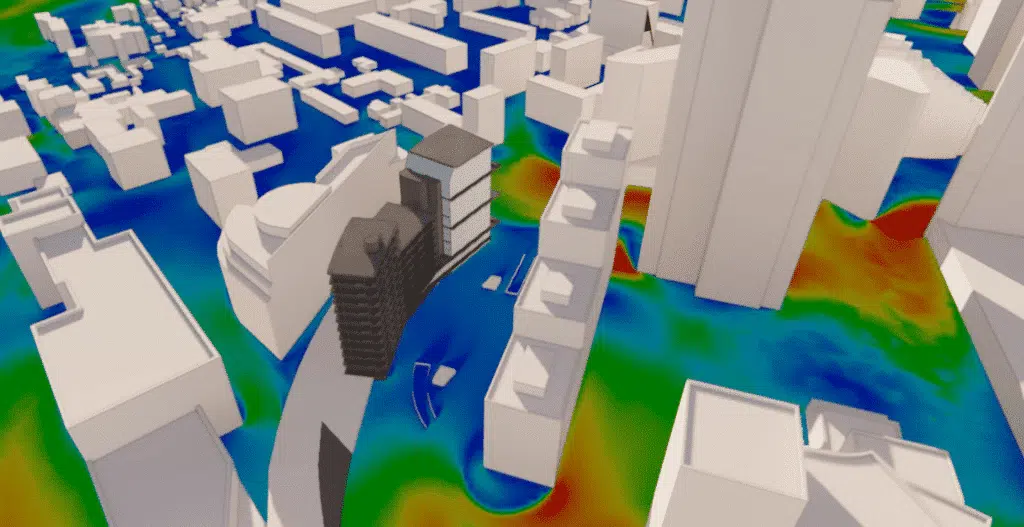
Wind in urban environments is a complex, dynamic phenomenon, strongly influenced by the density of buildings and the layout of streets. When it meets the façades, it collides, deflects around the street corners and accelerates in the narrow corridors, creating tunnel effects and unpredictable vortices. These air movements can generate localised microclimates, sometimes uncomfortable, even dangerous for pedestrians.
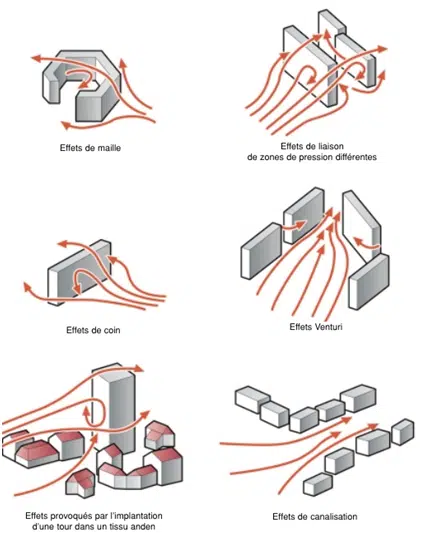
These phenomena can make some zones almost unusable: public squares turned into windy corridors, building entrances subject to sudden gusts, or unusable terraces. In some cases, the force of the wind can even threaten the integrity of glazed surfaces or lightweight structures.
CFD for innovative solutions
Our CFD studies accurately map the wind patterns and identify the at-risk zones. We then design bespoke solutions: windscreens, modification of the urban geometry, integration of vegetation. These interventions improve pedestrian comfort, reduce wind erosion and optimise the urban microclimate, while blending harmoniously into the landscape.
Safety against wind-related risks
Wind-comfort studies are not limited to the well-being aspect: they also play an essential role in preventing wind-related risks, in both urban and rural settings. By analysing the dynamics of the airflow around the infrastructure, we identify the zones where the force of the wind could pose a danger to the stability of cyclists, pedestrians, or even vehicles such as trucks.
On the basis of the identified risks, we design suitable preventive solutions: placement of strategic windbreaks, modification of the orientation of buildings, or installation of plant structures. Designed taking into account the long-term climate forecasts, these measures ensure lasting resilience against the vagaries of the wind.
EOLIOS, a strategic partner for your urban projects
At EOLIOS, our expertise in CFD applied to outdoor thermo-aeraulic comfort makes us much more than a simple service provider: we are a true strategic partner for designing resilient, sustainable and welcoming spaces. We support urban planners, architects and developers at every stage of their projects, from the initial analysis to the implementation of the recommendations. As each project is unique, we are committed to providing solutions perfectly suited to your specific needs.