The importance of ventilation and smoke-control systems
Ventilation and smoke-control systems are crucial to ensuring safety in underground car parks. Because of the concentration of exhaust gases and the risk of fire, it is essential to install air-treatment devices in order to prevent the risk of poisoning and to enable evacuation in an emergency.
The smoke-related risk
In underground car parks, it is essential to install toxic-gas extraction systems to ensure occupant safety. Because of the intensive use of motor vehicles in these confined spaces, the concentration of exhaust gases can reach levels that are dangerous to health. To prevent any risk of poisoning, it is mandatory to install suitable air-treatment devices, such as mechanical ventilation.
These systems renew the air, reducing concentrations of harmful pollutants. They must be sized so as to effectively counter the stagnation, even local, of harmful or flammable gases.
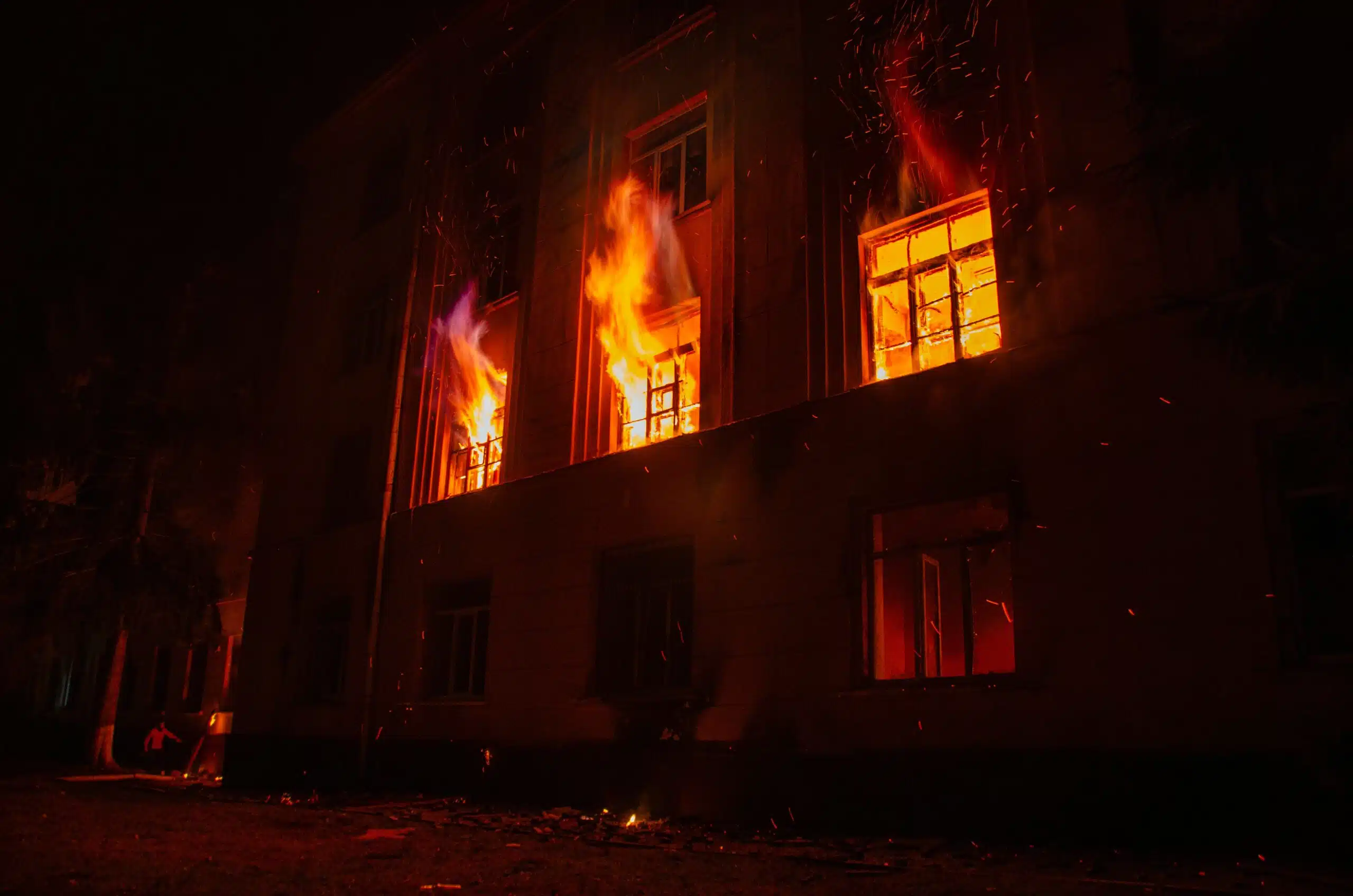
Fire safety is paramount in underground car parks. It is very difficult to maintain a smoke-free height above 2 metres there in the event of fire: ceiling heights are often low and vehicle fires release large amounts of heat and smoke. The approach therefore differs from other premises: the priority is to keep escape routes usable, preserving smoke stratification as much as possible. The system's main role is then to allow emergency services to locate the fire source and reach it in the best possible conditions. The spread of smoke beyond the affected level and compartment must be limited, and the accesses to the compartment kept smoke-free over their full height.
Installing these systems therefore meets a fundamental need to protect occupants against the risks of poisoning and asphyxiation in the event of fire, ensuring healthy air and the preservation of users' lives.
French regulation on smoke control
The decree of 25 June 1980
The main regulatory text governing smoke control in covered car parks is the amended decree of 25 June 1980, approving the general provisions of the safety regulation against fire and panic risks in public-access buildings (ERP). It classifies establishments by type, according to the nature of their operation, then into two groups:
ERP classification
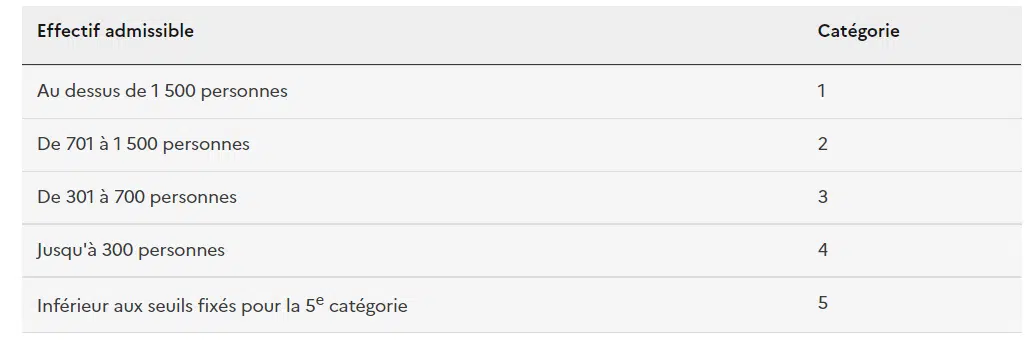
- Establishments of the 1st, 2nd, 3rd and 4th categories
- Establishments of the 5th category (public capacity below the thresholds set for each type)
This classification is linked to the reception capacity. Underground car parks are type PS establishments.
The regulation distinguishes two types of underground car park: residential car parks and car parks linked to ERP and to high-rise buildings (IGH), which must comply with specific rules. Residential car parks and those linked to a building governed by the Labour Code are not covered by these rules. The regulation applies to covered car parks able to accommodate more than 10 vehicles not exceeding 3.5 tonnes.
There is also the “Guide of recommendations on the provisions for fire safety in covered car parks open to the public”, drawn up by the French Directorate-General for Civil Security and Crisis Management (DGSCGC), which brings together all the rules applicable to this type of establishment.
General rules on smoke control
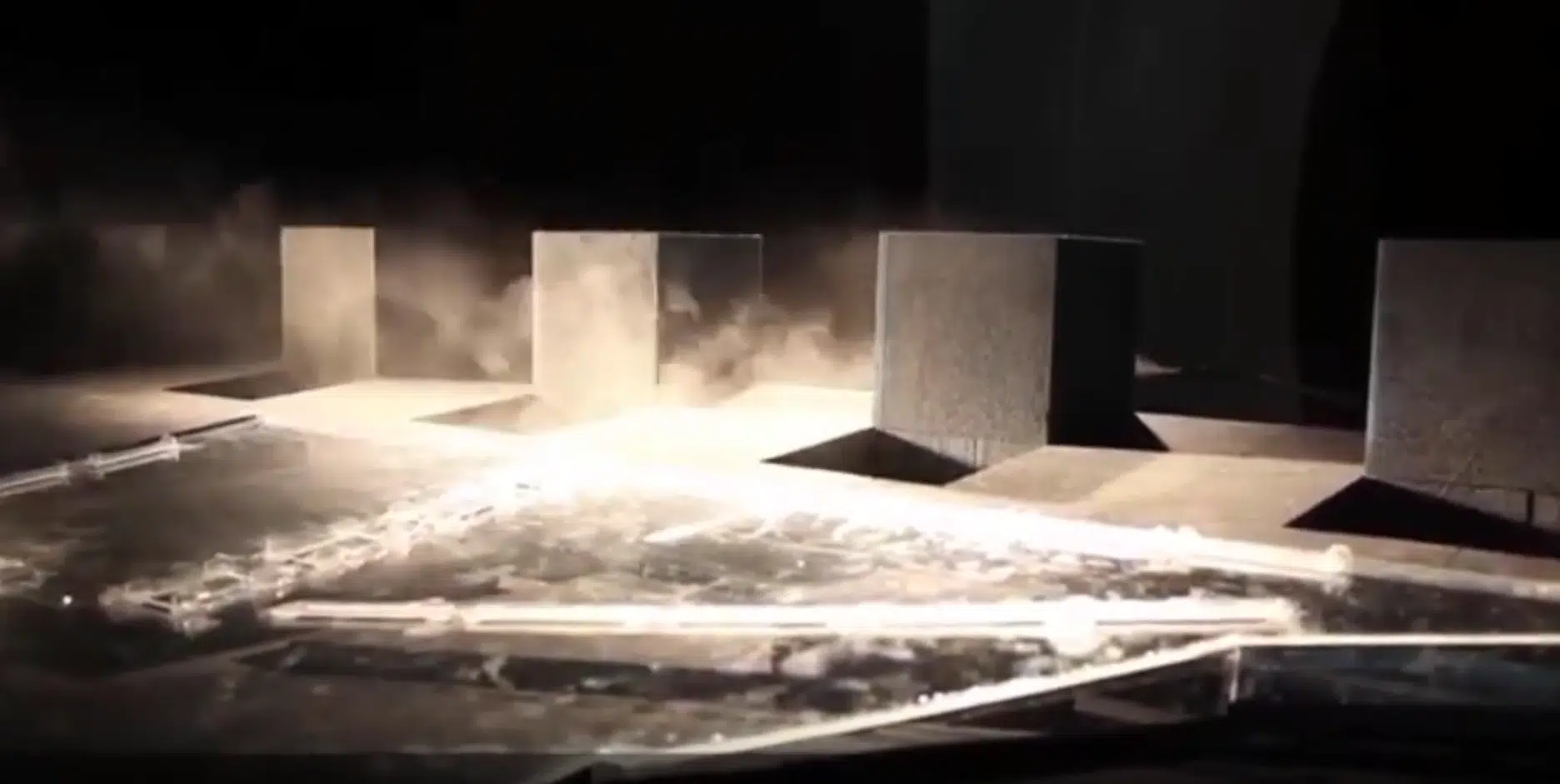
As explained earlier, it is very difficult to maintain a smoke-free height of more than 2 metres in underground car parks, owing to the low ceiling height and the large fire loads. This is why car-park smoke-control systems are based on the sweeping principle: the aim is to keep the smoke within a restricted zone. To do this, the air movement must be properly directed — from the air inlets to the exhausts — with a velocity between 0.5 and 1.5 m/s. The sweeping flow must also be oriented to limit smoke rising back up the access ramps.
The systems can be natural or mechanical. Natural smoke extraction is generally preferred in small residential car parks, whereas mechanical smoke extraction is often used in ERP and IGH car parks.
Rules common to every type of smoke control
- Air inlets in the lower part of the car park, to maintain smoke stratification.
- Extraction in the upper part, for direct extraction within the smoke layers.
- Inlets and extractions never blocked (by a vehicle, for example): a vehicle-free area around the vents may be required.
- Keeping vents away from access ramps to limit the flows exchanged between levels.
In addition, underground car parks are divided into compartments, which must not exceed an area of 3000 m². However, if the car park is fitted with a sprinkler system, this limit can be raised to 6000 m². This division limits the spread of flames and smoke, eases evacuation and prevents the fire from spreading to the whole car park. Finally, car parks must be equipped with safety lighting powered by an independent source (backup battery) to guide people towards the emergency exits in the event of a power failure.
Natural, mechanical smoke extraction and jet fans
Natural smoke extraction
Natural smoke extraction is permitted for underground car parks with a single level, located at the reference level. To comply, the fresh-air inlet and smoke-exhaust openings must have a minimum free area of 12 square decimetres per vehicle affected. These openings can take various forms: ventilation grilles, windows, hatches or dedicated openings.
This requirement aims to ensure a sufficient supply of fresh air to limit the spread of toxic smoke and to ease evacuation. It is important to stress that this minimum area of 12 dm² per vehicle must be met both for the fresh-air inlet openings and for the extraction openings: it is not a cumulative total, but an individual requirement for each of the two.
Mechanical smoke extraction
The mechanical smoke-extraction rules apply per compartment, to limit the spread of smoke. The air-extraction flow rate is calculated according to the number of spaces:
Regulatory flow rates
- 900 m³/h per vehicle and per compartment; reduced to 600 m³/h if the car park is fitted with sprinklers.
- Extraction systems with a fire resistance of 200 °C for 1 h.
- Air-supply flow rate = 0.75 × extraction flow rate (puts the affected volume under negative pressure).
- Supply velocities ≤ 5 m/s to maintain smoke stratification.
Jet fan systems play an important role: their ability to generate a directional airflow allows an effective sweeping of the smoke and helps maintain a breathable atmosphere for users in the event of fire.
Jet fans: an essential preliminary study
Jet fans are designed specifically for underground car parks and tunnels. Strategically installed on the walls or ceiling, they promote good air circulation and, thanks to their power, push the smoke towards the exhaust openings, helping to keep spaces free of toxic smoke.
Another advantage: their ability to reduce dead zones (where air circulates less well). By creating continuous air circulation, they improve the overall effectiveness of the smoke control. Their installation requires a thorough preliminary study taking into account the car park's characteristics: size, ceiling height and required air flow rate.
Smoke-control engineering as a sizing tool
Modelling the scenarios
Smoke-control engineering aims to design effective systems to extract the smoke in the event of fire. An essential component of fire safety, smoke control limits the risk of asphyxiation, improves visibility and eases the intervention of emergency services. It relies on a rigorous technical and regulatory approach and requires a precise analysis of the building's characteristics (area, height, number of storeys, type of occupancy), which determine the requirements for air flow rates and number of exhausts.
Underground car parks are confined spaces that are particularly complex to clear of smoke and heavily regulated: smoke-control engineering is especially well suited to them. It makes it possible to optimise the placement of extractions and inlets to ensure a proper sweeping of the entire compartment and to minimise dead zones. Installing jet fans may prove necessary; preliminary studies make it possible to position them optimally to maximise their effectiveness.
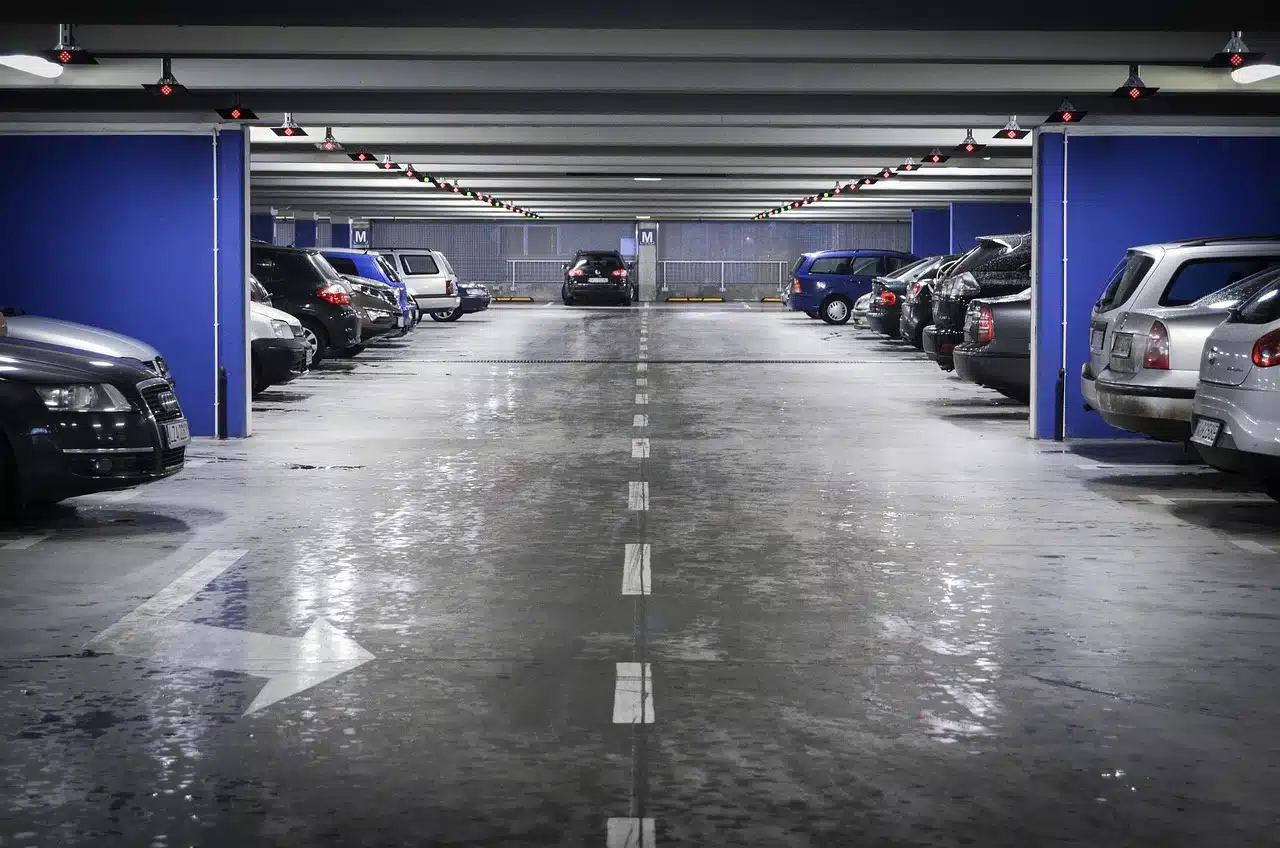
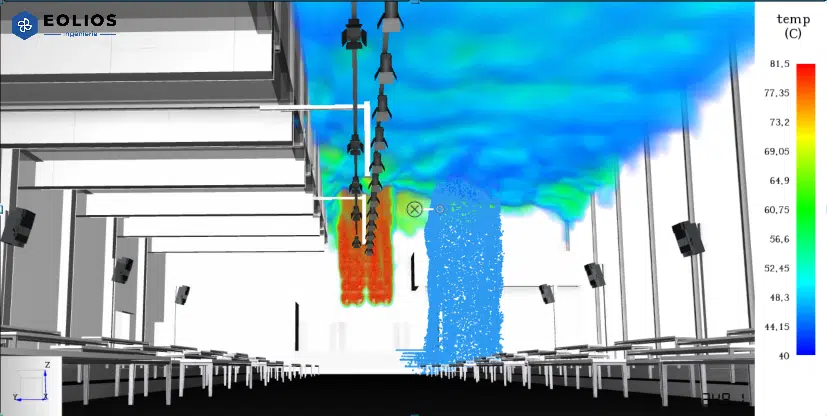
During a fire risk assessment, several scenarios are identified as the most likely. One may model a car fire start on the lower levels: vehicle fires generate a large amount of heat and smoke, requiring a fast and effective evacuation. Another scenario is a fire start at an electric charging point: with the growing popularity of electric vehicles, it is essential to assess the impact on fire safety and to model the dispersion of the smoke.
Modelling these scenarios with simulation tools makes it possible to analyse the behaviour of the smoke, to determine the most appropriate escape routes and to optimise the design of the smoke-control systems — reinforcing occupant safety and allowing emergency services to intervene in the best possible conditions.
EOLIOS: advanced CFD and smoke-control studies
EOLIOS Engineering's expertise in CFD modelling and studies (airflow and thermal), together with its skill in fire safety engineering, make it a partner of choice for smoke-control studies. Its experience makes it possible to meet the specific challenges of underground car parks: low ceiling height, presence of many vehicles and strict regulatory constraints. EOLIOS thus offers tailor-made solutions, ensuring compliance with the standards and the safety of occupants.
Sweeping flow, jet fans, regulatory flow rates, FDS simulation: our engineers size and justify your installation.