
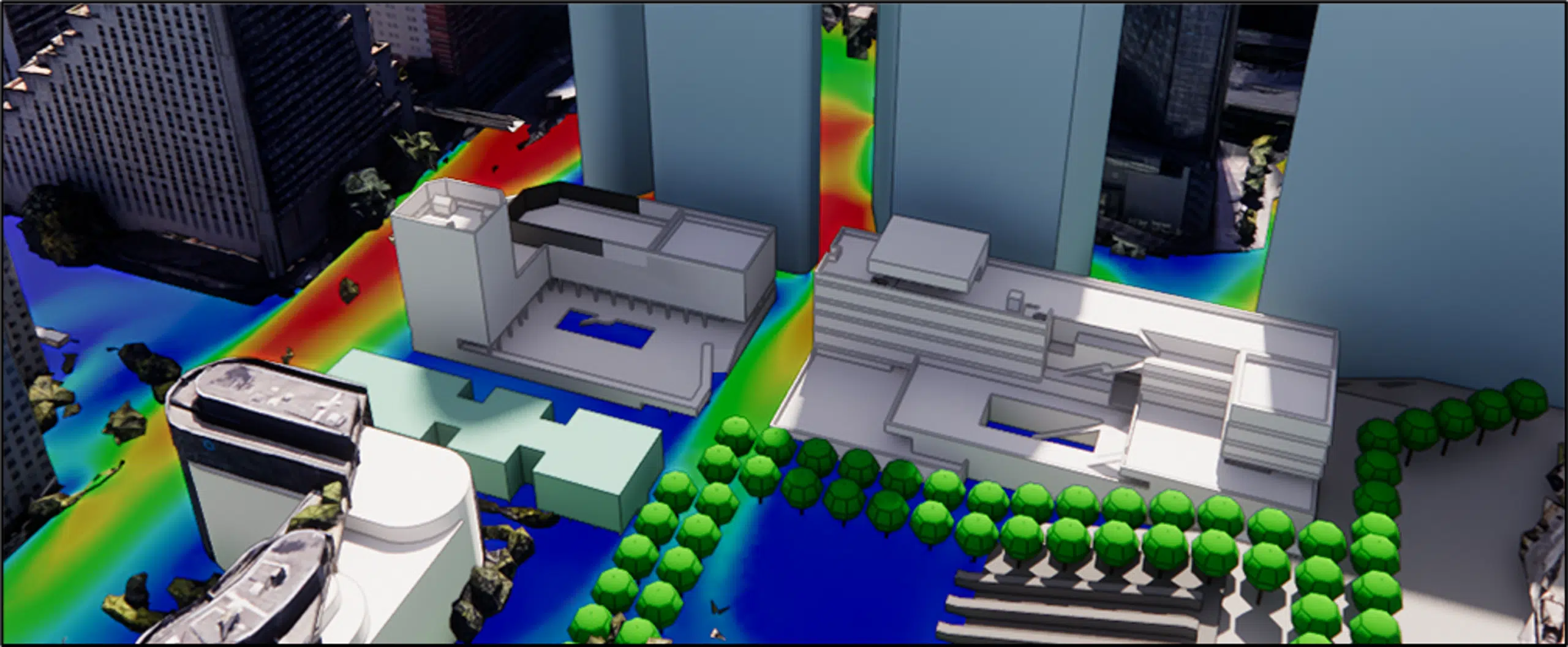
CFD wind-comfort study of a secondary school and a European school in the La Défense district, in Courbevoie.
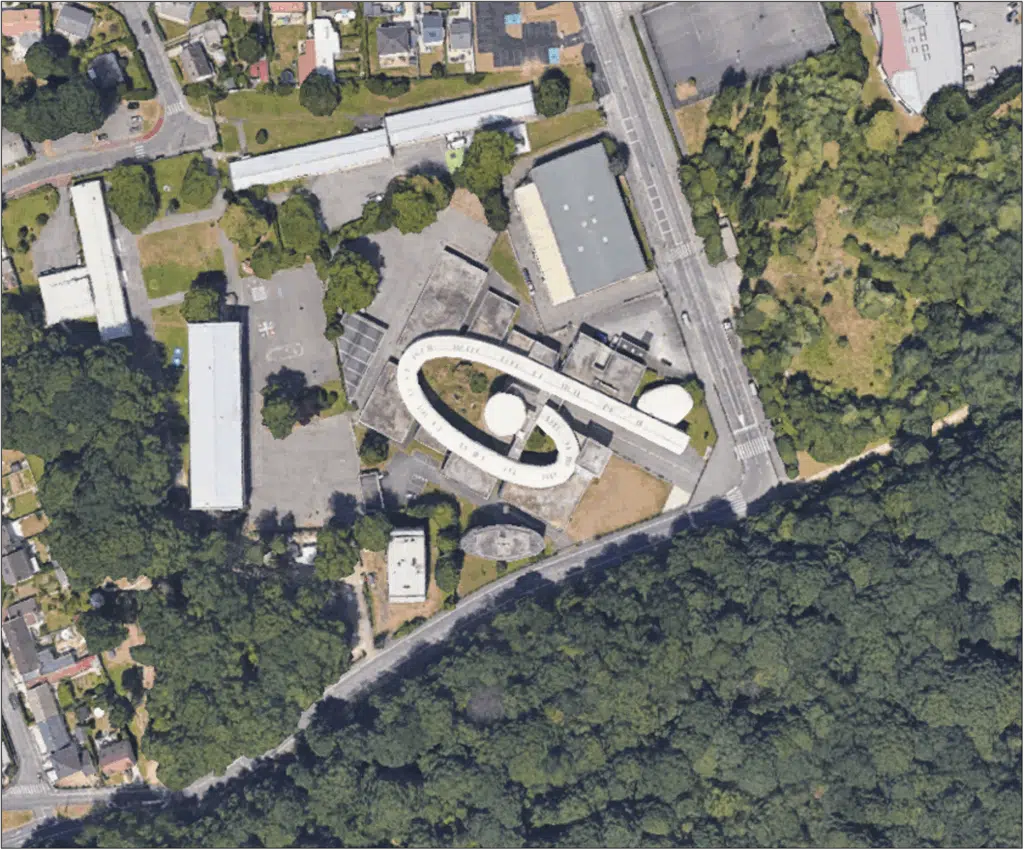
EOLIOS Ingénierie carried out a wind-comfort study of a middle school and a European school in the La Défense district, at Courbevoie. This project is part of the construction of these establishments within a very dense urban zone.
The study area, located in the Hauts-de-Seine, has many airflow obstacles such as high-rise buildings. It was therefore essential to take these elements into account in the study to understand their impact on the comfort of the occupants.
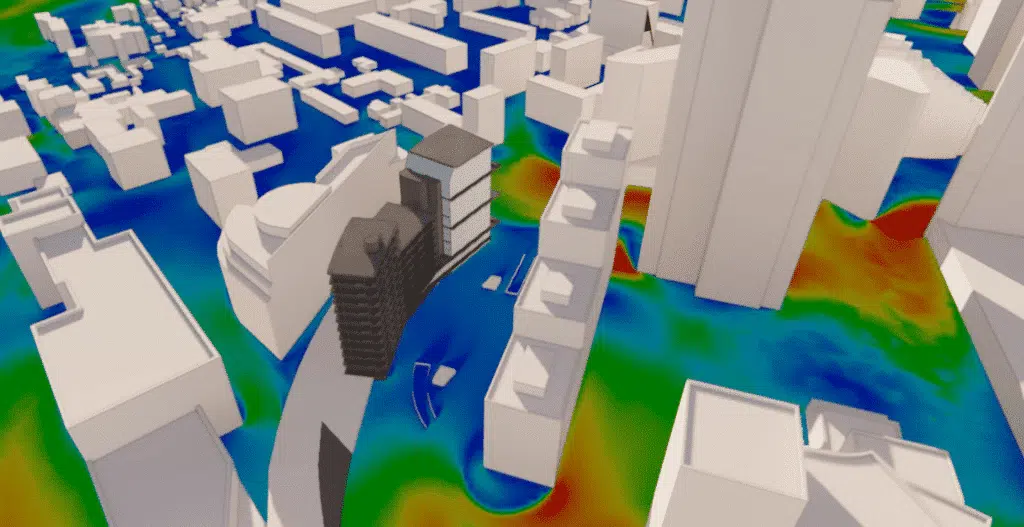
EOLIOS studies the project's wind comfort by specifically analysing the airflows on the future site, using the CFD simulations presented in the rest of the article.
The essentials — CFD study of the wind comfort of a middle school and a European school at Courbevoie (La Défense), in a very dense urban zone: wind profile according to Eurocode EN 1991-1-4, mapping of the speeds at 2 m above the ground, identification of the zones exposed to South-West winds, and solutions (windbreaks, planted landscaping) to secure the comfort of the users, in particular the children.
Wind comfort refers to the sense of well-being felt by people exposed to windy conditions. The aim is to find a balance between sufficient ventilation and excessive wind speeds, in order to create a pleasant and safe environment. The study aims to understand the wind characteristics — speed and direction — as well as the impact of the surrounding obstacles on the flows, to design optimal outdoor (or indoor) spaces.
The study of wind comfort is essential in the design of buildings, particularly in dense urban zones such as La Défense, at Courbevoie. Building in such environments requires understanding the impact of the obstacles (neighbouring buildings) on the flows and on the comfort of the people present on the site.
Assessing the wind potential of a site and studying wind comfort are two complementary aspects. Assessing the wind potential requires understanding the wind characteristics: analysing the frequency of the different speed classes and determining the availability of the wind makes it possible to assess the feasibility of a wind project.
The study of wind comfort, for its part, assesses the impact of the wind on the well-being and safety of the people present. One of the objectives of the EOLIOS study was to understand the daily wind characteristics over the project area. The data of a weather station representative of the region made it possible to determine the annual average speeds, the dominant directions, the gust periods and the frequencies of speeds and directions.
For numerical wind-comfort studies, it is essential to define the boundary conditions precisely: delimit the simulation domain taking into account the geographic and urban features, specify the ground roughness, integrate the weather data, define the properties of the buildings and obstacles, and specify the air-outlet zones. Taking into account the weather variability and precise details enables realistic simulations and more reliable results.
To apply the right boundary conditions, one must understand the wind-speed profile near the ground. The wind is described by the notion of atmospheric boundary layer, divided into three sub-layers. The outer layer (inertial sub-layer) is about one kilometre thick. Below it, the surface boundary layer (10 to 100 m) shows a strong gradient of speed and temperature. Finally, the rough sub-layer, a few metres thick, is affected by the surface obstacles.
At ground level, the wind is slowed by the roughness and the obstacles. Above the rough layer, in the undisturbed air layers of the geostrophic wind, the wind is no longer influenced by the earth's surface. Between the two, the speed evolves with altitude according to a logarithmic profile, called vertical wind shear.
Layer of air near the ground where the wind speed is slowed by the terrain roughness and the obstacles. It follows a logarithmic speed profile with altitude — the basis of the boundary conditions imposed in CFD simulation.
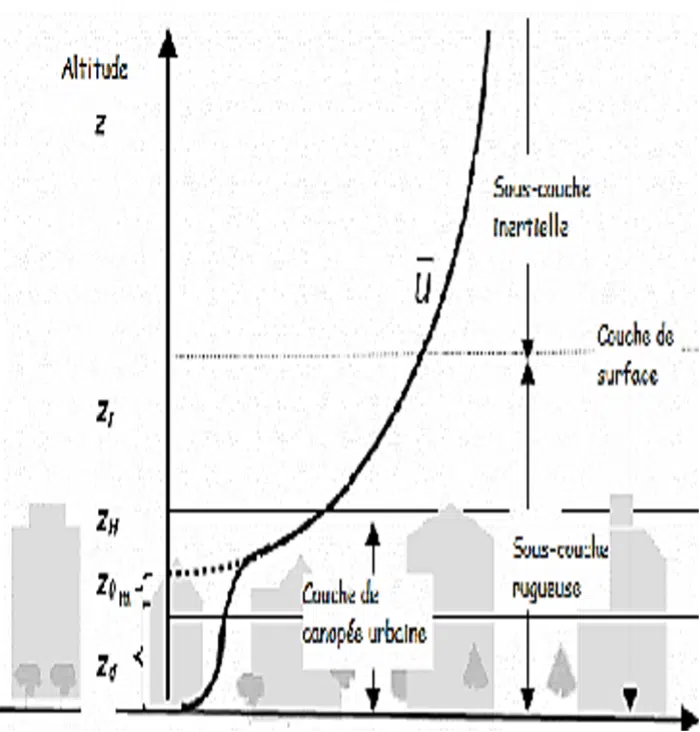
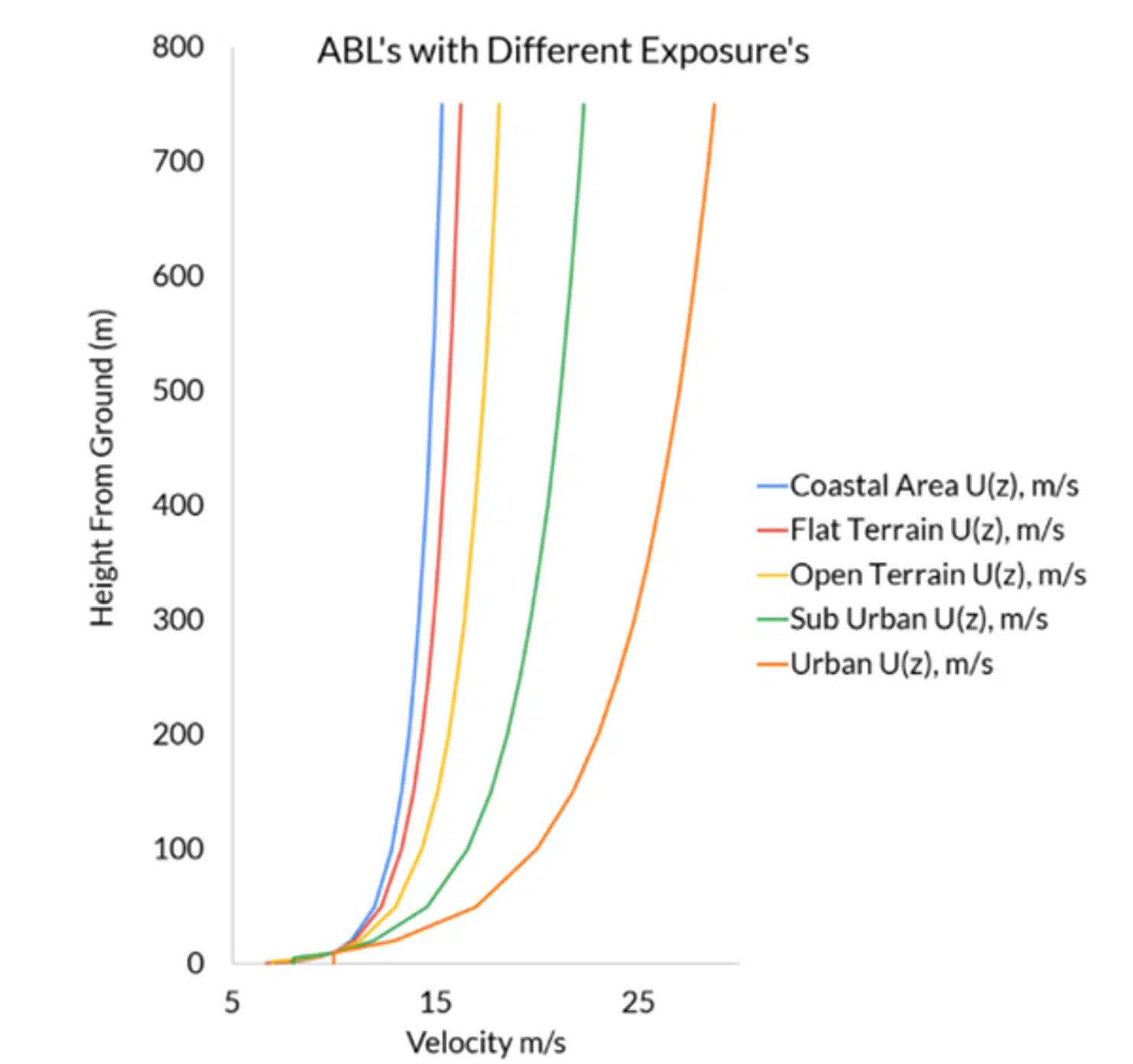
The terrain roughness plays a crucial role in the study of wind comfort. It is defined by all the obstacles — buildings, trees and other elements — that affect the wind flow at the surface. The higher the roughness, the more the wind is slowed. It influences the shape of the vertical speed profile, which increases with the distance from the ground. It is therefore important to take it into account to obtain the most realistic wind profile possible.
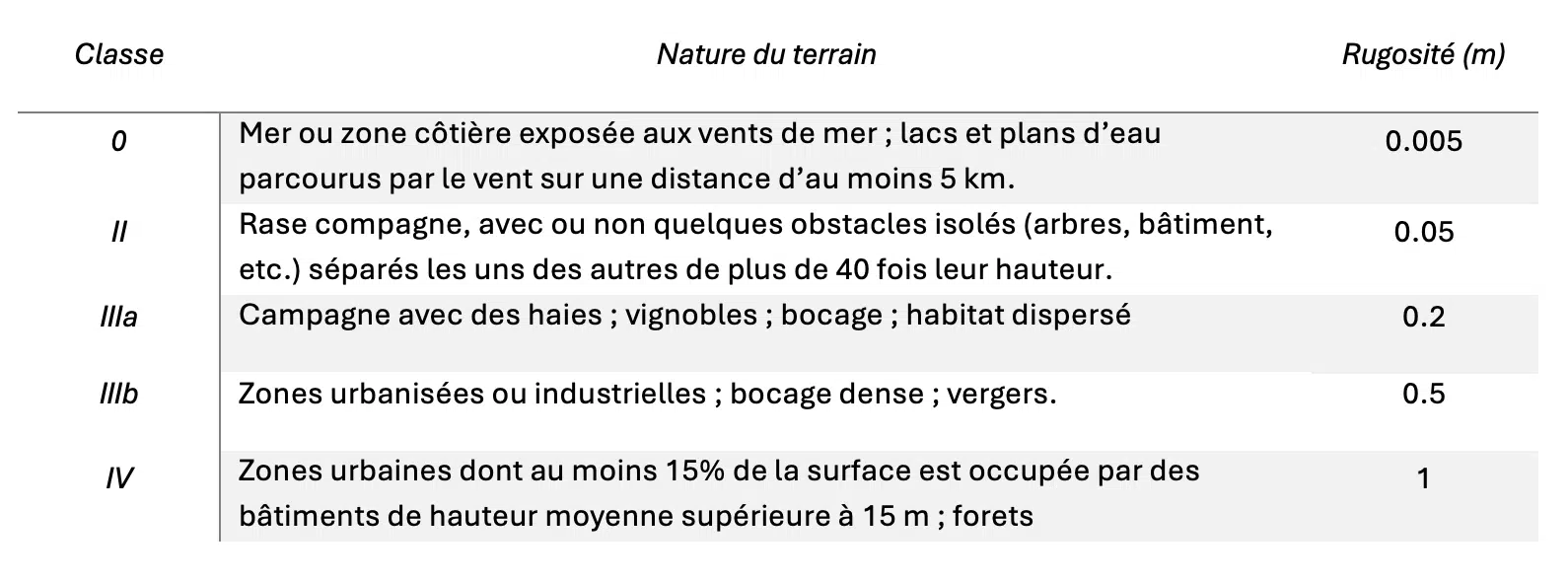
All the obstacles (buildings, trees, relief) that slow the wind near the ground. The higher the roughness, the more the wind is slowed; Eurocode 1 provides typical values according to the nature of the environment.
The annex of the "Wind Eurocode" proposes roughness values according to the nature of the environment.
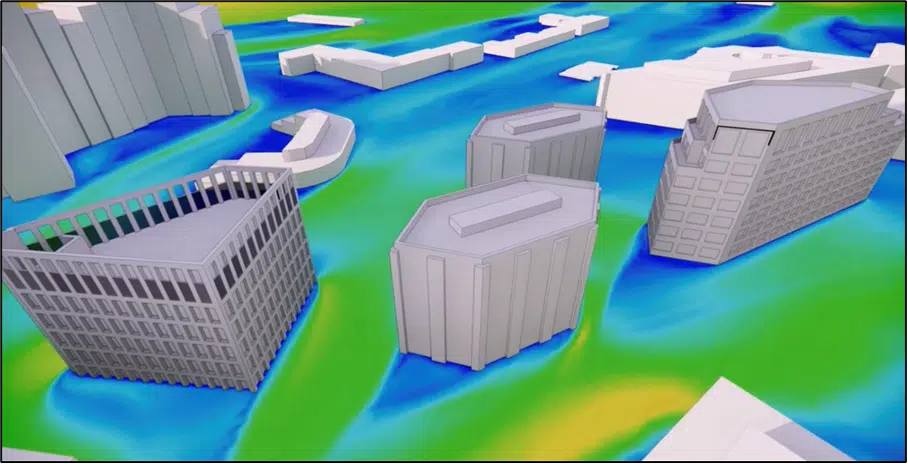
In heavily urbanised zones with a high concentration of buildings, the Venturi effect plays an important role: the presence of the buildings reduces the wind's passage section, which accelerates its flow. These overspeed zones must be taken into account when assessing the comfort and safety of the users.
When close buildings reduce the passage section of the wind, the air accelerates to keep its flow rate. This narrowing creates overspeed zones at pedestrian level, decisive for comfort and safety.
Wind studies play a crucial role in the safety of installations and structures. Understanding the wind characteristics — speed, direction and impact on the surrounding obstacles — makes it possible to assess the risks linked to windy conditions. By identifying the zones exposed to high speeds, appropriate safety measures can be put in place to protect people and property.
Wind studies also make it possible to design structures resistant to wind loads, reducing the risks of damage or failure. A thorough analysis from the design phase guarantees the safety of the occupants and sets appropriate construction standards. As part of this project, guaranteeing the safety of the occupants, in particular the children, is paramount.
Key takeaway — the site hosts a sensitive public (middle- and primary-school children). The study therefore aims for a reinforced safety margin on the play and circulation zones, with protections sized for the most impactful south-west winds.
EOLIOS Ingénierie modelled the wind flows near the project using a computational fluid dynamics (CFD) model. This model made it possible to solve the fundamental equations of fluid dynamics and obtain a precise simulation of the airflows, in order to study wind comfort.
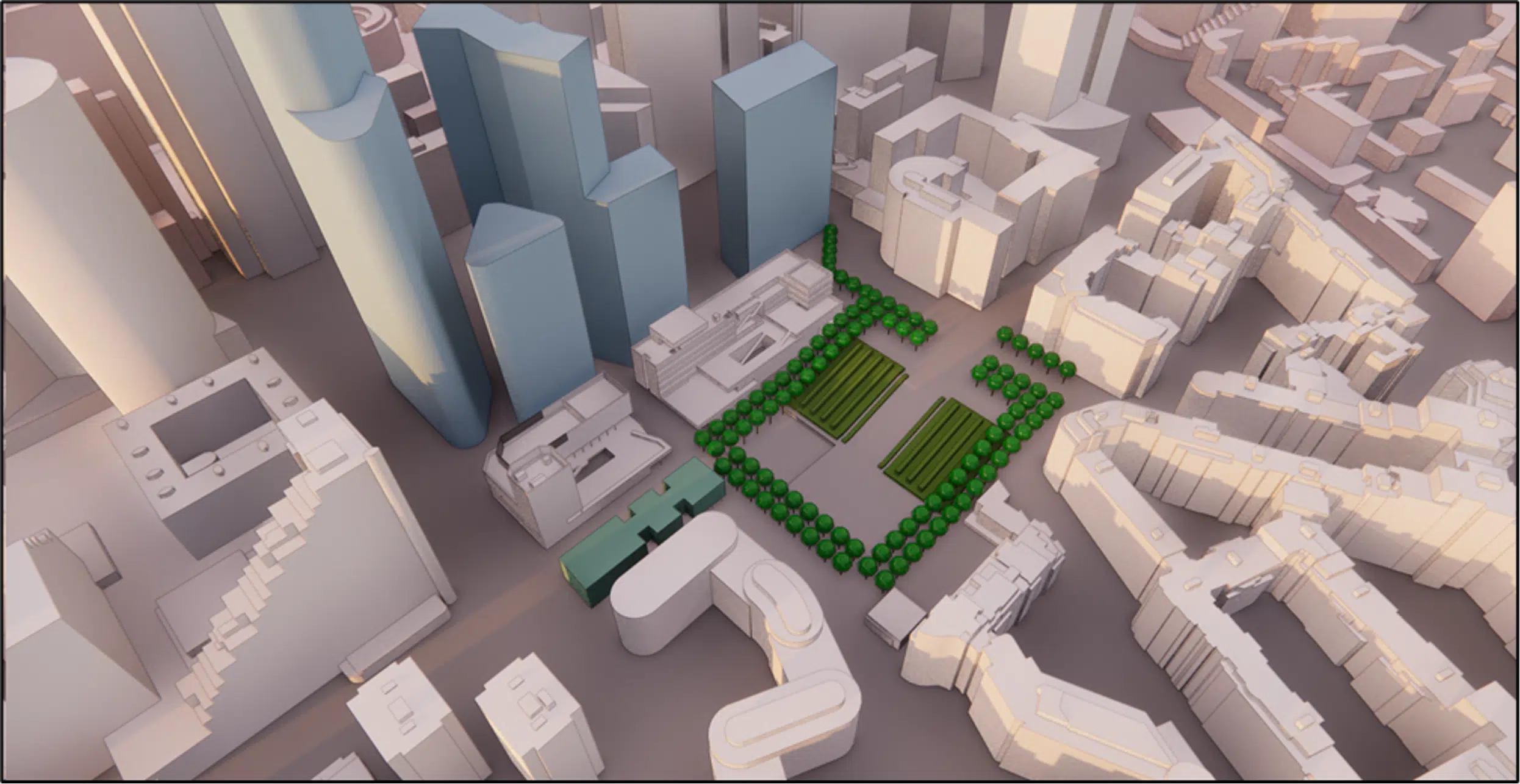
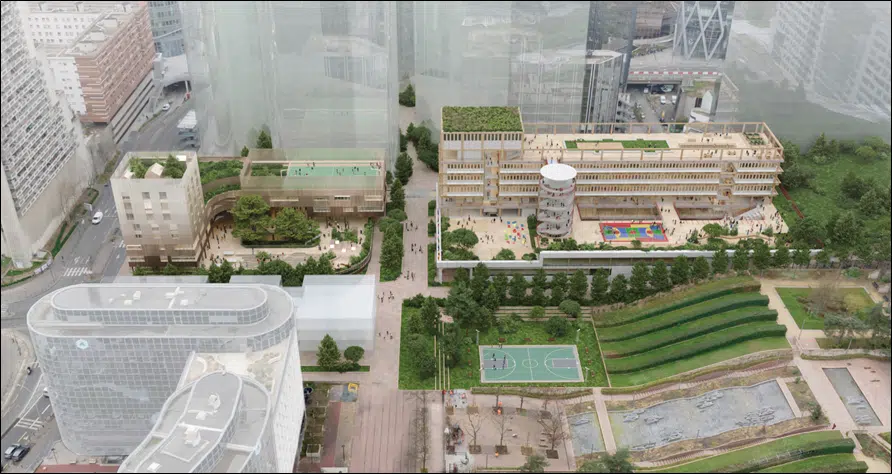
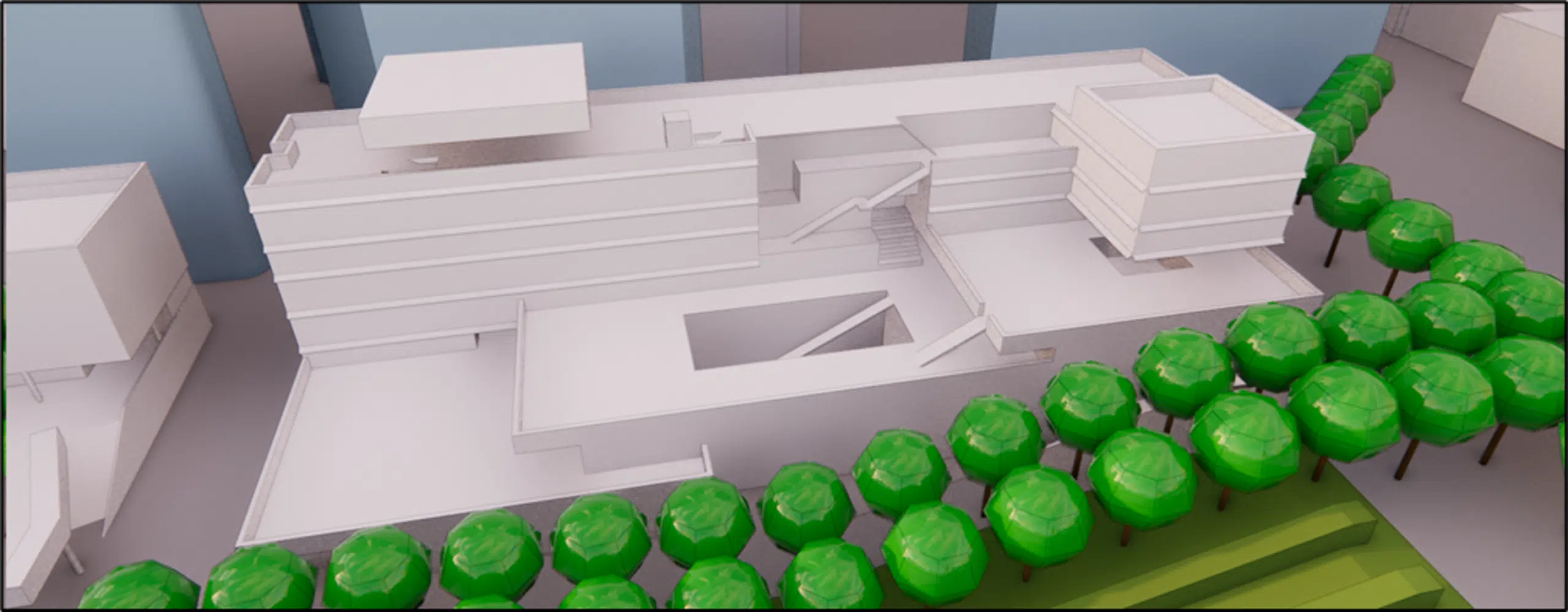
By faithfully reproducing the 3D geometry of the district — existing buildings and project buildings — EOLIOS obtained detailed results on wind comfort. This made it possible to quantify the impact of the project and to identify the most exposed zones. The results showed that some zones were strongly affected by the south-west winds.
Conversely, the terraces proved relatively protected from the dominant wind, and the north zone of the site also benefits from some protection thanks to the project buildings.
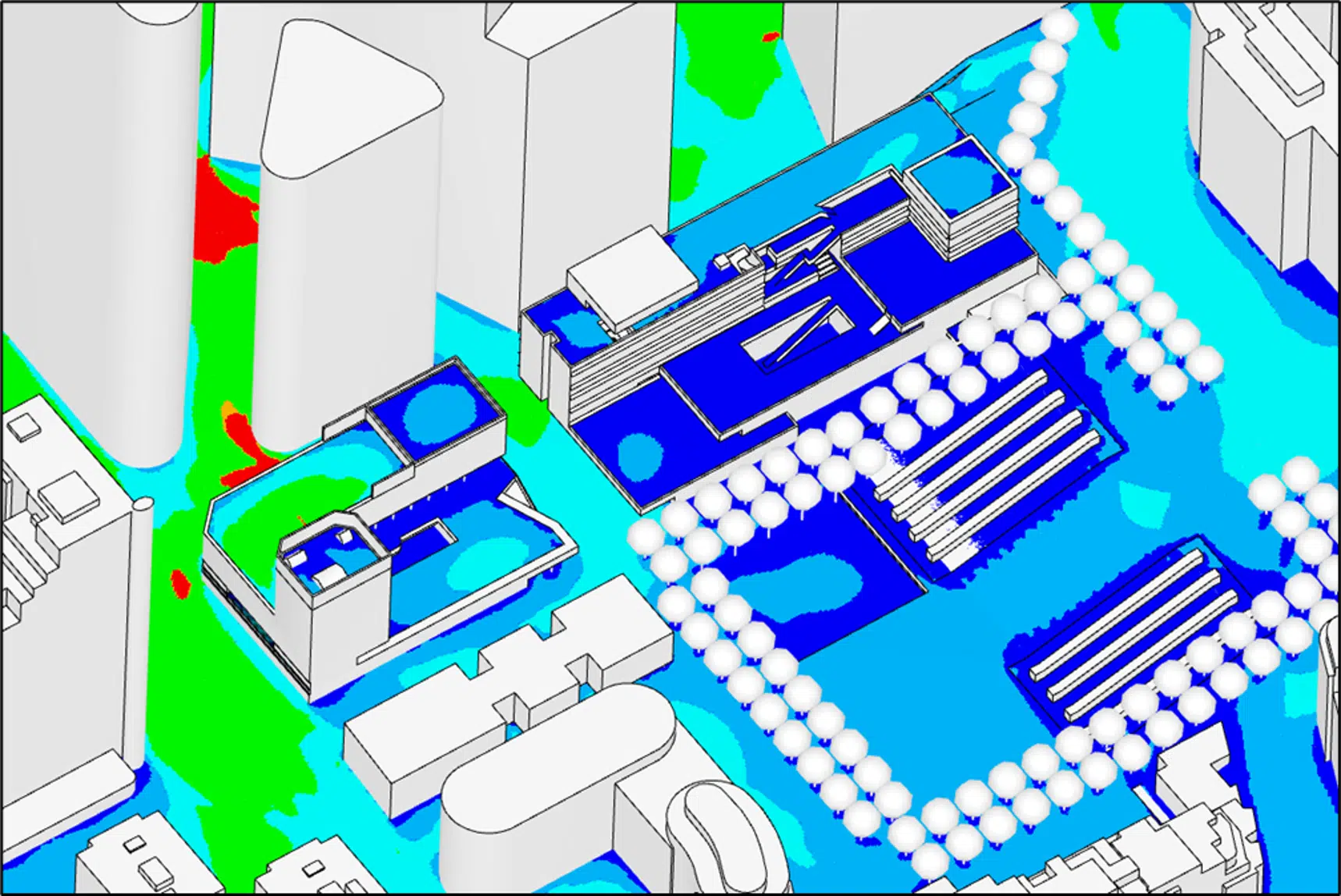
For the zones most exposed to south-west winds, EOLIOS recommended additional protections. In the form of windbreaks or landscaping, they reduce the wind speed and create more comfortable zones. By modifying the flows and minimising the turbulence, these solutions make outdoor activities safer and more pleasant.
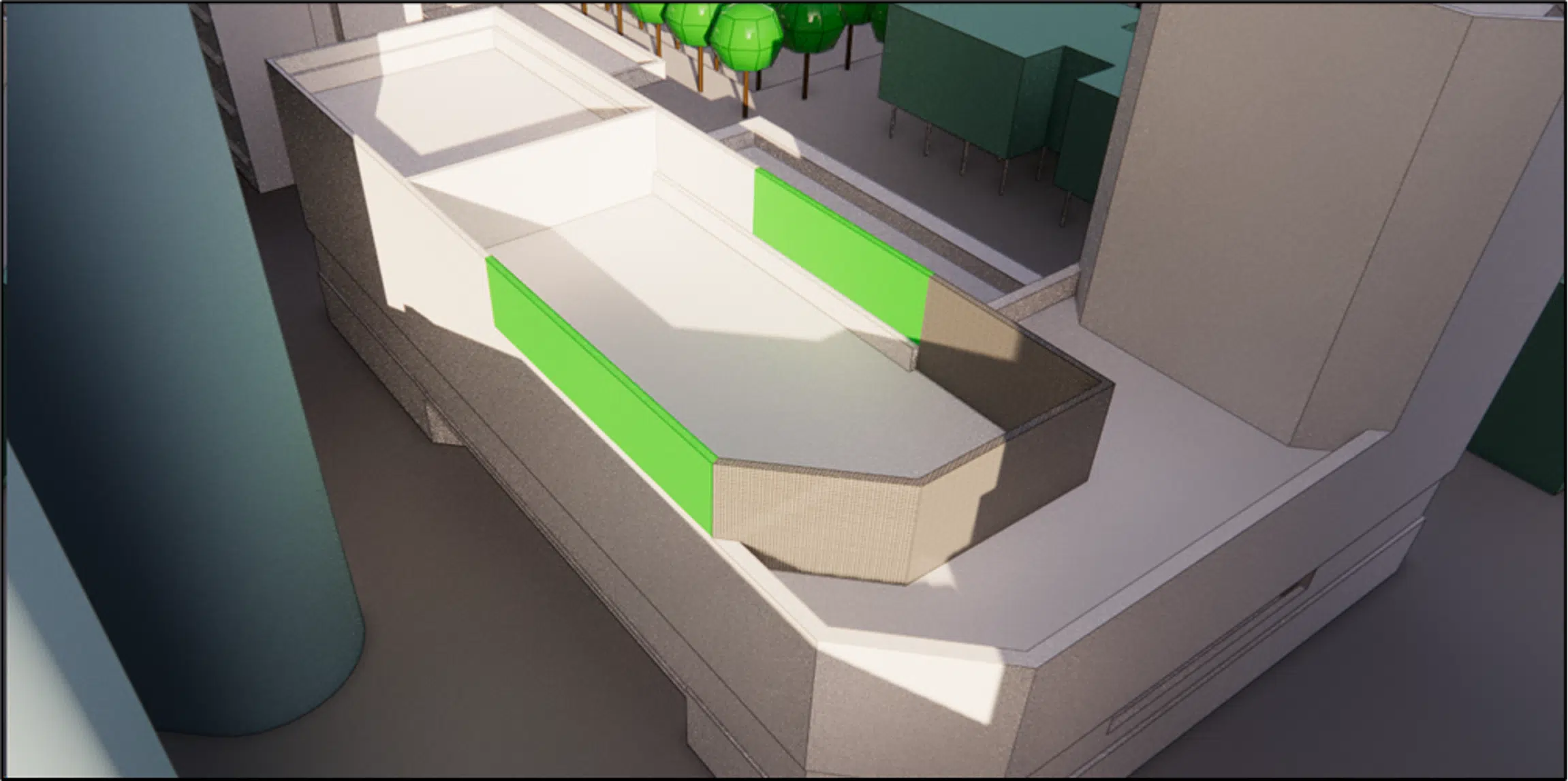
For the terraces and outdoor spaces exposed to the wind, EOLIOS Ingénierie recommended a suitable design: use of walls to create protected zones and planted spaces forming a natural barrier. These arrangements create environments conducive to outdoor activities, even in sustained wind.
These solutions improve user comfort while optimising the use of the outdoor spaces around the project — more welcoming and attractive places. By taking into account the wind exposure and the ground roughness, and by proposing additional protections, EOLIOS guarantees pleasant and safe spaces, compliant with the requirements of the tender specifications.
Expertise: the measurement and simulation of pedestrian comfort in urban environments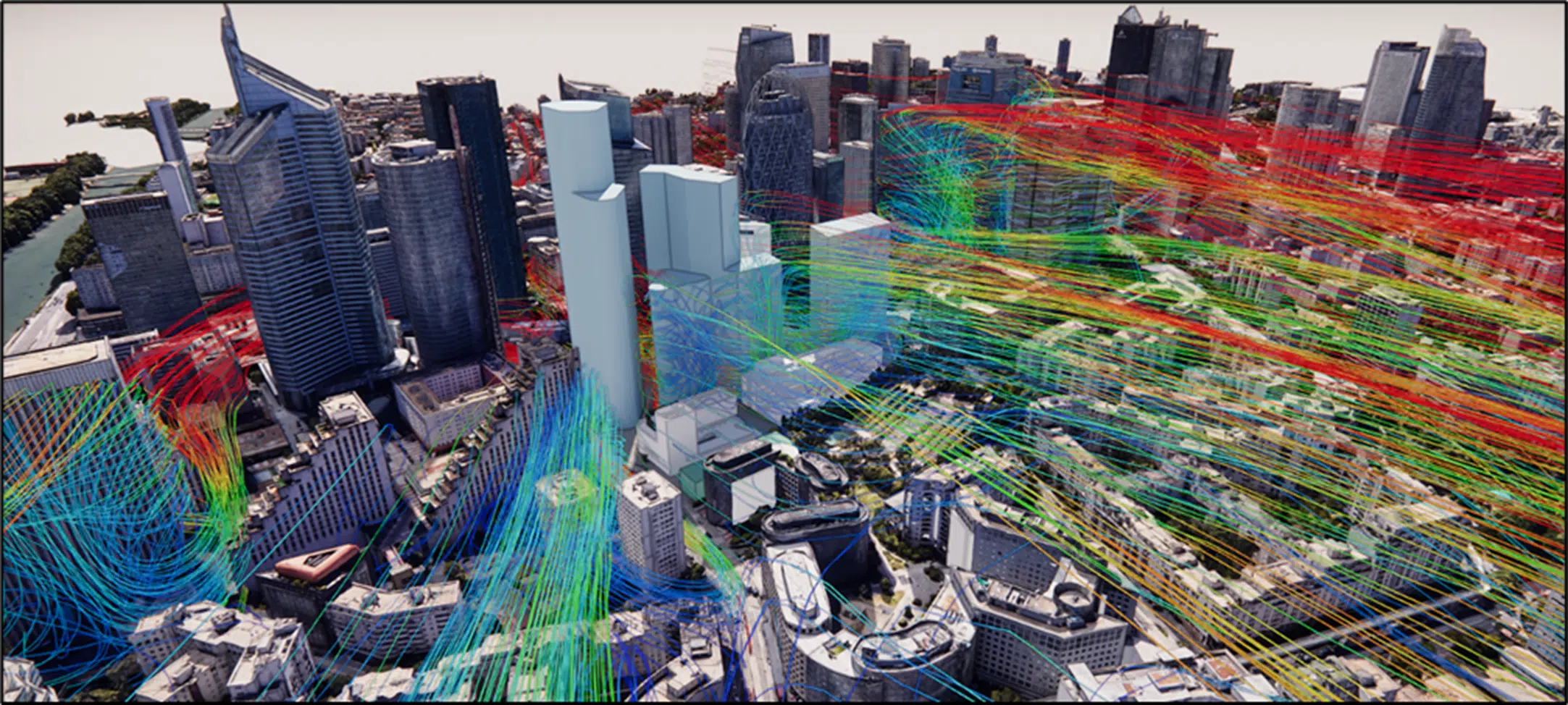
Wind comfort, Venturi effect and user safety around a school project at La Défense.
It analyses the speed and direction of the wind and the influence of the neighbouring buildings on the flows, to design pleasant and safe outdoor spaces. At Courbevoie, it was used to assess the comfort of a middle school and a European school. See our paper on what are the effects of wind in the city.
The site hosts a middle school and a European school: a sensitive public that justifies a reinforced safety margin. The study identifies the zones exposed to south-west winds and proposes protections to make them safe.
When close buildings reduce the wind's passage section, the air accelerates to keep its flow rate. This narrowing creates overspeed zones at pedestrian level, to be controlled for comfort and safety.
Windbreaks, walls and planted landscaping in the exposed zones. They slow the wind, reduce turbulence and create comfortable outdoor spaces, including on the terraces.
CFD reproduces the complete 3D geometry of the district, applies a standardised wind profile (Eurocode EN 1991-1-4) and maps the speeds at every point of the site, without a physical mock-up. See our paper on CFD, an alternative to wind-tunnel testing.
Explore our expertise, projects and technical papers to go further than the FAQ.
EOLIOS Ingénierie carried out a wind-comfort study of a school establishment in the La Défense district, at Courbevoie. The aim was to understand the impact of the surrounding obstacles on the comfort of the occupants, by analysing the wind characteristics (speed, direction), the effects of surface roughness and the Venturi effect, as well as the wind potential and the safety of the users.
 Solar energyWind impact — solar farm
 RooftopPalace rooftop — Casablanca
 SolarWind-erosion control — solar power plant
 Pedestrian comfortAirflow comfort — School
 RooftopWind comfort — Rooftop
 IGHWind impact — IGH tower — Caen
 Air qualityAir quality — Issy RER station
 SafetySecuring a commercial site — Wind risk
 IGHWind impacts — Tours Olympiades — Paris
 SportWind comfort — PSG training centre
 Wind potentialWind study — La Défense
 IGHTour Liberté — La Défense
 Air qualityFine-particle capture — Metro
 Wind potentialBalenciaga — Wind potential