
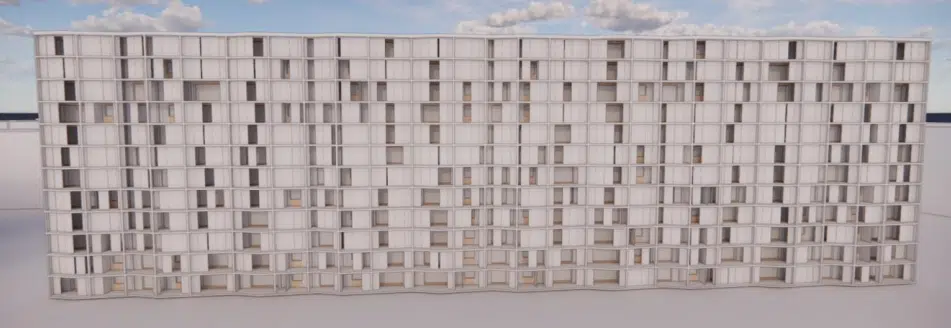
CFD study of wind comfort on the balconies of a residential block: when does the wind make them unusable, and which protections make them usable all year round?
Before building a block with private outdoor spaces such as balconies, the wind comfort of the occupants must be assessed and the potentially problematic zones identified. EOLIOS carried out this study by CFD simulation of the exterior airflow around the building.
The solution studied here is that of sliding panels, which do not fully close the balcony. Winds are colder and stronger in winter : without suitable protection the balconies then become unusable. The goal : to check the wind speed profile on the balconies, especially on the upper floors, then propose alternatives to optimise residents' comfort.
The essentials. CFD study of wind comfort on the balconies of a residential block : climatic analysis (wind roses) and flow simulation identify the uncomfortable balconies, discomfort from 1 m/s, then assess three protections (sliding panels, enclosed spaces, glazed railings). The sliding panels emerge as the best compromise : ventilation in summer, a greenhouse-effect winter garden in winter.
Balconies are by nature exposed to the wind. Depending on its magnitude, it can make them unusable, so a good comfort level must be ensured, at least in spring and summer. A balcony is deemed uncomfortable as soon as the air speed exceeds 1 m/s, a much lower threshold than in pedestrian areas because people are most often seated or still.
V < 0.2 m/s : air of an enclosed space · 0.2–0.5 : open window, slight draught · 0.4–1 : breeze · V > 1 : comparable to a running fan · V > 2 : unpleasant wind.
The CFD simulation reproduces the airflow phenomena induced by the particular geometry of the balconies by computing the airflow around the building. As the interior of the building has no influence on these exterior flows, only the balconies and the façade were modelled in detail.
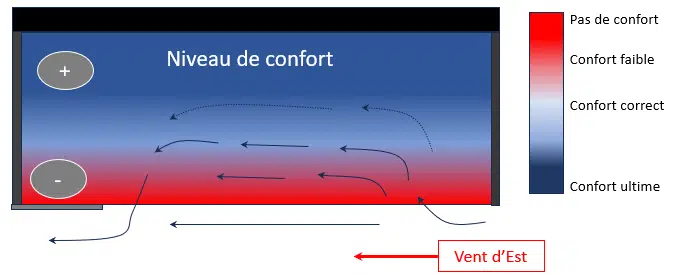
Depending on the wind's origin, recirculations appear at the rear of the building : part of the air that has reached the ground, slowed by friction, rises along the façade and rushes into certain balconies, generating discomfort even when the wind is not blowing towards the façade. This must be anticipated from the design stage.
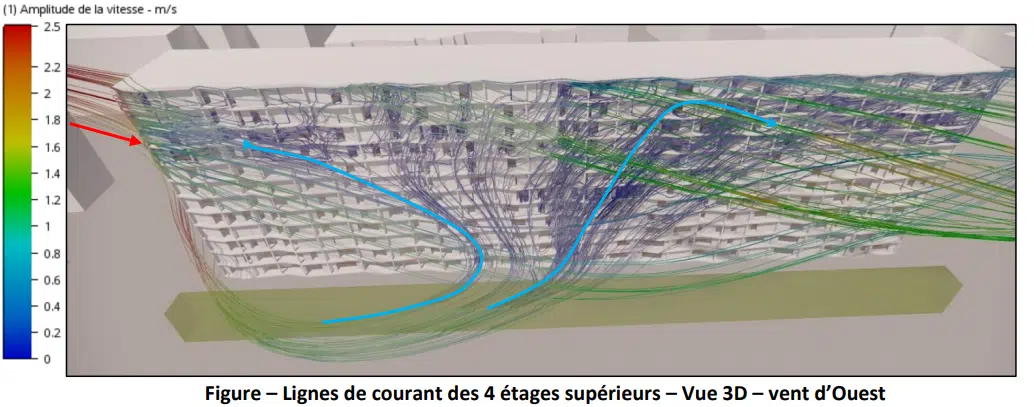
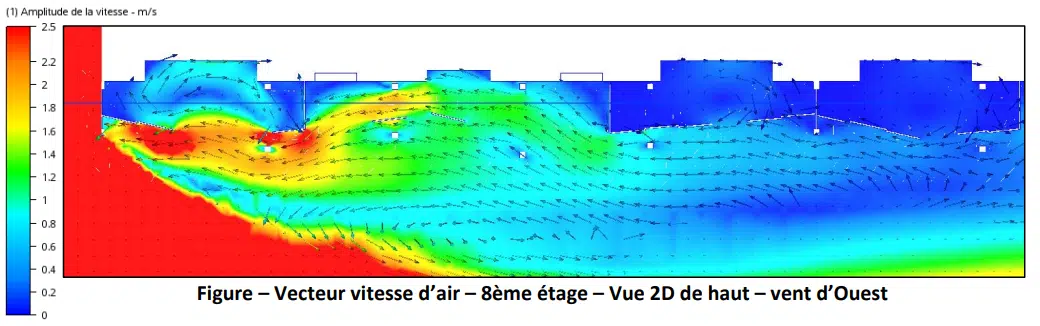
A local study of the air speeds, balcony by balcony, gives the velocity vectors at each point. It distinguishes the recirculation zones, of no real nuisance, from the high-speed and through-flow zones, which are the priority to treat.
Worth remembering. A balcony's discomfort threshold (1 m/s) is very low : people seek calm there, not just the absence of danger. Hence the value of modular protections that preserve summer ventilation while cutting the cold winter wind.
To protect residents from the wind, several devices are conceivable, artificial or plant wind-breaks, enclosed spaces, glazed railings. Three options were compared :
Sliding panels — mobile, they open in summer to ventilate and avoid overheating, and close in winter to create a greenhouse-effect winter garden, warming the balcony and reducing heating. The best compromise for this project.
Enclosed spaces — fully isolated from outside, they remove the wind but cause summer overheating and lose the feeling of being outdoors.
Glazed railings & wind-breaks — fixed screens, canopies or plant wind-break hedges, to position according to the exposed zones identified by the simulation.
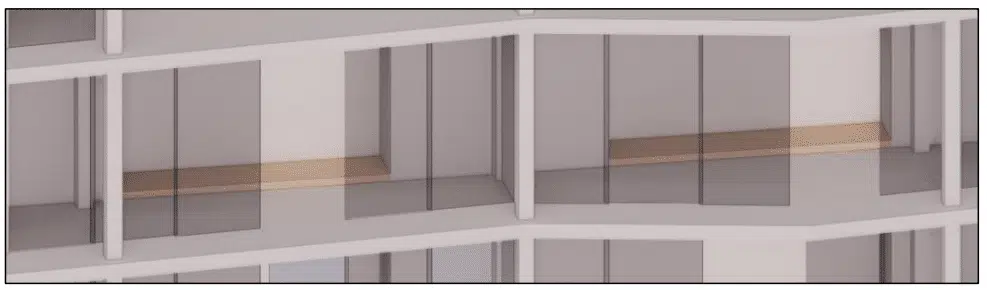
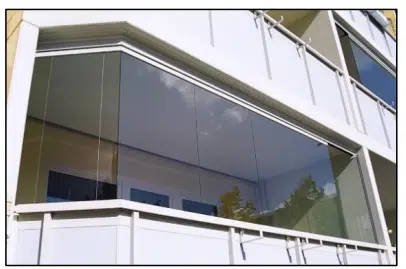
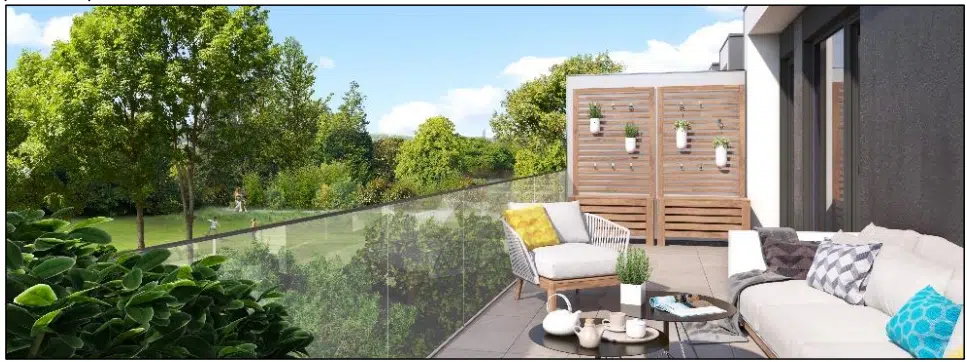
By treating in priority only the critical zones identified by the simulation, the comfort gain is maximised while controlling cost and architectural impact. Well designed, these fittings make the balconies fully usable, ventilated in summer, tempered in winter.
Expertise: measuring and simulating wind comfort in urban environmentsWind comfort on balconies, recirculations and modular protections.
Beyond about 1 m/s, the balcony is deemed uncomfortable, a much lower threshold than in pedestrian areas, because people are most often seated or still.
Depending on the wind's orientation, recirculations form at the rear of the building : air slowed at ground level rises along the façade and rushes into certain balconies. This mechanism is close to the one studied in the study of wind pressures.
Mobile, they open in summer to ventilate and avoid overheating, and close in winter to create a greenhouse-effect winter garden that warms the balcony and reduces heating.
Not necessarily : a fully enclosed space removes the wind but causes summer overheating and loses the outdoor feeling. Sliding panels offer a better compromise.
The interior of the building does not influence the exterior airflow at the balconies. Only the balconies and the façade are therefore modelled in detail, to focus precision where it matters.
Explore our expertise, projects and technical papers to go further than the FAQ.
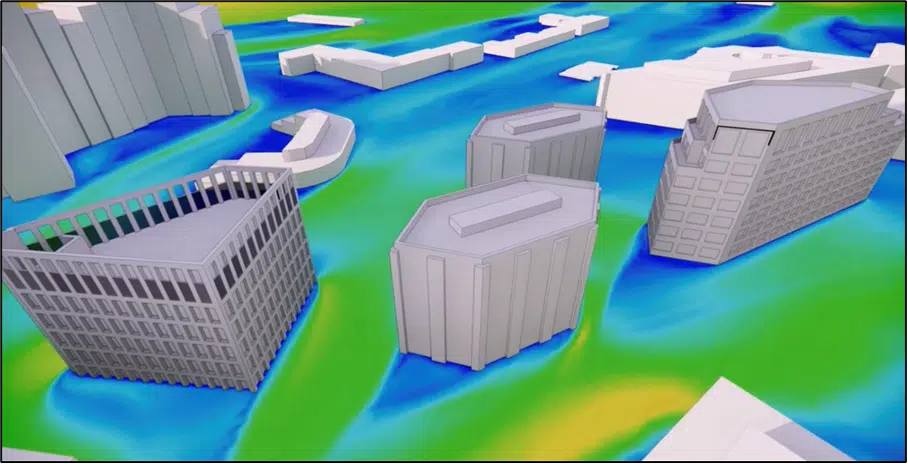
Air currents at an intermediate floor for a west wind: visualising the recirculations and the air rushing into the balconies of the residential block.
 Pedestrian comfortPedestrian comfort — La Défense
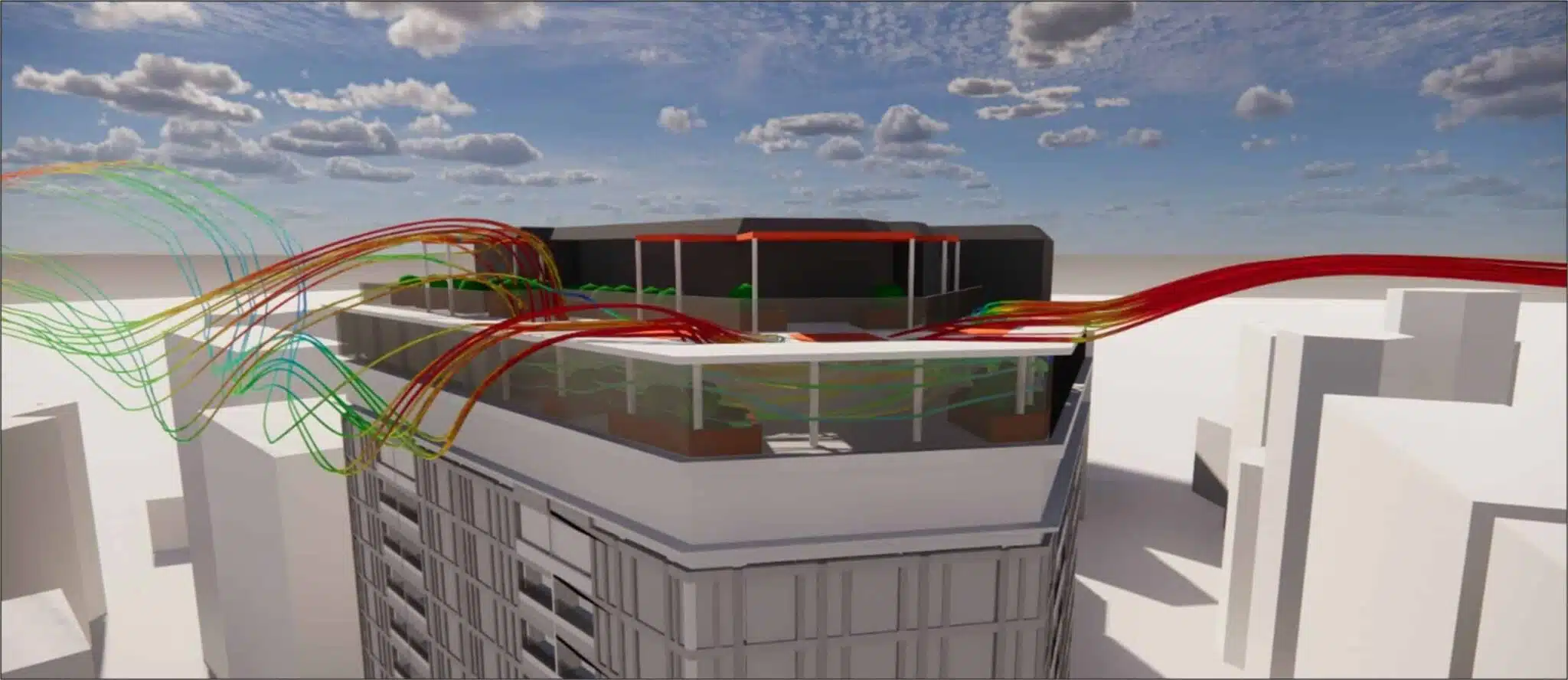 RooftopRooftop of a palace — Casablanca
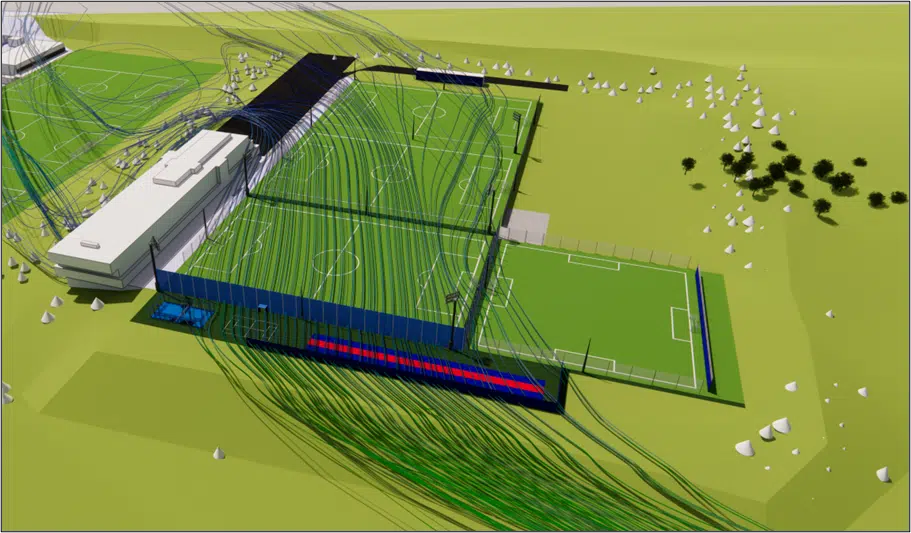 SportWind comfort — PSG training center
 Pedestrian comfortAeraulic comfort — Middle school
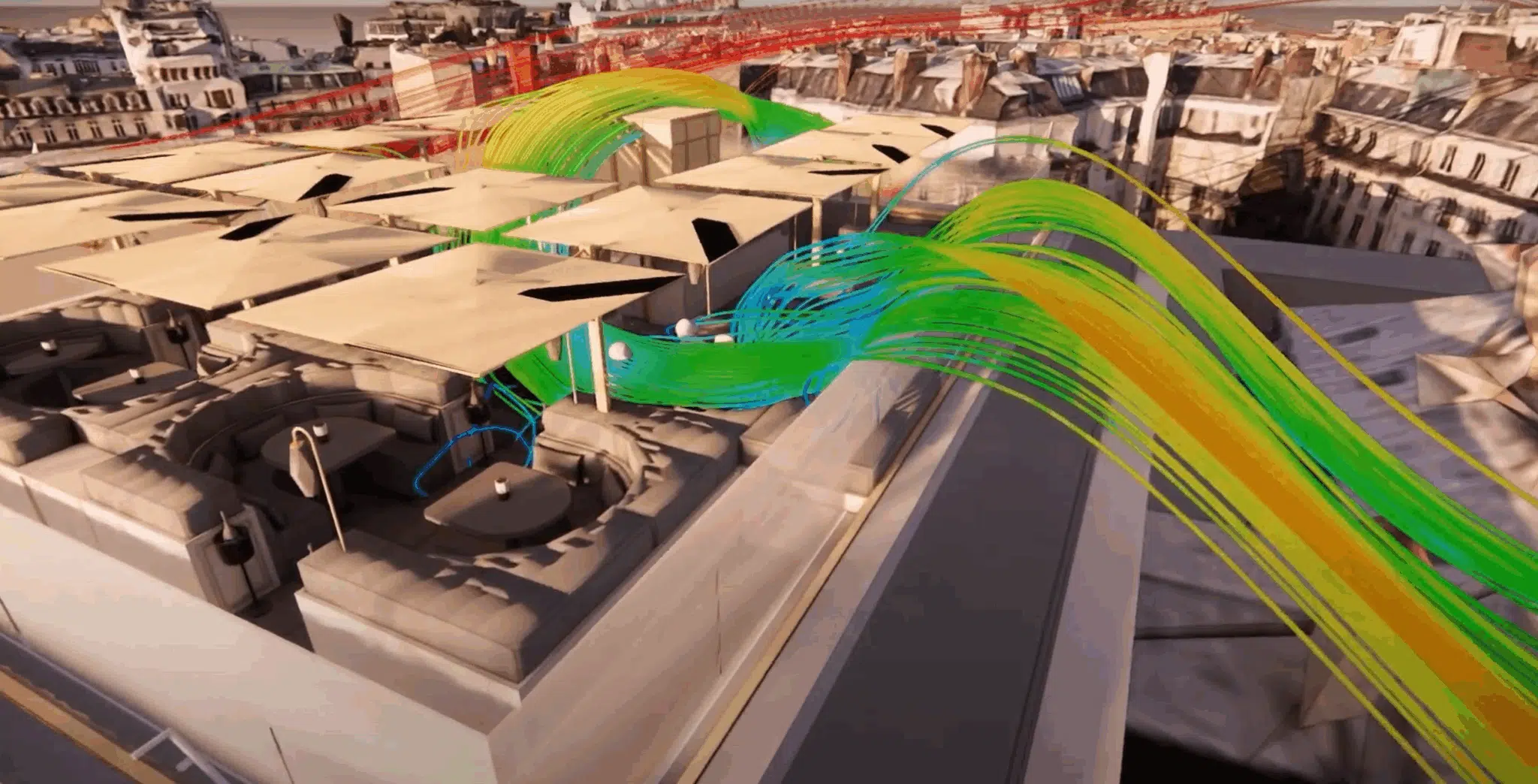 RooftopWind comfort — Rooftop
 SafetySecuring a commercial site — Wind risk
 High-riseWind impact — High-rise tower — Caen
 SolarWind impact — solar power plant
 Wind potentialWind study — La Défense
 High-riseTour Liberté — La Défense