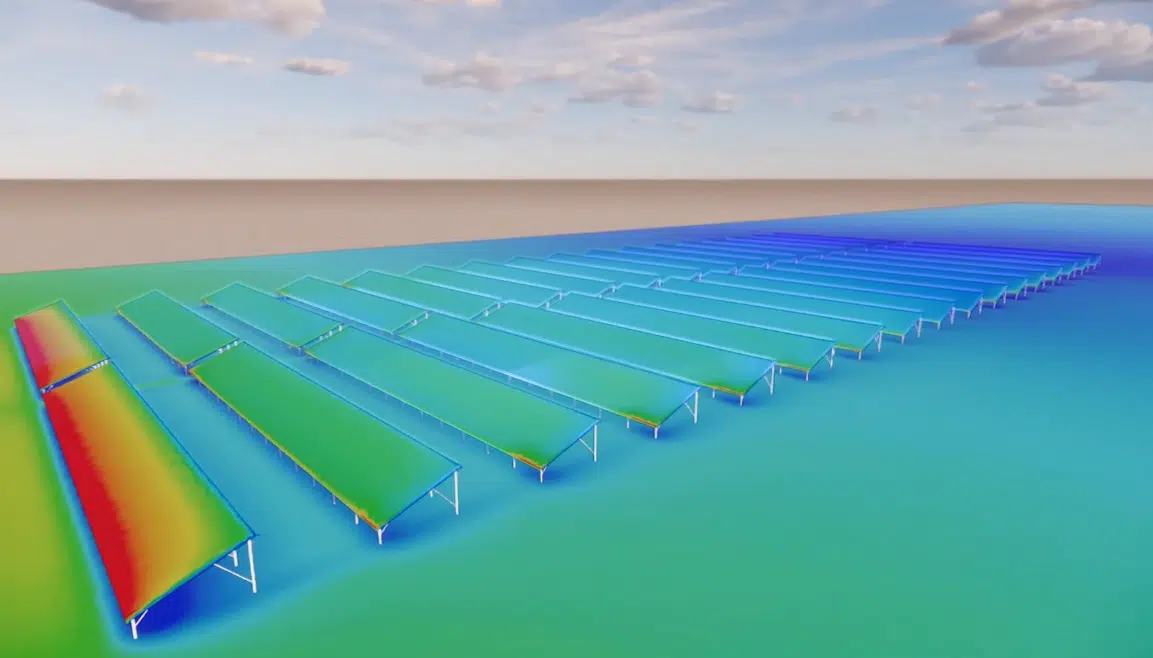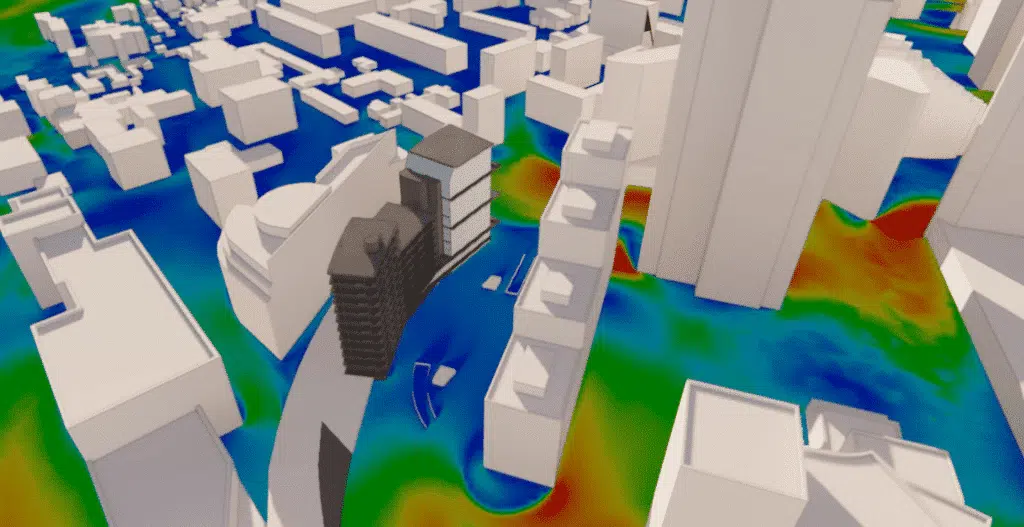
EOLIOS, unique know-how in Europe
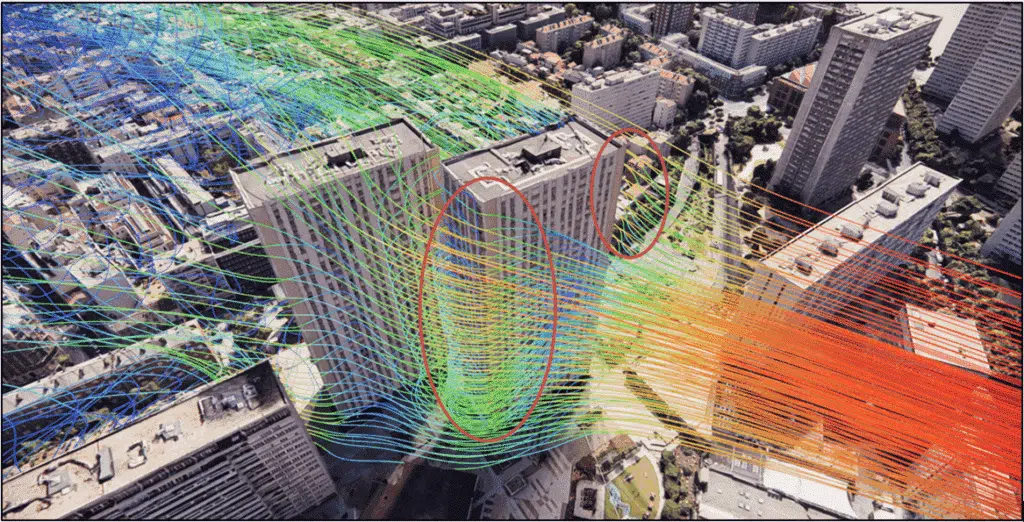
EOLIOS studies the actions of wind on buildings and the effects of wind in the city through CFD simulation — and brings that same expertise to your solar farms and renewable-energy projects, to guarantee they withstand extreme winds.
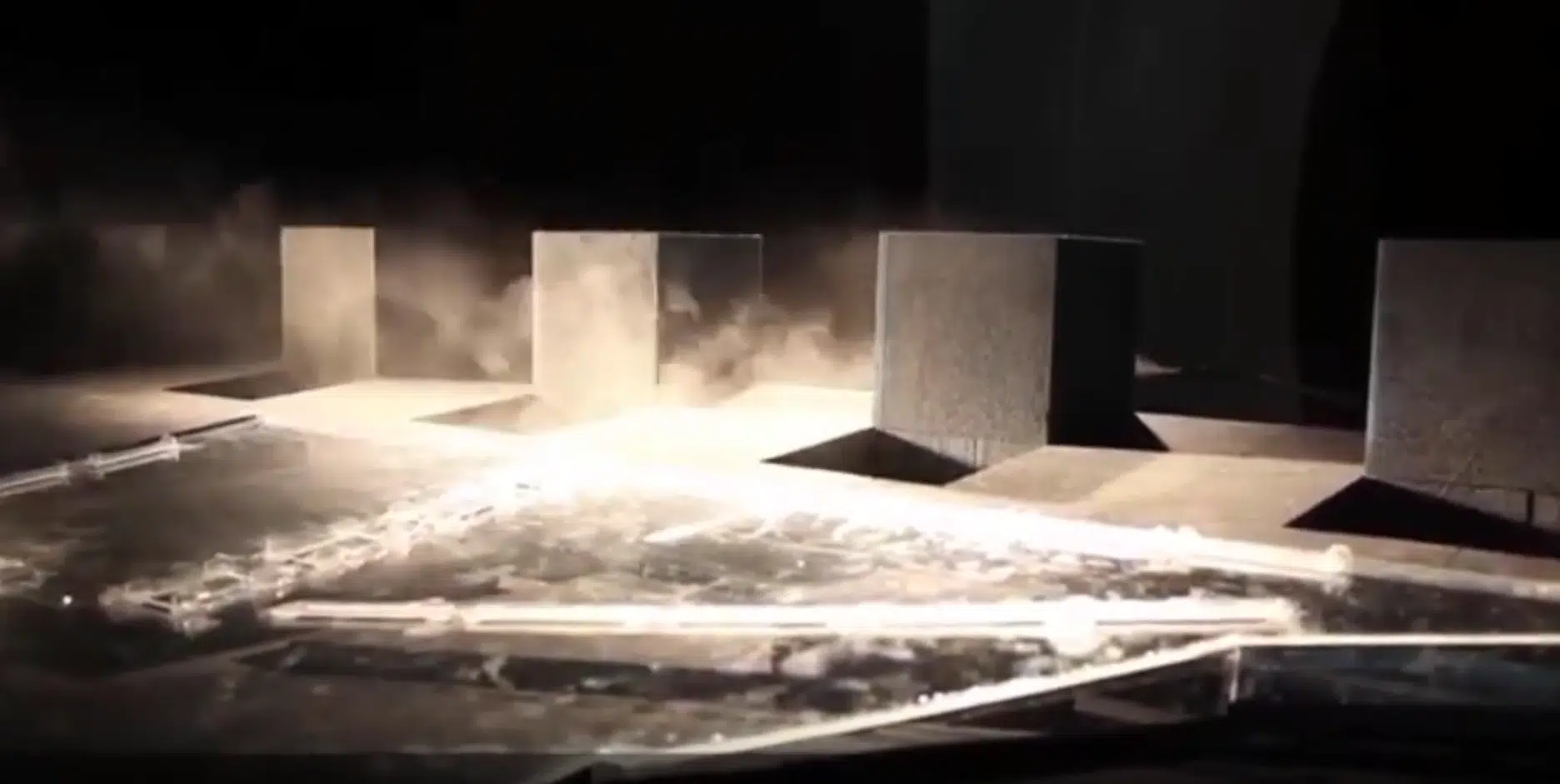
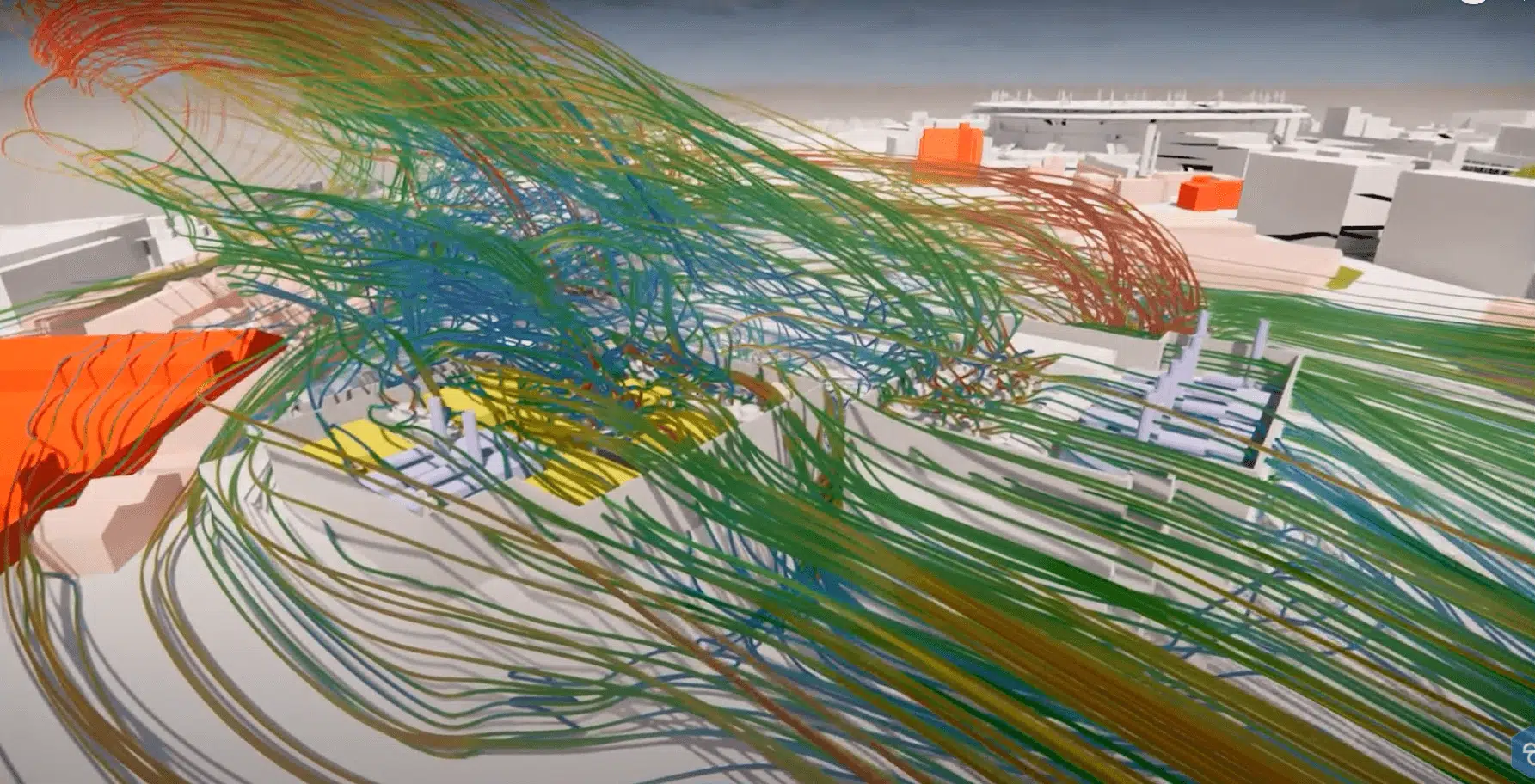
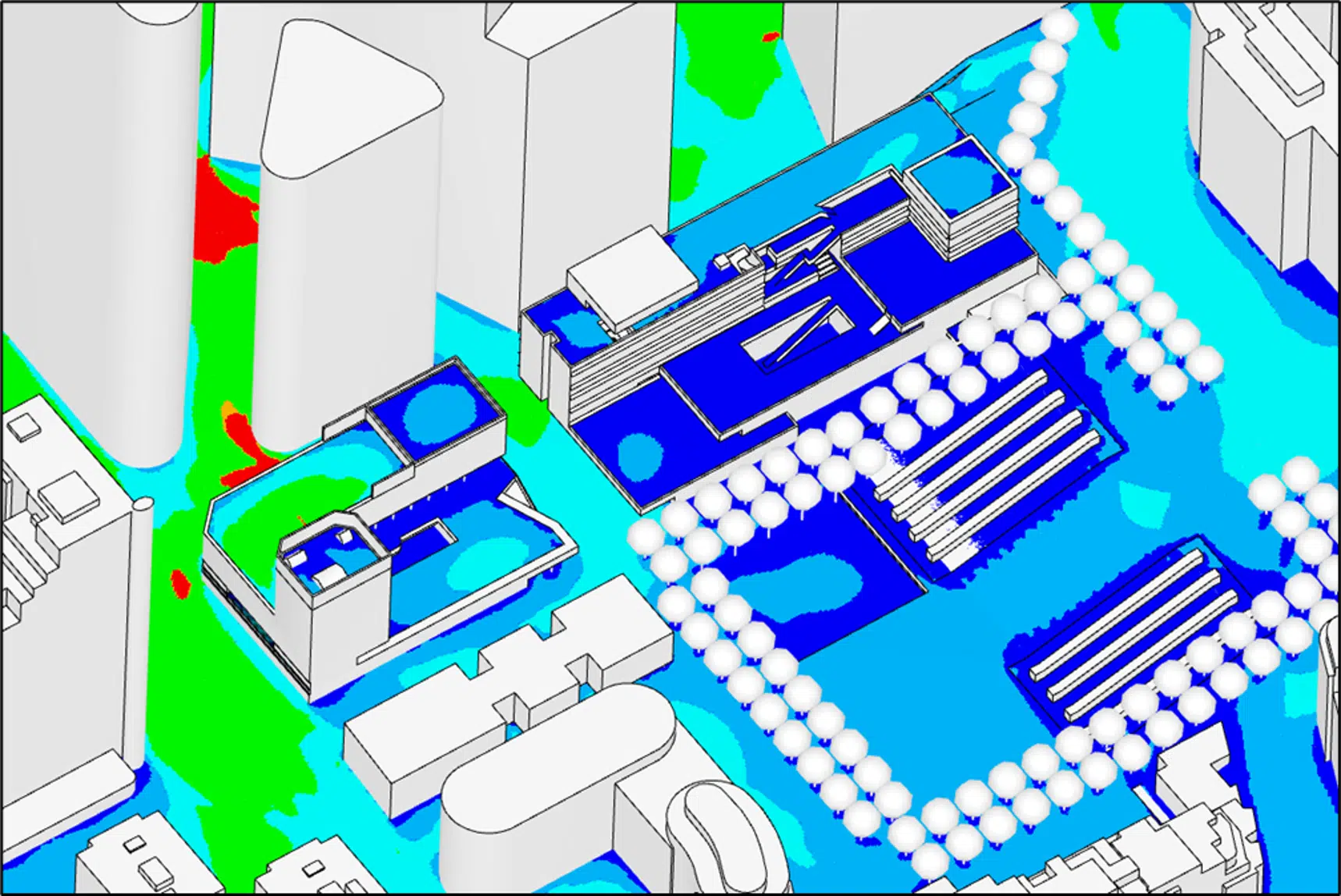
CFD (Computational Fluid Dynamics) is a simulation method that numerically solves the equations governing airflow. It makes it possible to visualise and quantify the velocities, pressures and wind loads at every point of a site — a true digital wind tunnel, without physical testing.
Wind study
- Analysis of gusts & prevailing winds
- Worst-case scenarios (W50)
Flow analysis
- Air movements on and around the modules
- Applied pressures, forces and torques
Sizing
- Checking the panels' limit values
- Technical solutions against tear-off
Structure of a photovoltaic farm
Photovoltaic farms consist of a large number of photovoltaic (PV) panels connected in series and in parallel to produce electricity. They can be installed in very varied locations, including car parks, plains and the sea. They must cope with very diverse weather conditions: rain, storms, extreme temperatures and above all wind gusts. This wind depends on the location of the farm: it will be stronger at sea, for example.
EOLIOS helps you size your photovoltaic farm's installations by studying the risk of PV panels tearing off in strong wind gusts.
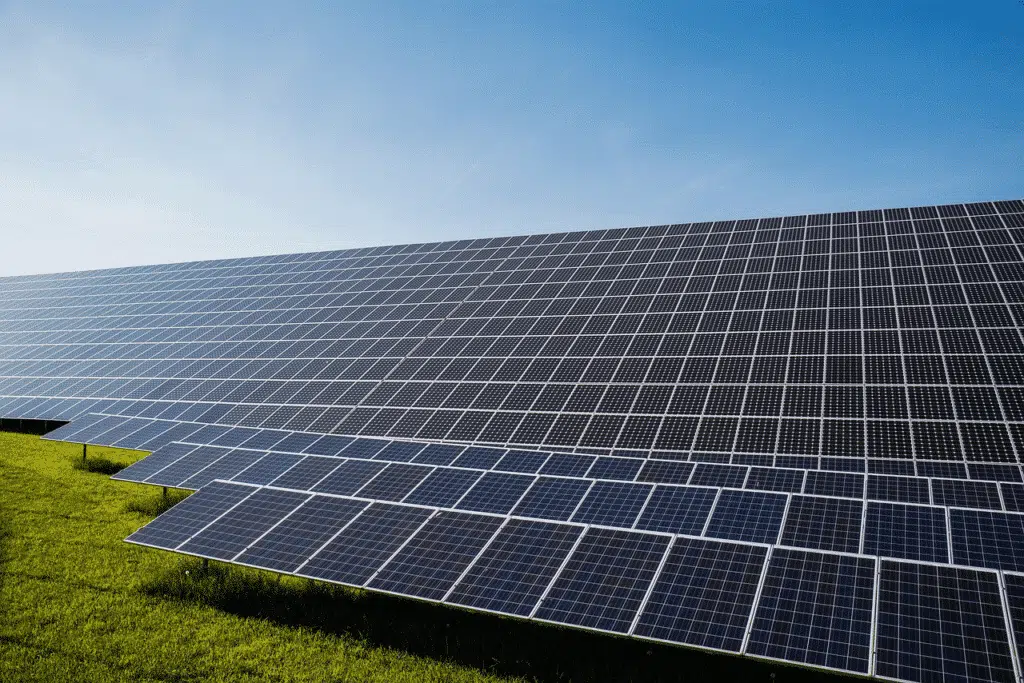
A farm's solar panels are made of silicon, and can be monocrystalline or polycrystalline. Their lifespan is around 20 years. To capture the maximum solar radiation, some panels are fitted with trackers that change their tilt according to the position of the sun during the day. This technology makes them more sensitive to disturbances than fixed panels: the risk of tearing off in the wind is higher, which is why damping systems are installed to protect the PV modules.
In addition, these are supported by rails that can be fixed in various ways — to a motor, for example, in the case of a tracker panel. This whole structure can be deformed by wind gusts, which exert a non-uniform force and therefore a torque on the PV panel.
Analysis of wind and gusts
EOLIOS studies the actions of wind on buildings or the effects of wind in the city through CFD simulation, but we can also help you analyse the effects of wind and gusts on your solar farm. Wind can seriously damage outdoor photovoltaic panels: it exerts pressure on the surface of the panels. If the applied force is too great, they risk being torn off, detached and therefore damaged. It is therefore important to make PV farms safe against wind and gusts — those significant exceedances of the wind speed. The sizing and protection of the farm are thus a major issue for the solar industry.
To optimise the sizing of the system, the studies are carried out in the worst-case scenario, that is, with the most unfavourable but also the most frequent winds. The analysis of the wind roses over different periods close to the project informs about the prevailing winds of the site. The most unfavourable air speeds — the highest measured over the year from the weather data — are used as input parameters for the study.
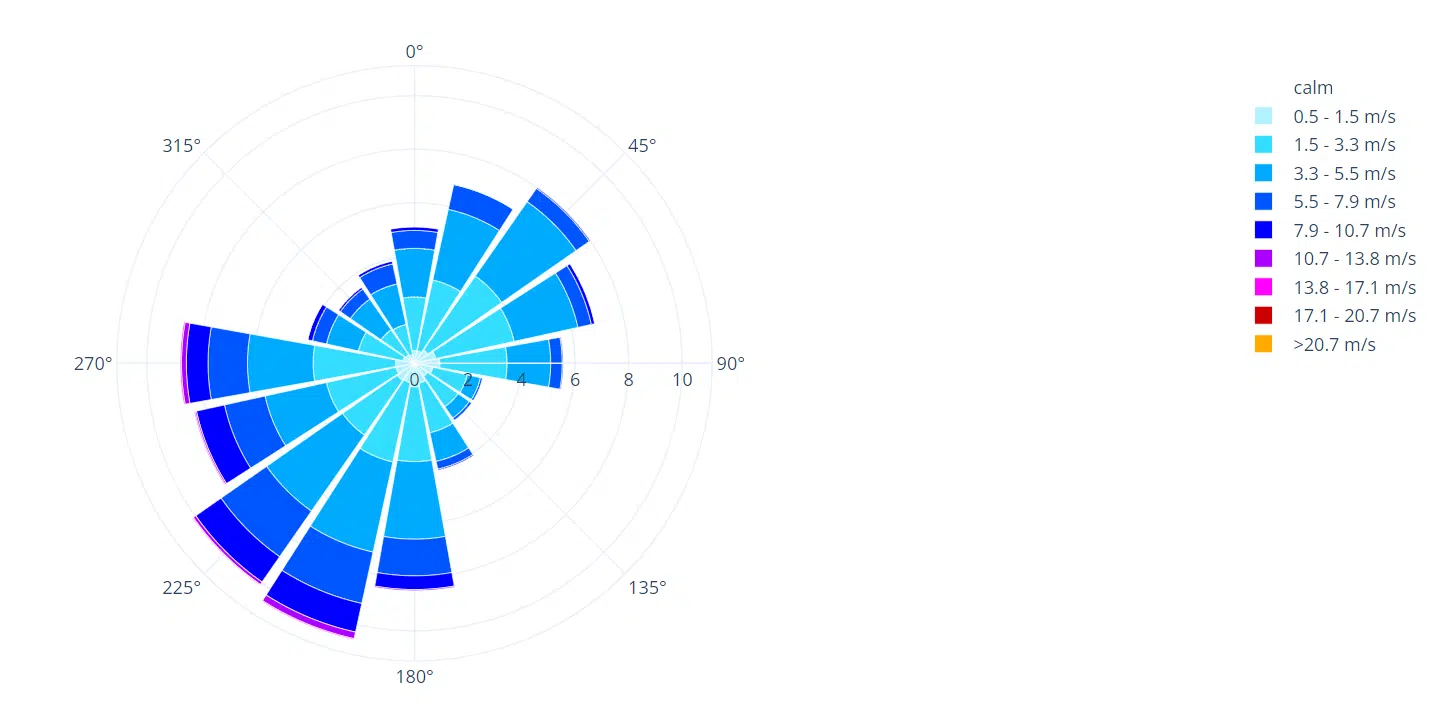
We refer to National Annex NF EN 1991-1-4 (Eurocode 1) to simulate and compute the wind pressures on the structure, with a reference wind speed corresponding to an annual probability of exceedance equal to 0.02 (an event with a 50-year return period, i.e. W50).
Wind simulation for a photovoltaic farm
The CFD simulation rests on a precise, detailed 3D CFD model of the project. It includes accurate modelling of the modules of the photovoltaic farm, as well as the immediate surroundings of the site over a distance of 500 m. The topography is also taken into account. A mesh of this model is generated and refined in the appropriate places.
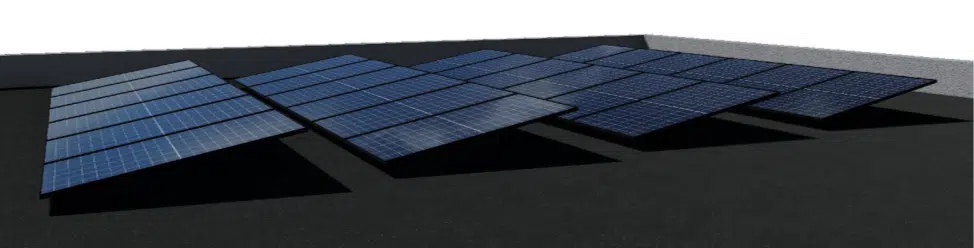
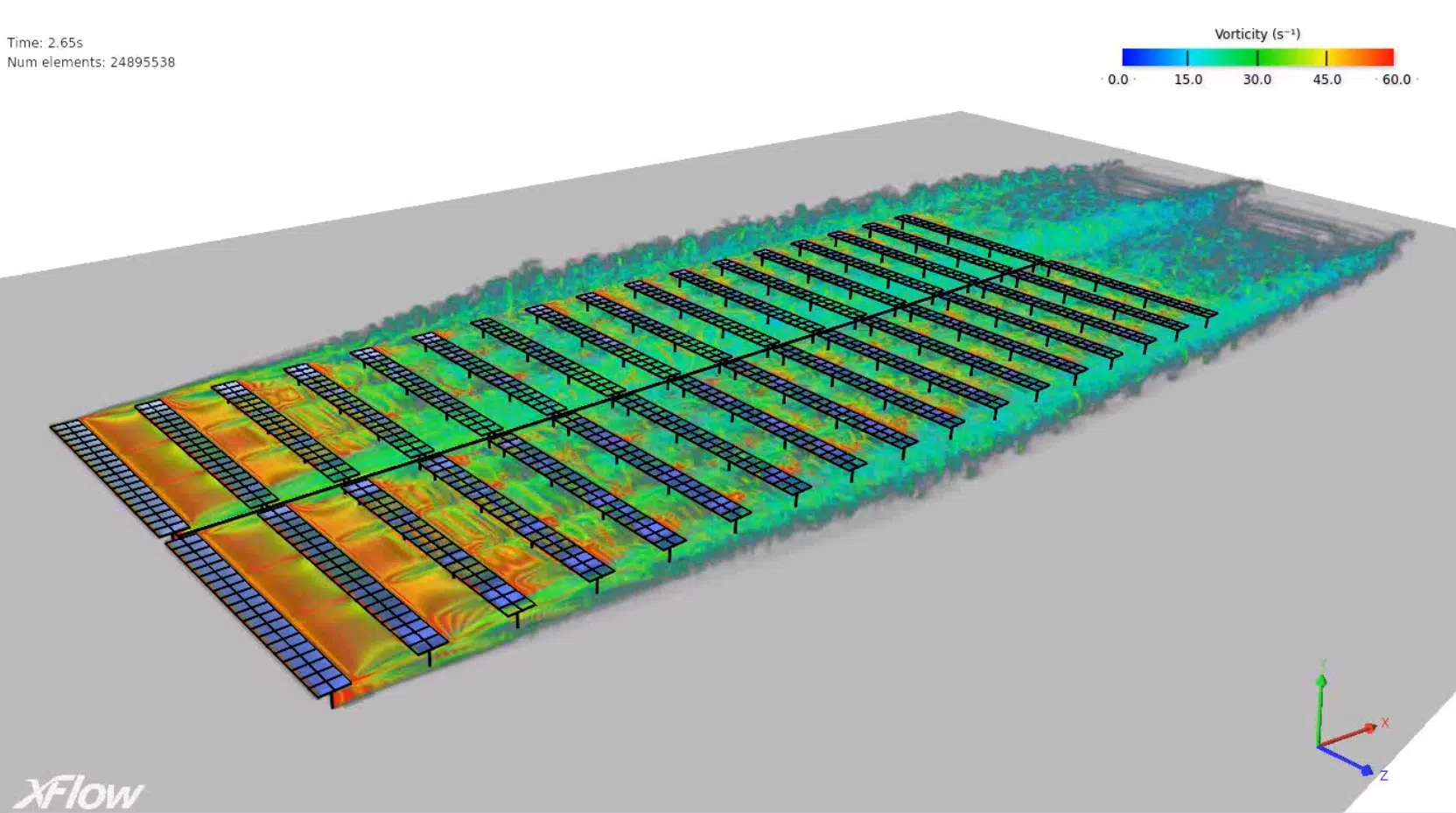
CFD simulations are carried out to visualise the air movements on and around the PV modules. Several scenarios — with different winds and different panel tilts — are studied to determine the potential technical solutions against tear-off, for a wind horizontal to the ground that generates higher torques when the panel is more tilted. Thanks to CFD, it is therefore possible to compute the torques and forces, and to determine whether these exceed the limit values of the PV panels.
EOLIOS supports you in wind load sizing
EOLIOS is able to carry out complete CFD studies of the project site. These studies can be conducted at large scale, on large photovoltaic farms, with a high degree of precision — in service of the wind resistance of your solar farms and renewable-energy projects.
Know-how: simulating wind pressure on buildings — Eurocode 1