
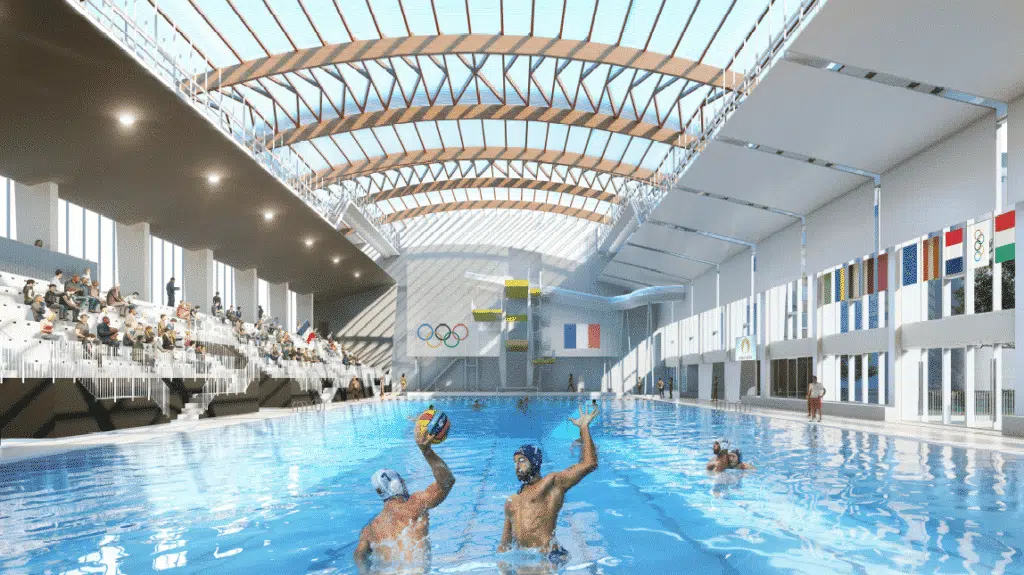
Study of the airflow and condensation phenomena of the pool zones of a swimming pool under renovation: air distribution, mixing and control of condensation on the walls.
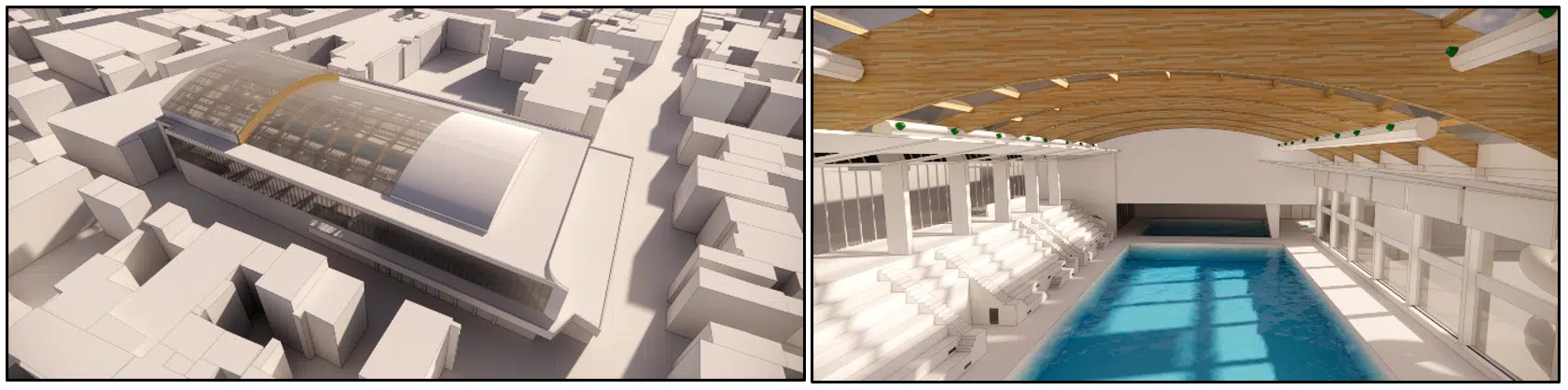
This study focuses on the pool zones of a swimming pool under renovation in Montreuil. The CFD model captures the air volumes of the pool hall and the walls in contact with the outside.
Condensation occurs when warm, humid air comes into contact with a cold surface: walls, partitions and glazing, colder than the ambient air, cool the humid air and cause condensation.
In brief. A CFD study of the pool zones of a swimming pool under renovation in Montreuil, in a warm and humid environment (27 to 28 °C, 60 to 65 % RH). After a thermal-camera audit, EOLIOS modelled the pool hall and its air distribution (floor grilles along the façades, directional nozzles, diffusing ducts), studied the mean age of air and mapped surface condensation. The system proves sized to keep a strip at head height free of condensation down to −7 °C outdoors, while some roof zones remain to be watched in very cold weather.
A pool hall combines three constraints rarely found together elsewhere: a high temperature, heavy humidity and a vast body of water that evaporates continuously. This evaporation injects vapour into the air non-stop; the ventilation has to remove it to keep the relative humidity at its set point and protect the building fabric. This is what makes the swimming pool one of the most demanding environments in HVAC engineering.
Control rests on a narrow balance. The air temperature is kept slightly above that of the water to limit evaporation, while the relative humidity is held around 60 to 65 %. Too low, it accelerates evaporation and the cooling of bathers; too high, it favours condensation and the deterioration of the building.
The temperature at which air, as it cools, reaches saturation and starts to deposit water. As soon as a wall drops below the dew point of the ambient air, vapour condenses on it. The whole challenge is to keep surfaces above this temperature.
The amount of water vapour added to the air by evaporation from the pool and wet surfaces. It depends on the water temperature, the surface agitation and the air velocity; it is what the air-handling unit must offset.
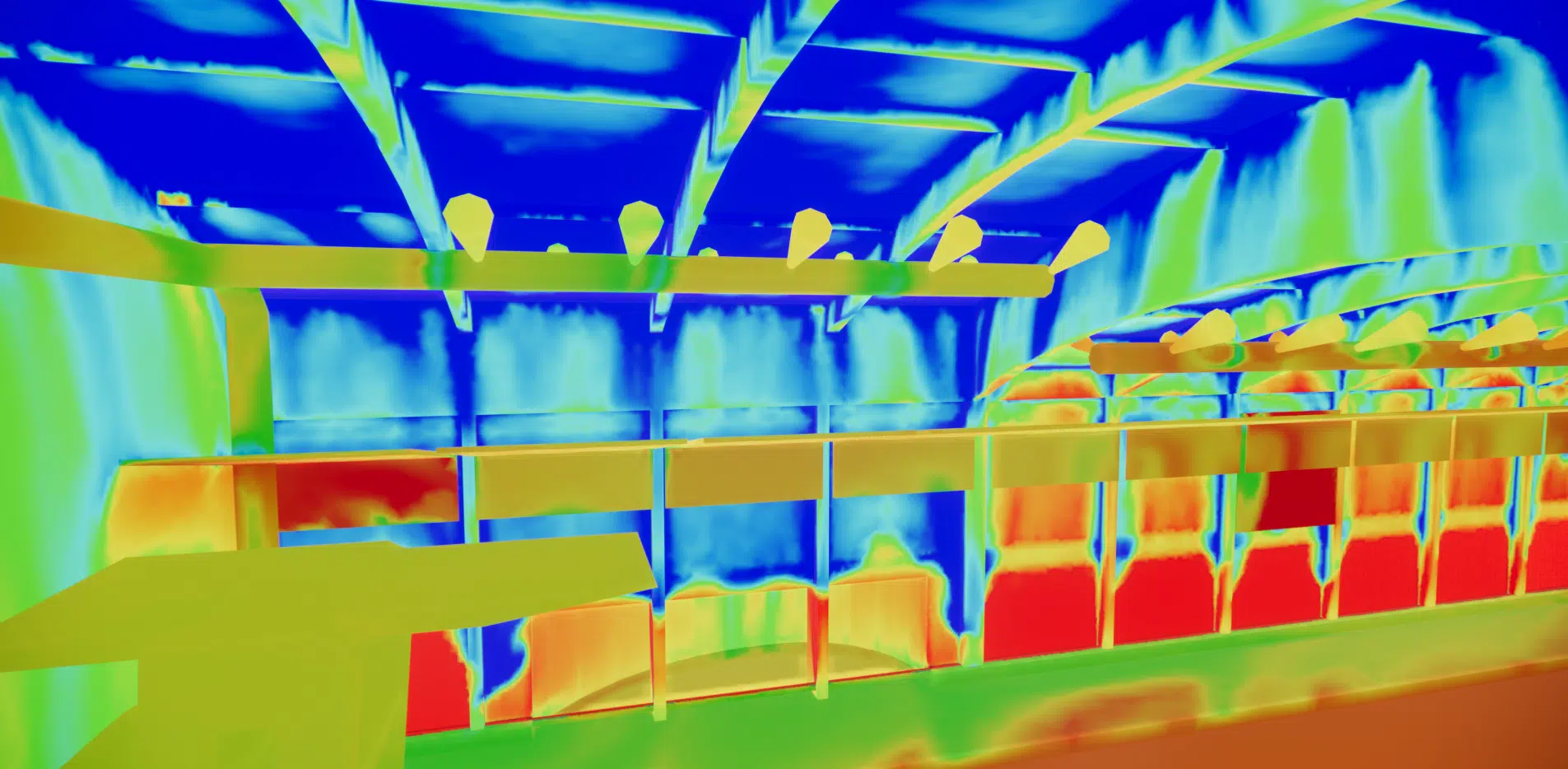
Drawing on their experience, the EOLIOS engineers first carried out an on-site audit, in order to highlight the various issues of the building before conducting the CFD study on the whole volume. The infrared thermography reveals the supply zones and their effects up to under the roof, as well as the performance differences between the old and the renovated parts. This thermal reading then guides the choice of measurement points and the assumptions of the numerical model.
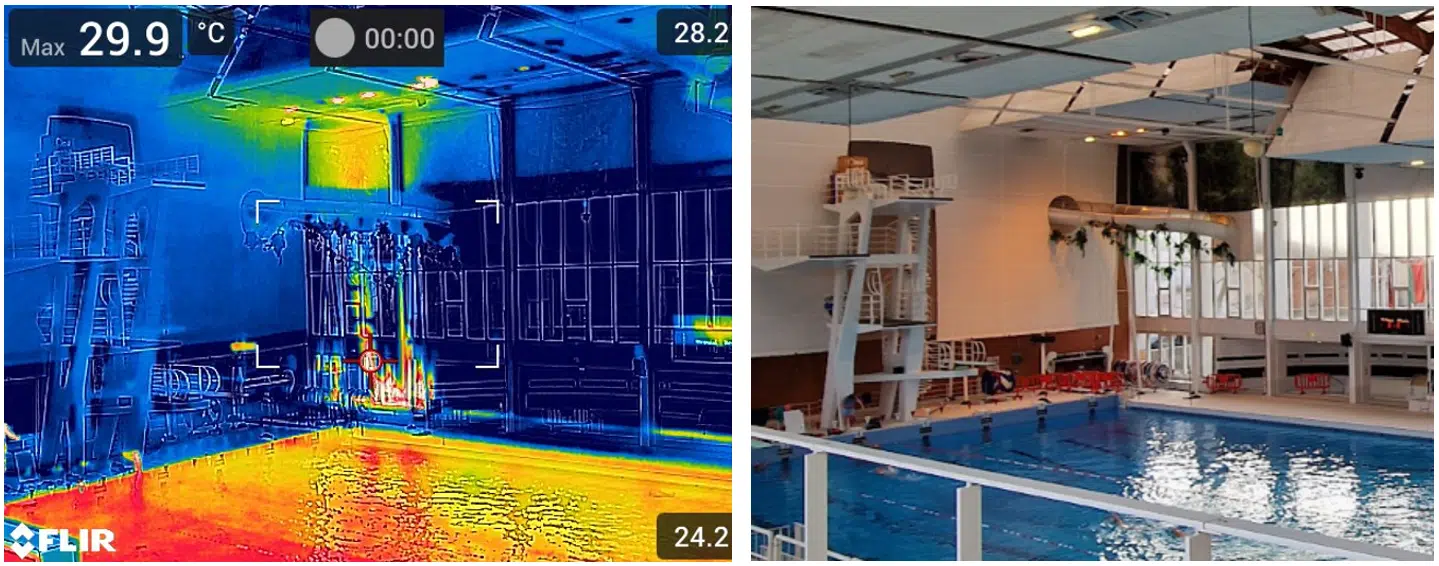
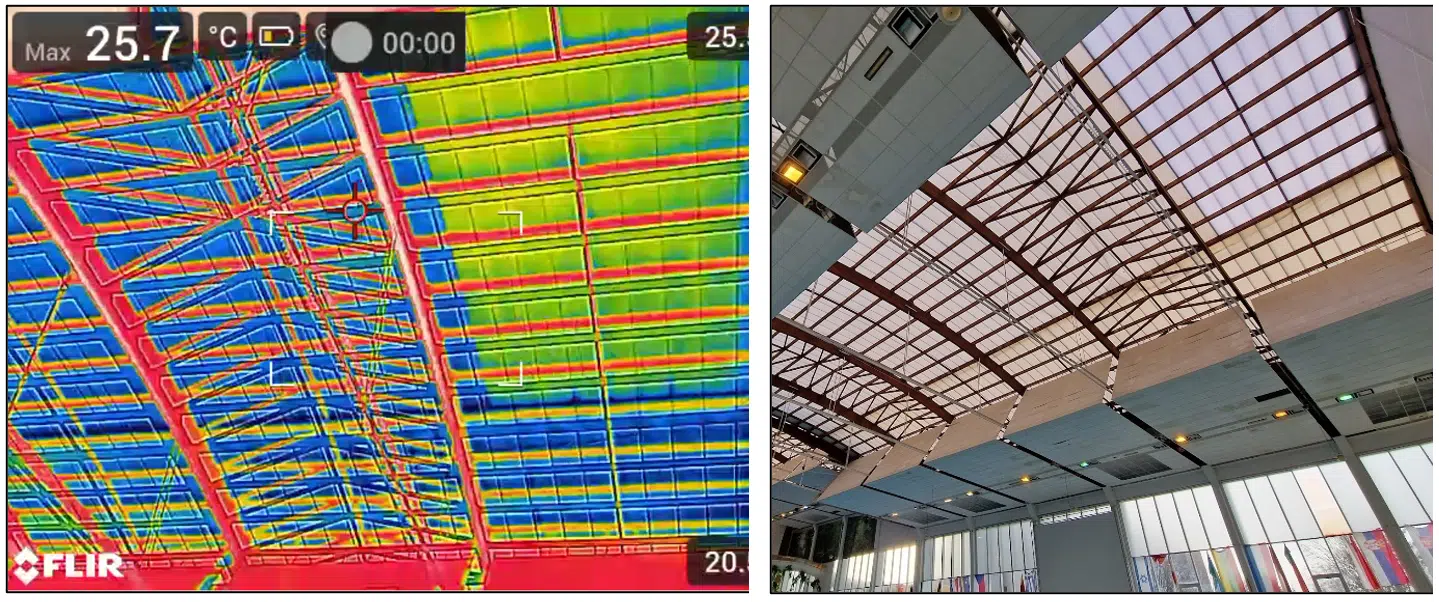
The temperature control of the air is provided by the HVAC system (heating, ventilation, air conditioning). The flow-rate distribution follows the HVAC as-built records, identifying each supply point and its flow rate individually. The supply nozzles are considered balanced, the flow rate being set individually from each nozzle. The CFD simulation then reconstructs the velocity and temperature fields throughout the volume.
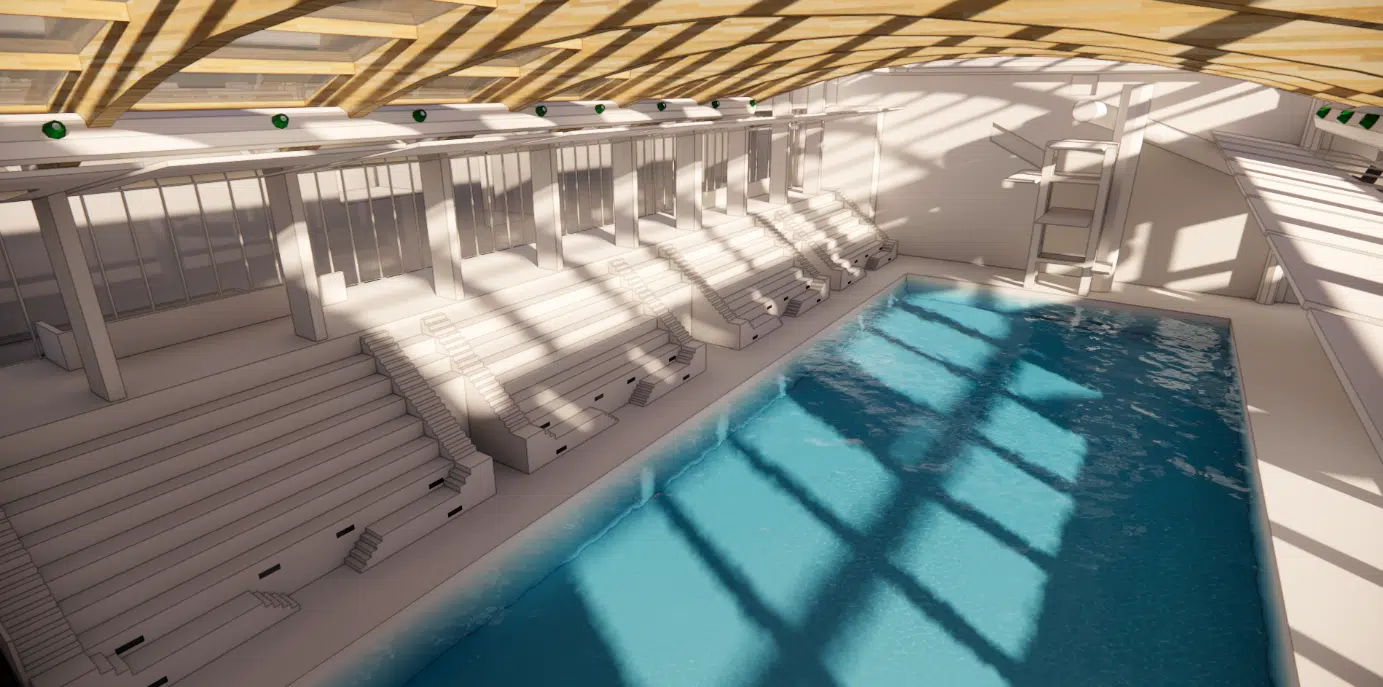
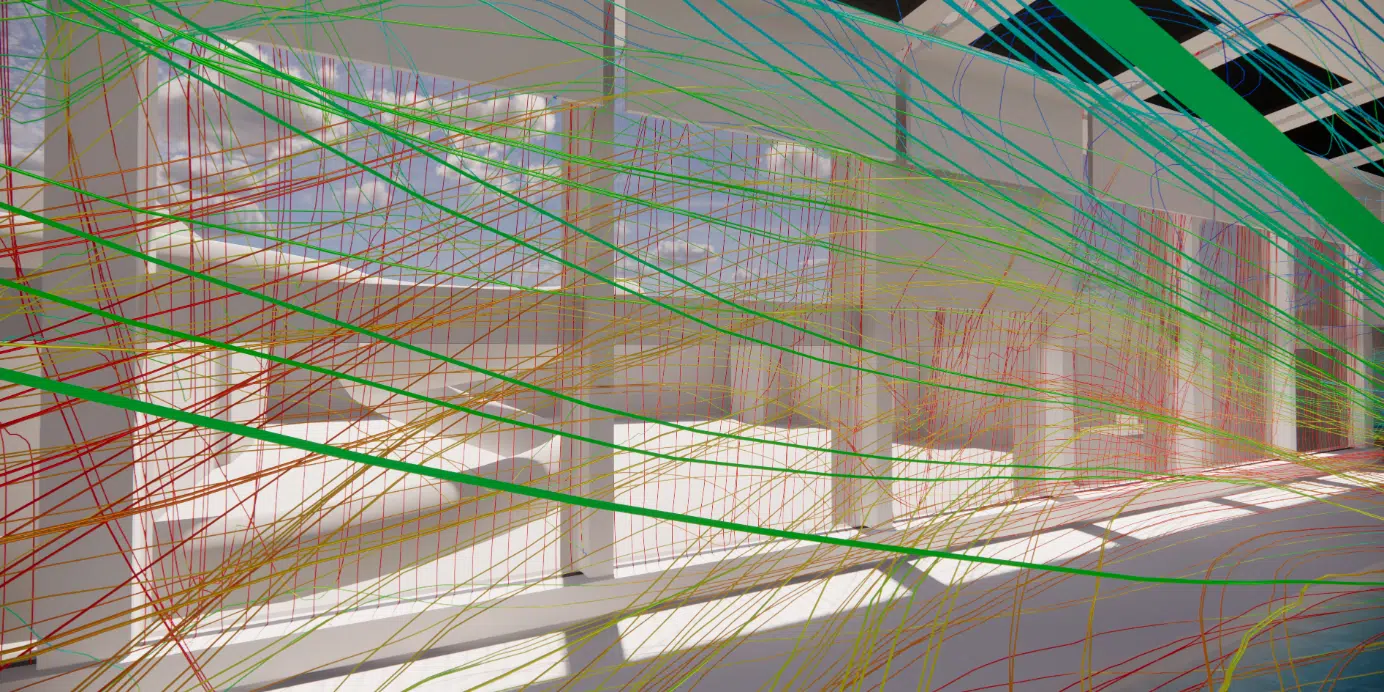
Most of the air is supplied via floor grilles along the curtain walls; all the existing supply points are kept and integrated into the CFD model. The streamtube representation makes it possible to understand the air movements and the mixing effects of the volume, from the distribution grilles of the façades. This confirms that the air properly reaches the glazing to be treated and that no stream short-circuits directly to the returns.
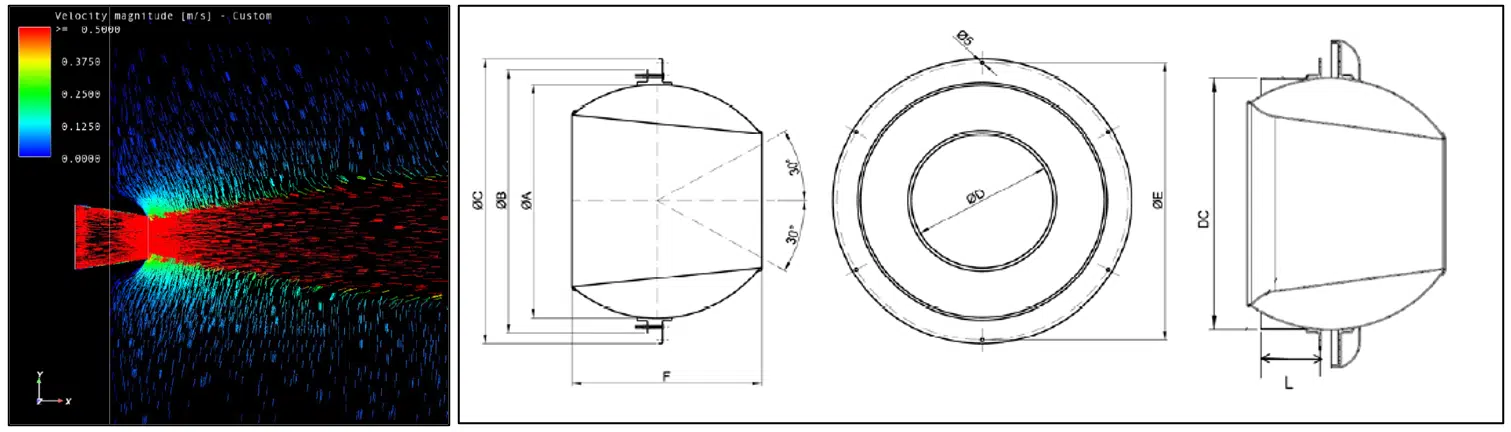
The engineers devised different scenarios to meet the client's needs, for example an additional supply of 20,000 m³/h (two diffusing ducts under the roof) with the addition of directional nozzles. The mean age of air characterises the average time spent by the air in the volume between its supply and its extraction, a key indicator of the quality of the air renewal.
The average time an air particle spends in the volume between the moment it is supplied and the moment it is extracted. The lower it is, the better the air renewal; a high age flags a stagnant zone.
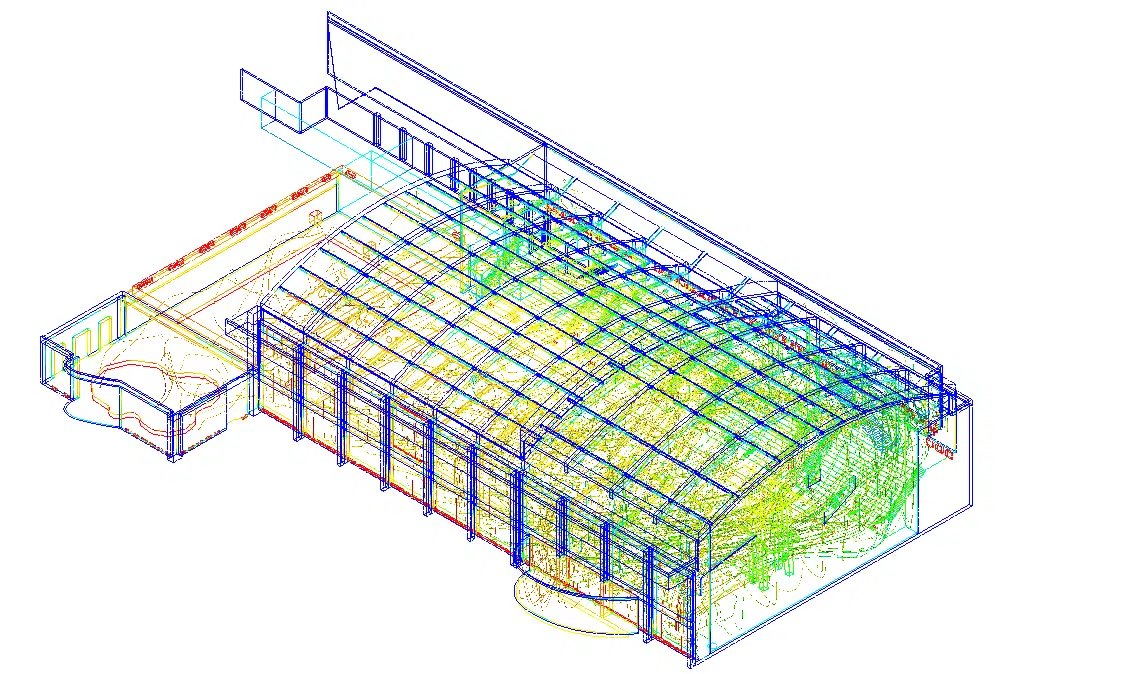
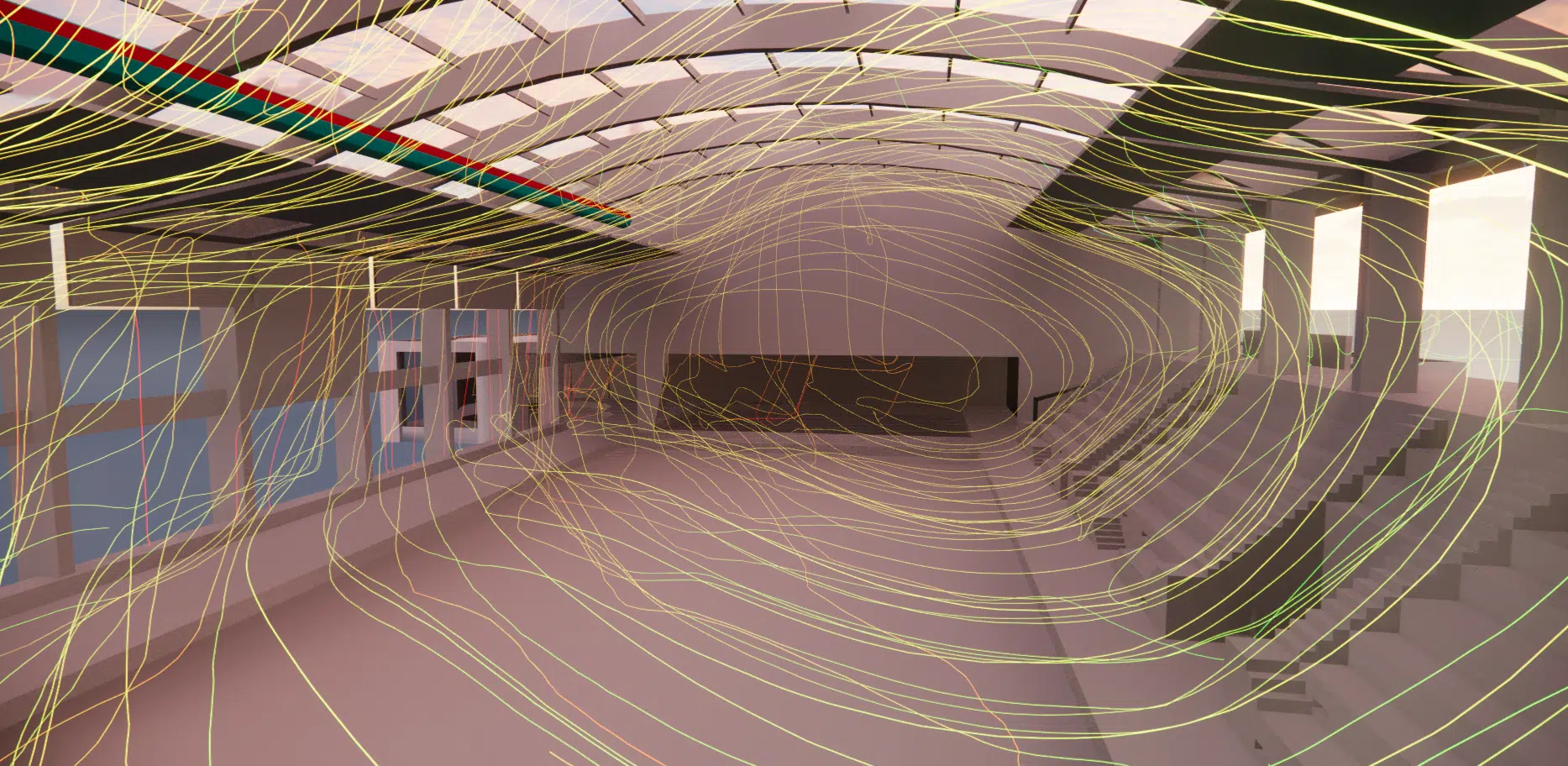
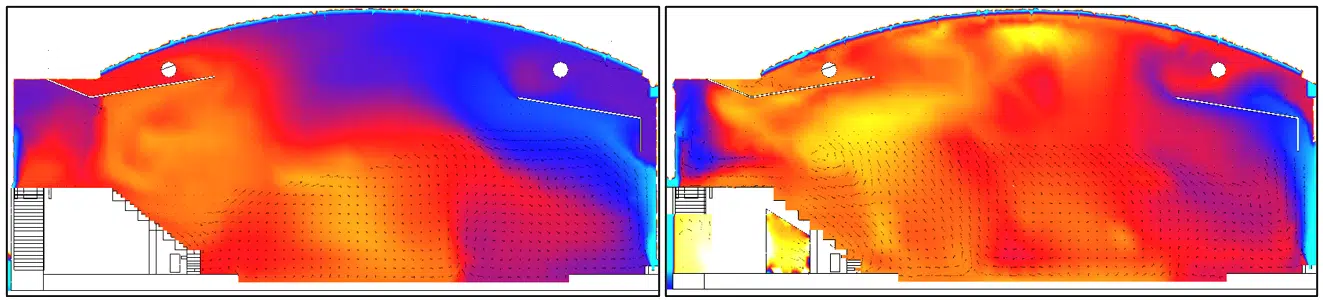
Above the water, comfort depends first on controlling the air velocity. On wet skin, the slightest draught accentuates the sensation of cold and speeds up evaporation: low velocities are therefore sought in the bathing zone, without creating pockets of stagnant air.
The air quality plays out in the same place. The disinfection by-products of chlorine, including trichloramine, are volatile and concentrate just above the water, where swimmers breathe. A well-directed sweep captures these pollutants and steers them towards the returns, rather than letting them accumulate.
A volatile compound produced by the reaction of chlorine with the organic matter brought in by bathers. Concentrated at water level, it causes eye and respiratory irritation; the ventilation must remove it as close as possible to its source.
The convective exchanges of the walls are linked to the surface air velocity: a well-mixed wall stays close to the indoor temperature, whereas a poorly mixed wall in a dead zone tends towards the outdoor temperature (condensation risk). For the two façades, an air blanket warms the glazed surface via the distribution from benches.
The distribution system appears sized to combat cold walls and the appearance of condensation on the façades: it guarantees, for −7 °C outdoors, that a strip at head height always stays treated effectively. In severe winter conditions (< 5 °C), traces of condensation may nonetheless appear in the roof zone, behind the airflow obstacles (beams, posts, uprights).
A region poorly swept by the distribution, where the air stagnates. The wall there exchanges little with the warm hall air and its temperature tends towards the outside, which makes it prone to condensation. The behaviour of the rising warm air relates to the thermal draught effect.
Key point. Even with a system sized for −7 °C, traces of condensation may persist under the roof behind the airflow obstacles. CFD locates these dead zones precisely to target the corrections before the works.
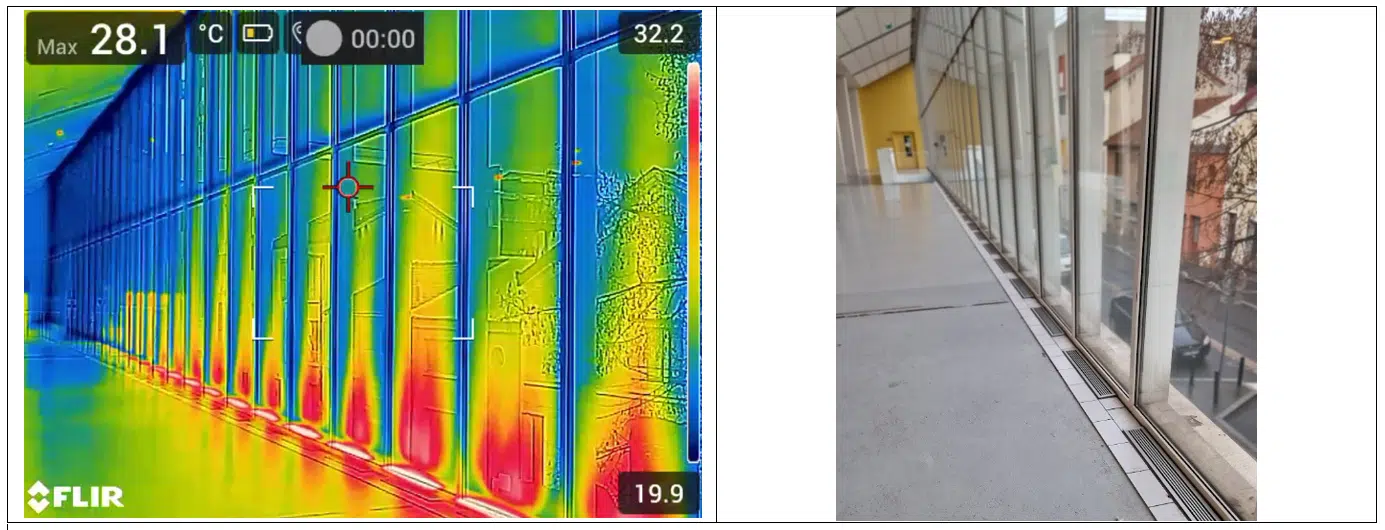
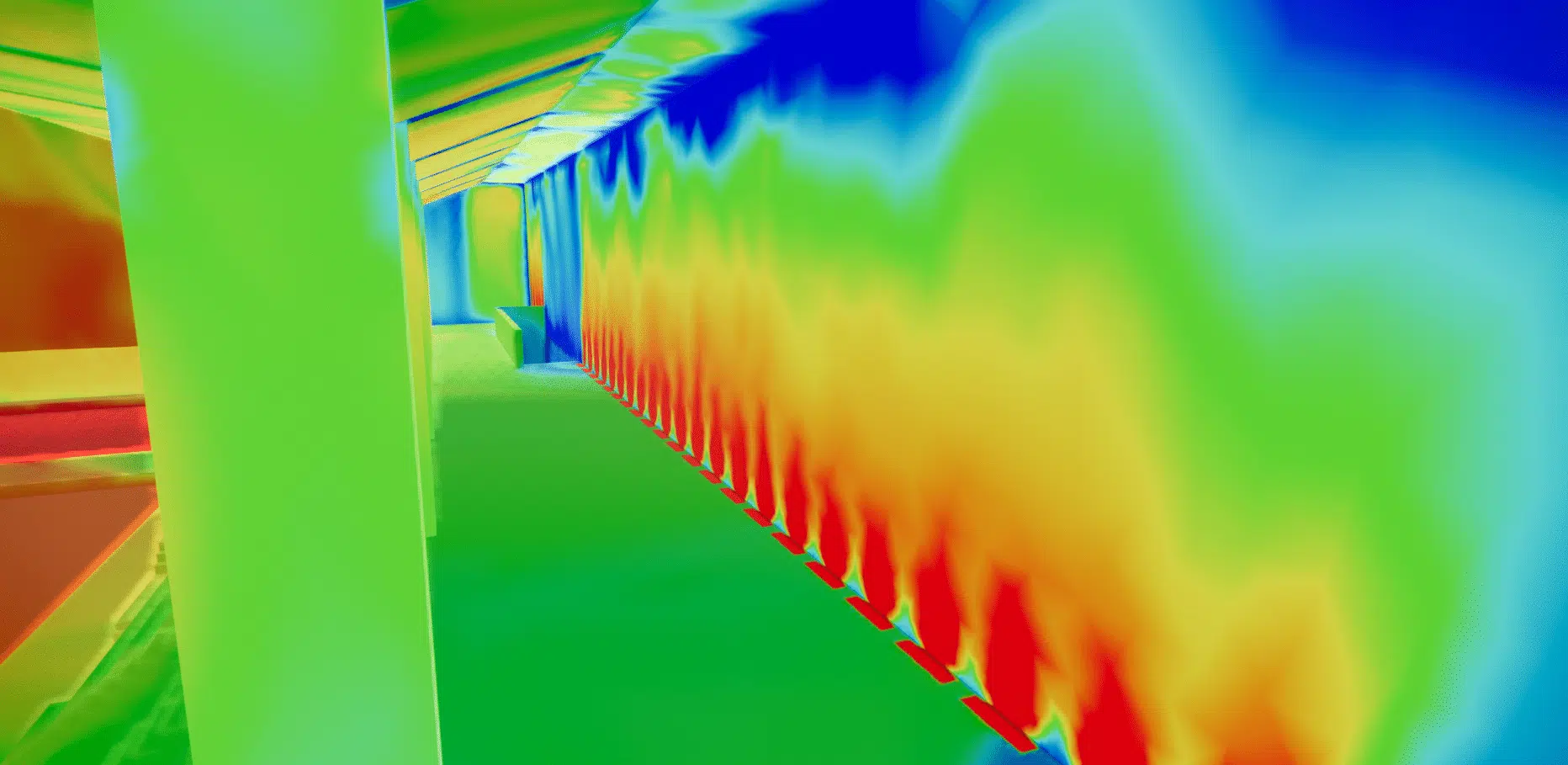
Treating the humidity of a pool hall has a cost. Dehumidification, provided by a dual-flow unit and often a heat pump, accounts for a significant share of the energy expenditure, alongside the heating of the water and fresh air. Recovering heat from the extracted air before rejecting it is an essential lever for savings.
The simulation helps to size as tightly as possible. By comparing the distribution and flow-rate scenarios, it avoids over-ventilation, which wastes energy and needlessly dries the air, as well as under-sizing, which lets condensation and discomfort appear. The aim is to hold the set point with the strictly necessary flow rate.
Key point. In a swimming pool, comfort, preservation of the fabric and the energy bill are decided together. Objectifying the airflows through simulation makes it possible to arbitrate without over-sizing and to embed the renovation in the long term.
Condensation, thermal audit and air distribution: the answers to the questions operators and clients ask before a CFD study.
The pool hall is warm and very humid (27 to 28 °C, 60 to 65 % RH). In contact with cold walls (glazing, poorly insulated walls), the humid air cools below its dew point and water is deposited, damaging materials and structure. CFD locates these at-risk surfaces and checks that the distribution keeps them warm, as on our aquatic centre project in Hauts-de-Seine.
Infrared thermography reveals on site the supply zones, their effects up to under the roof and the performance gaps between old and renovated parts. These readings provide a reliable initial state that is used to calibrate the numerical model against the building's actual behaviour.
It is the average time the air spends in the volume between its supply and its extraction. A low age reflects good renewal; a high age flags a stagnant zone, often correlated with the risks of condensation and discomfort. The simulation maps it to compare distribution scenarios.
By creating a warm air blanket along the glazing, via benches or floor grilles that treat the façade directly. CFD checks that this sweep holds up to the coldest outdoor conditions and identifies the dead zones where additional distribution is needed.
Yes. Starting from the existing building, the simulation tests targeted additions (diffusing ducts, directional nozzles, reorientation) and quantifies their effect before the works. Weak points are thus corrected at the right cost, without over-sizing or disrupting operation.
Explore our expertise, projects and technical papers to go further than the FAQ.
CFD simulation of a swimming pool under renovation in Montreuil: air distribution in the pool hall, mixing along the glazed façades and mapping of the zones at risk of condensation. The video reconstructs the air movements and surface temperatures that guide the sizing of the distribution.
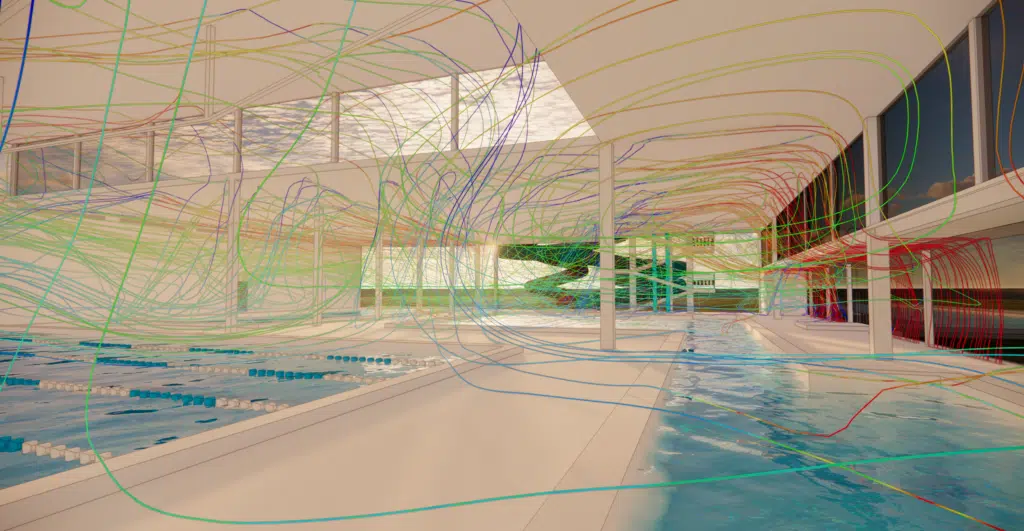 PoolAquatic Center — Hauts-de-Seine
 WarehouseHVAC engineering — Medical warehouse
 HotelSharaan by Jean Nouvel
 MuseumPalaeontology Gallery — MNHN
 IndustryPharmaceutical plant — HVAC
 Natural ventilationPrototype — Natural-ventilation chimney
 Cold roomCold room — Leipzig
 Sport / ArenaPalais Omnisports de Paris-Bercy
 IndustryPlant — Wind turbine
 Cold roomCold room — Resurfacing
 Atrium · 🔒Glass-roof comfort — Atrium
The simplest thing is to talk it through together. Our engineers reply with an initial technical read.