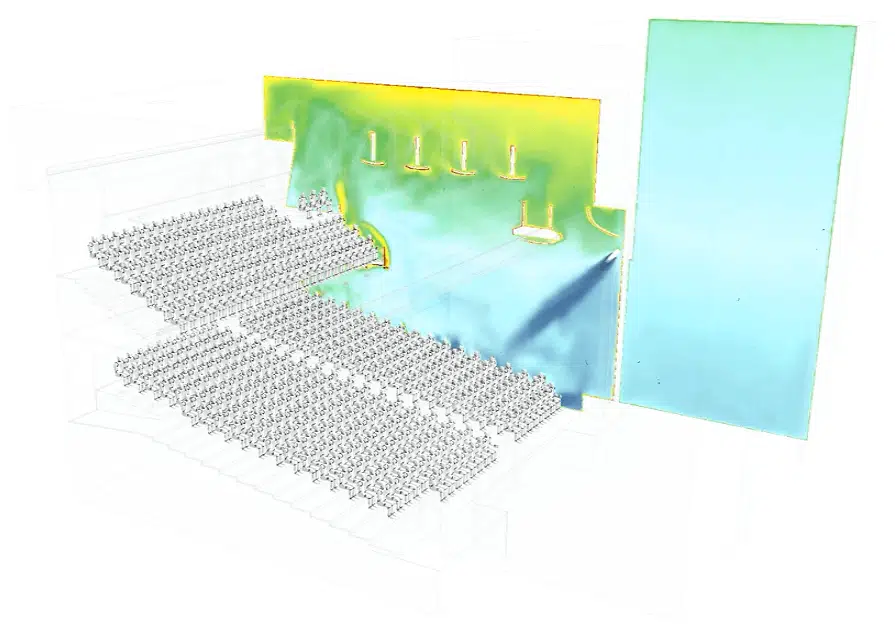
How does the airflow of a swimming pool work?
Swimming-pool facilities are very large-volume buildings that give rise to complex airflow phenomena. Our thermo-aeraulic know-how is dedicated to the operators and designers of aquatic centres.
Analysis
- Site audit
- Airflow phenomena
- Comfort-level assessment
Modelling
- Site modelling
- Trichloramine study
- Condensation-risk study
Support
- Proven expertise
- Design assistance
- Tailored support
Atypical buildings with complex atmospheres
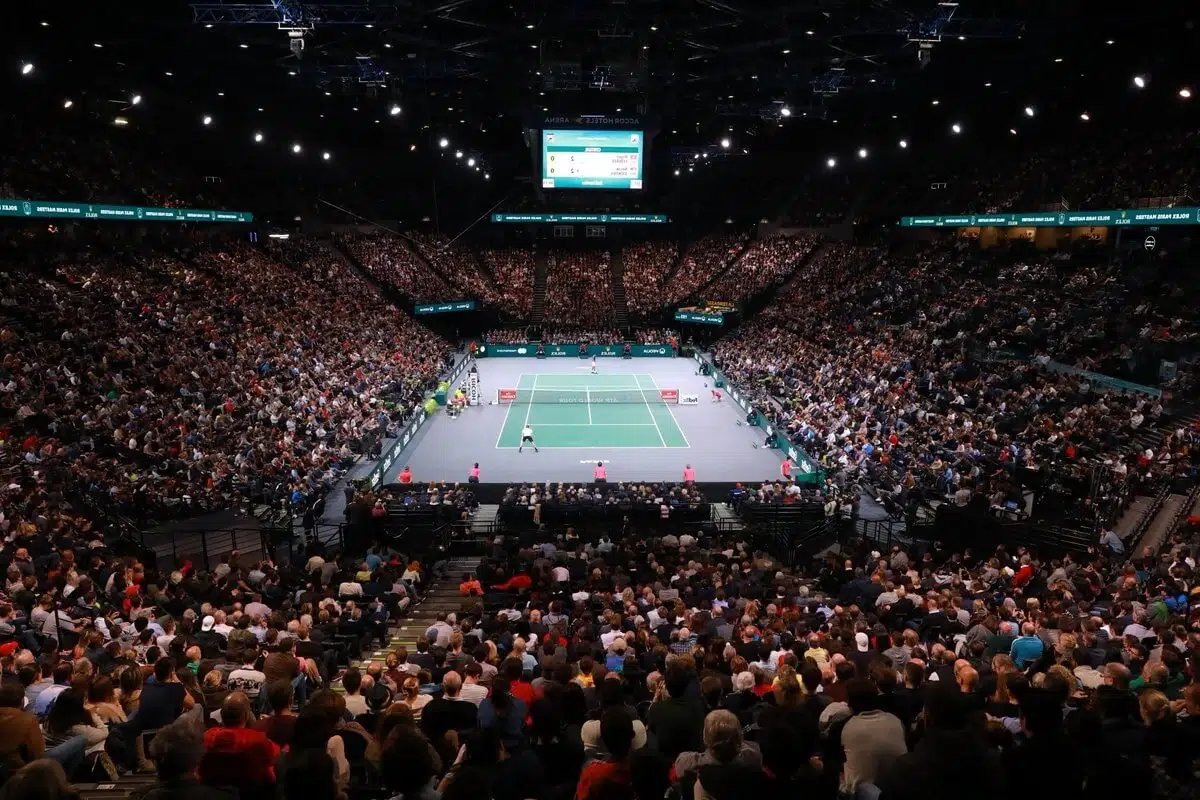
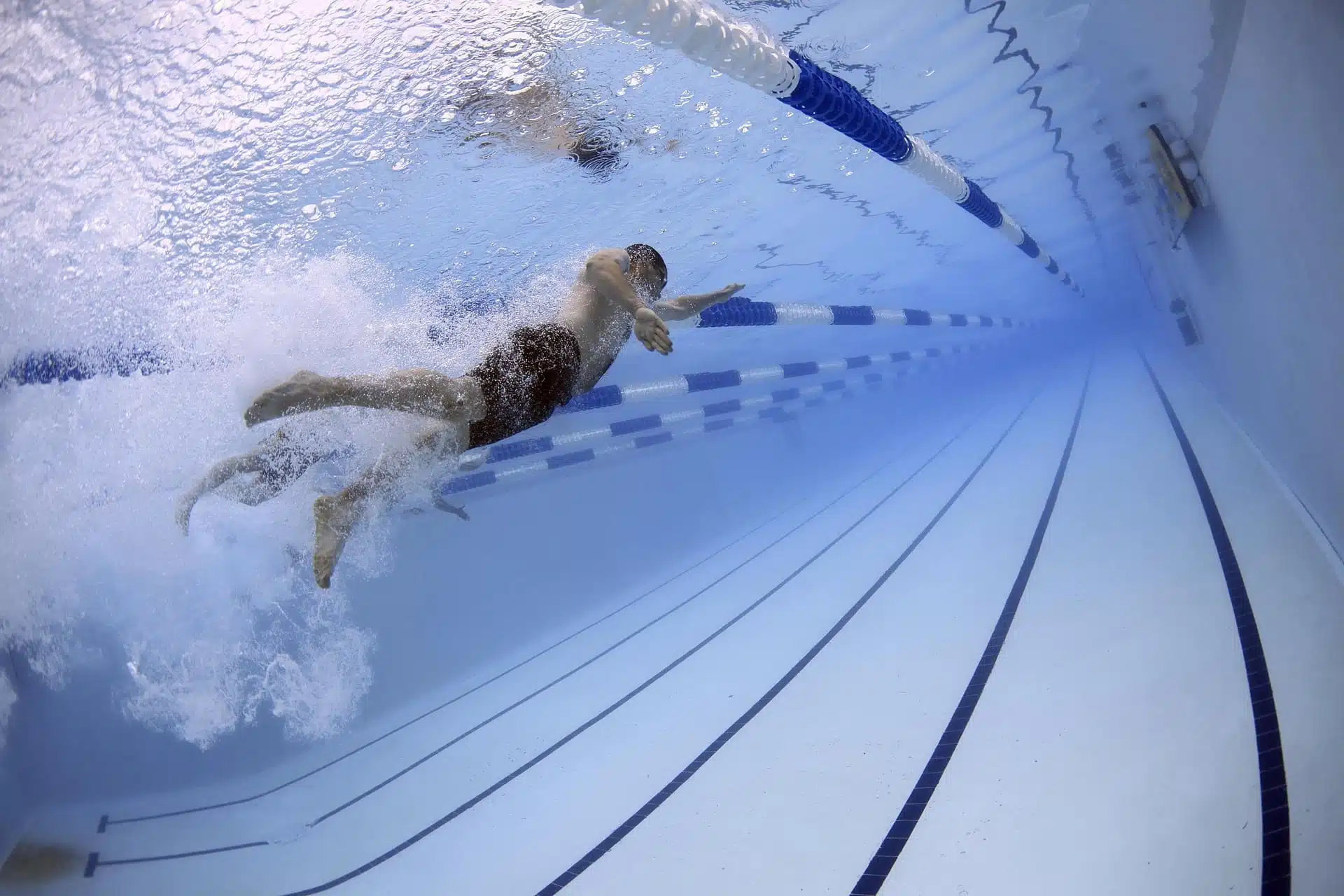
In large enclosed spaces, the issues related to indoor air quality, occupant thermal comfort and energy efficiency are a major concern. Given the heavy use of these venues, where breathing rates are higher because of the physical activity, these issues are particularly important for sports facilities such as indoor swimming pools.
It is, however, difficult to control air quality and thermal comfort in such high-humidity environments, particularly for indoor pools, which present a rather specific and complex environment due to the very particular airflow characteristics of the space.
Air at the heart of condensation issues
Maintaining the hygrometric conditions is also a matter of the durability of materials and of the structure over time, as internal hygrometric disorders can lead to condensation zones and, in the long run, to vapour migration into the walls.
To meet these requirements — air quality, thermal comfort, energy efficiency and humidity control — it is important to clearly understand the mechanisms that shape the structure of the air flow and to master the various physical phenomena behind the heat transfers and water-mass transfers that take place inside the pool.
Numerical study of condensation risks
Water-vapour condensation is a significant concern for HVAC and ventilation engineers. Condensation is a process in which the moisture present in the air condenses into water droplets on cold surfaces.
It can cause damage to buildings and materials and create aesthetic problems on glazing. It is therefore important to study the factors that influence condensation and to find ways to avoid this issue.
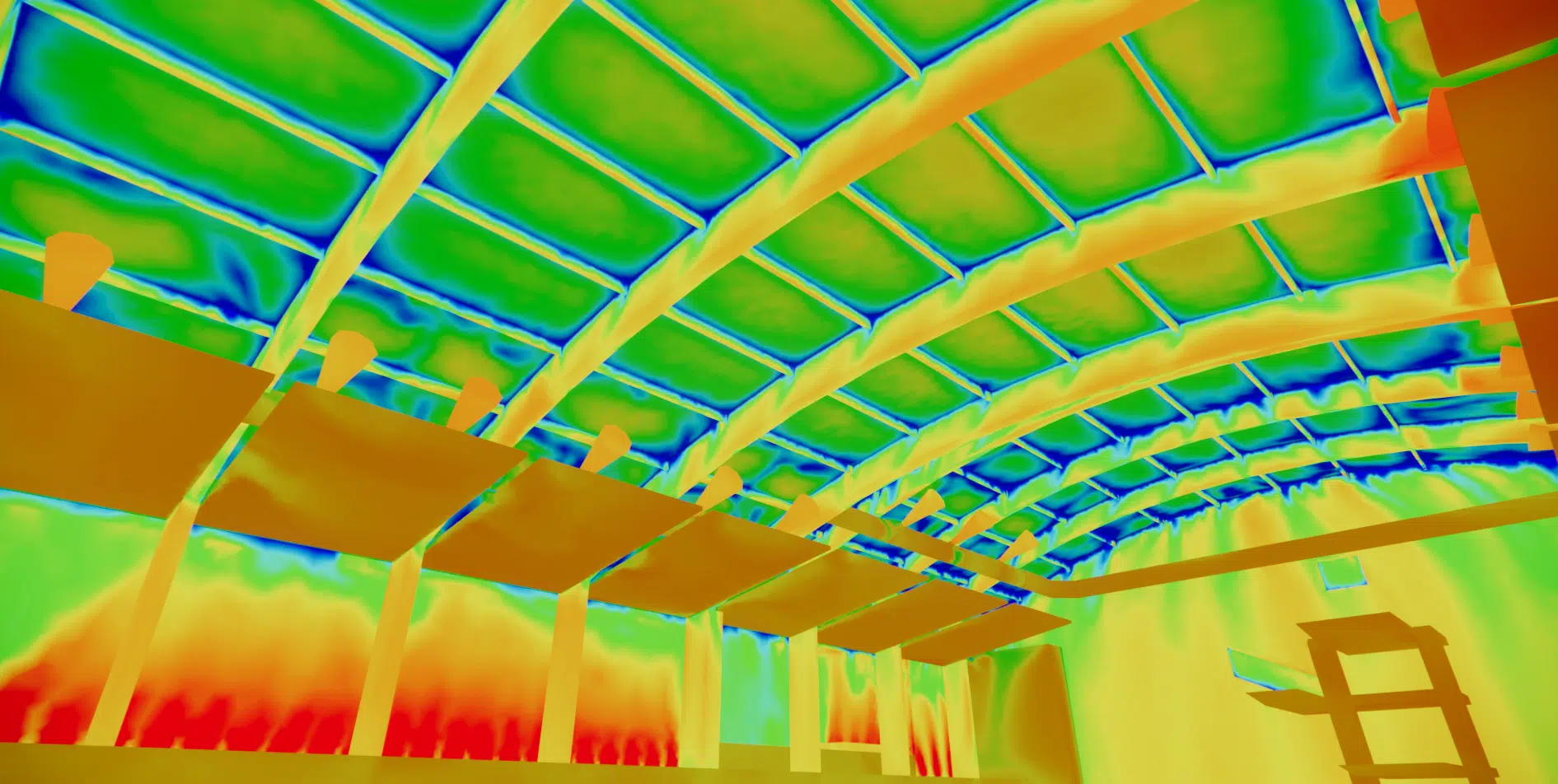
The simulations of water-vapour condensation risks include investigating the factors that influence condensation and identifying strategies to prevent its formation.
Improving air quality and treating trichloramine
What is trichloramine?
The level of nitrogen trichloride, also known as trichloramine, is closely linked to changes in air flows. Trichloramine is a chemical compound that forms when the chemicals used to treat the water — mainly chlorine — react with urine, sweat and the other organic waste produced by bathers.
Trichloramine can cause eye and respiratory irritation, as well as headaches and other allergy symptoms. It is important to control its levels in a pool by using suitable chemicals and by regularly renewing the air to evacuate harmful gases.
How to treat the trichloramine level?
Efficient ventilation can help reduce trichloramine levels by renewing the air and evacuating potentially harmful gases. It is essential to regulate the trichloramine level in the air in order to maintain comfortable conditions for users and staff.
Why CFD addresses trichloramine issues
CFD simulation makes it possible to efficiently characterize the distribution of trichloramine in space. The quality of the results depends on the input data, in particular the quality of the physico-chemical emission laws. In reality, the emission law is dynamic and can depend on the ambient temperature and humidity. Various levels of modelling complexity are possible, the first level being to use constant laws to incorporate pollutant diffusion. It is then possible to compare different ventilation systems and to identify the zones affected by over-concentrations of trichloramine.
Why CFD is necessary to validate the design
Mastering the airflow of large spaces
Mastering the airflow within large spaces such as swimming pools is a necessity in order to maintain stable temperatures, reduce condensation risks — which can lead to the breakdown of materials — as well as the evacuation of trichloramine, which can be harmful. However, the airflow of large spaces is very complex to grasp, and errors or a poor assessment of a design parameter are relatively common.
A precise and cost-effective approach
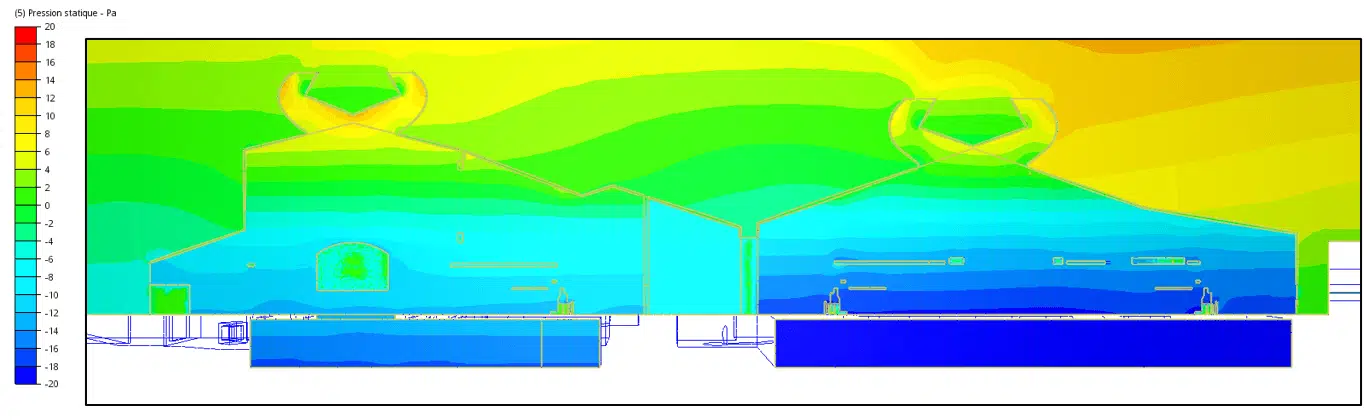
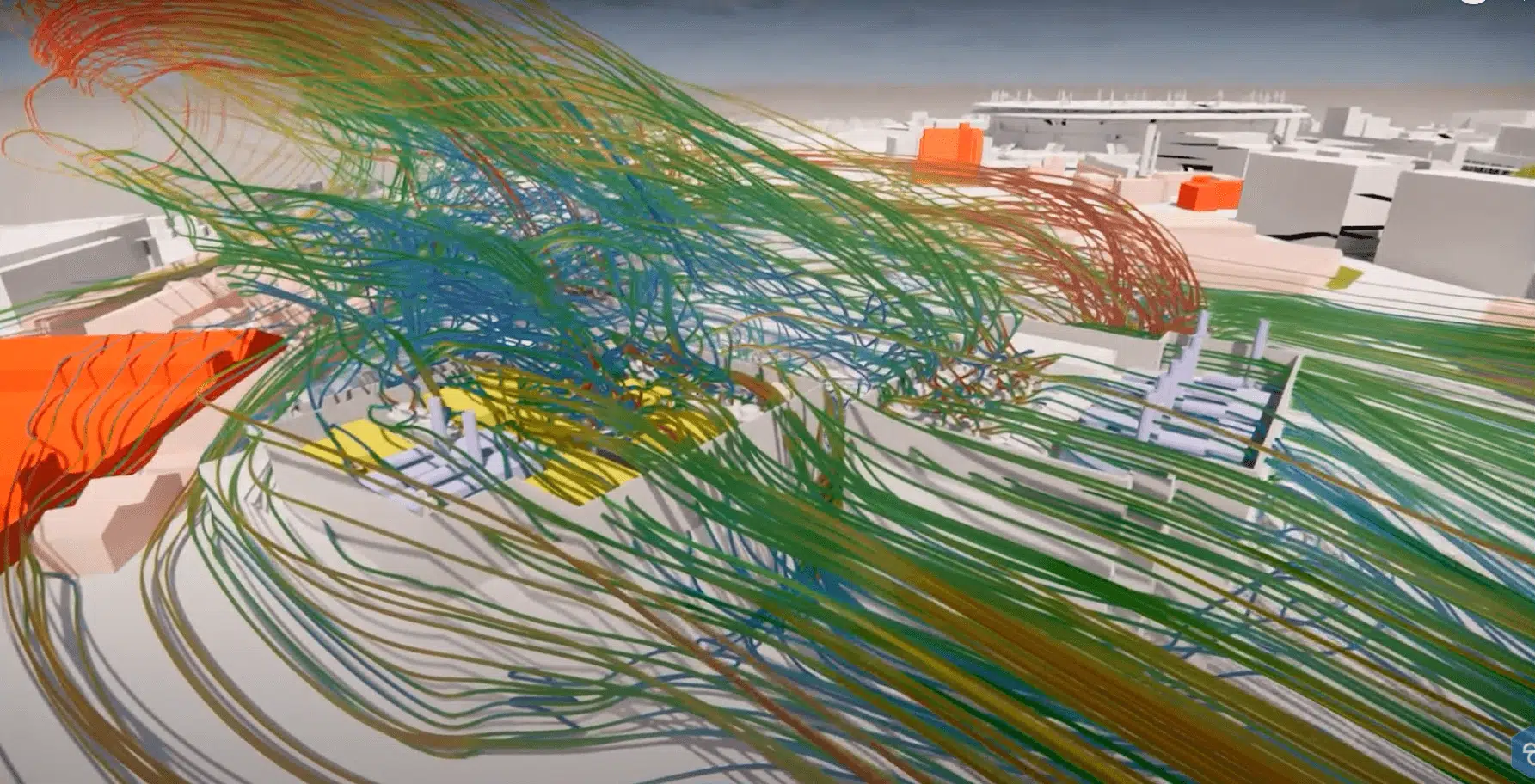
EOLIOS, a CFD consultancy specialized in the airflow of large spaces, offers an approach able to meet these needs through the use of CFD (Computational Fluid Dynamics) codes, which involve a numerical solution of the equations governing the physics of the flow. CFD is a sophisticated analysis technique: it makes it possible to study not only the behaviour of fluid flow, but also heat and water-mass transfer. CFD analysis makes it possible to optimize the design, thereby reducing the need for costly and lengthy physical tests.