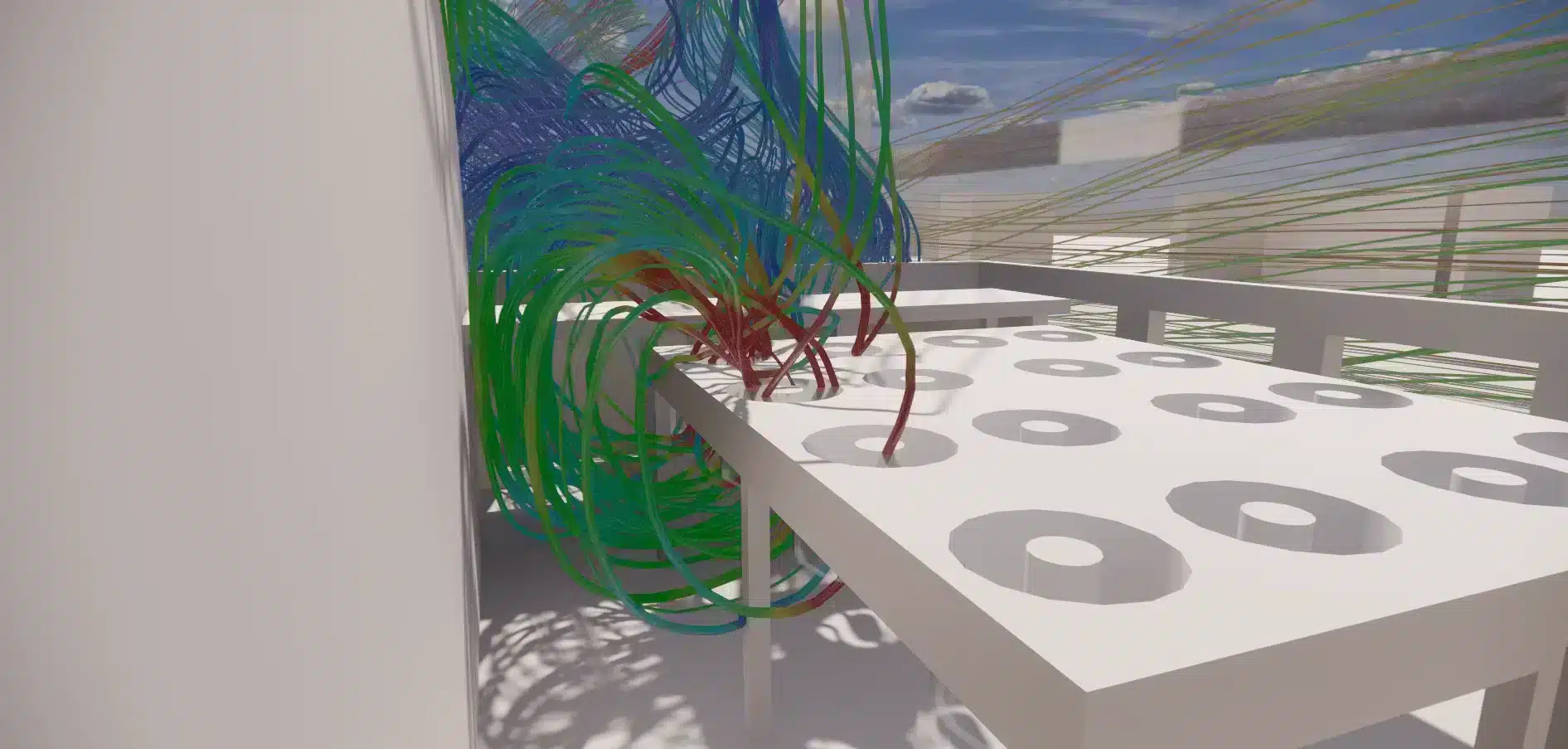
EOLIOS Ingénierie verified and optimised the design of a system to improve the air mixing of the rooftop air coolers on technical rooms housing generators.
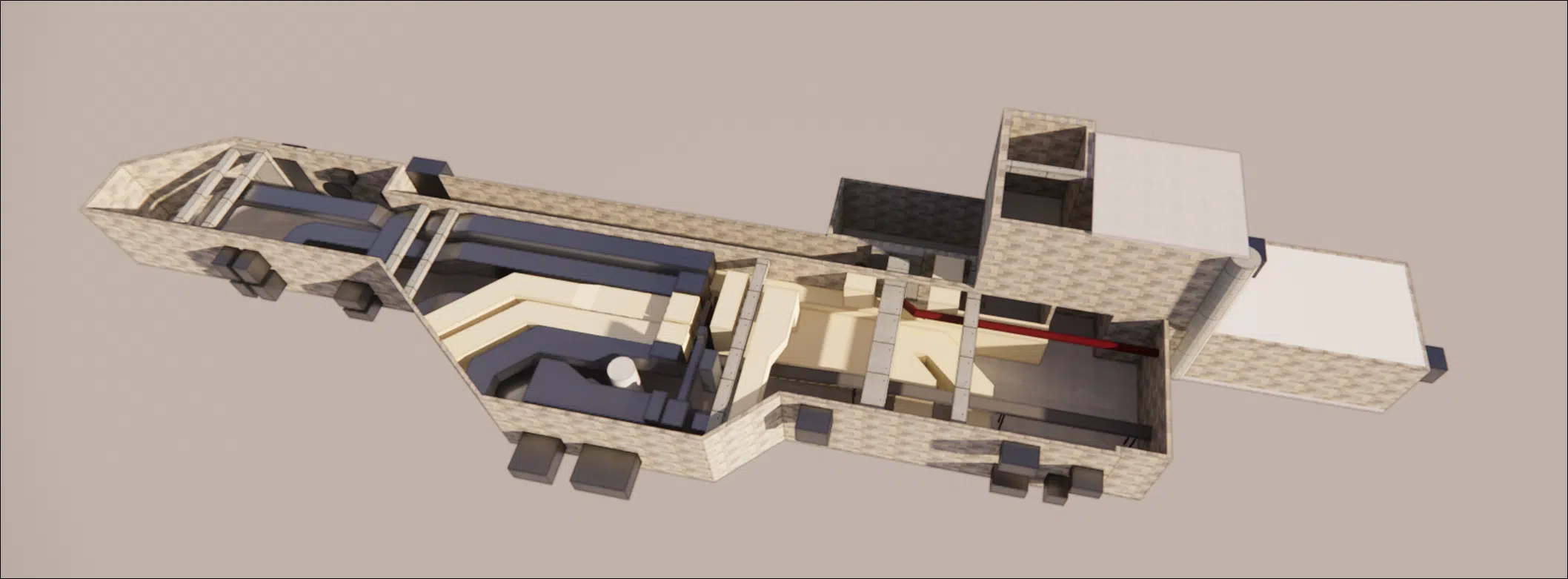
The project was to study the cooling system of a data center comprising a complex of 4 generators. On behalf of ENERIA, EOLIOS verified and optimised the design of a device intended to improve the air mixing of the air coolers installed on the roof of the technical room housing these units.
The essentials. To secure a data center's backup cooling, EOLIOS modelled in CFD a room of 4 generators and its rooftop air coolers, indoor and outdoor coupled. The simulation revealed a hot-air recirculation loop promoted by an opaque gable, then guided the design corrections to restore efficient heat extraction.
The challenge of such a project lies in mastering the specific thermo-airflow phenomena induced by the operation of the engines at very high temperature. The aim is to study, through thermo-airflow CFD simulation, the various airflow and thermal principles that govern the site according to the configuration chosen for the cooling systems.
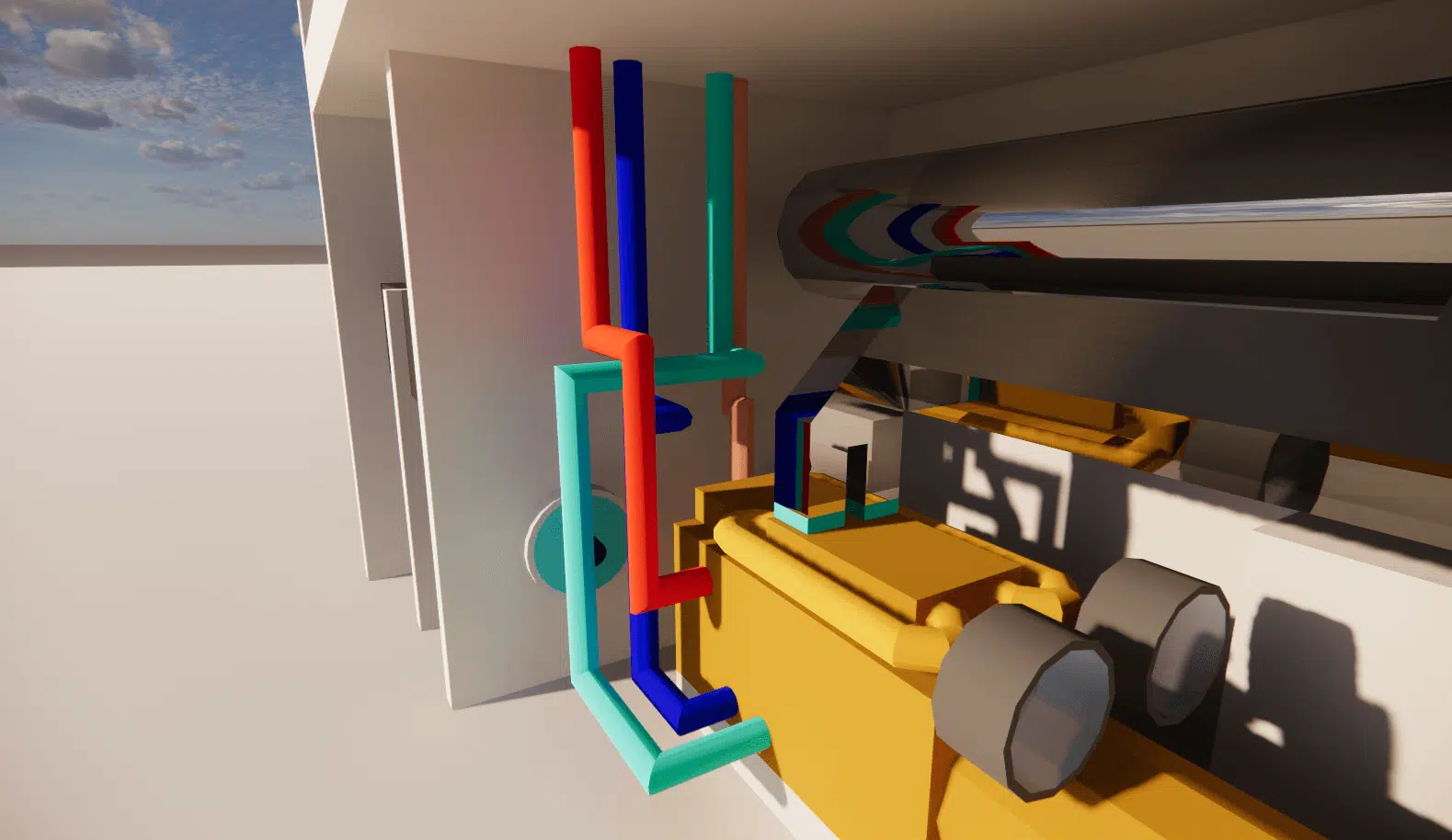
This analysis examines the exhaust plume of a series of generators in relation to the data center's rooftop systems. The aim is to determine whether the systems' exhaust can contaminate the supply air of the various pieces of equipment, and to assess their impact on the adjacent buildings.
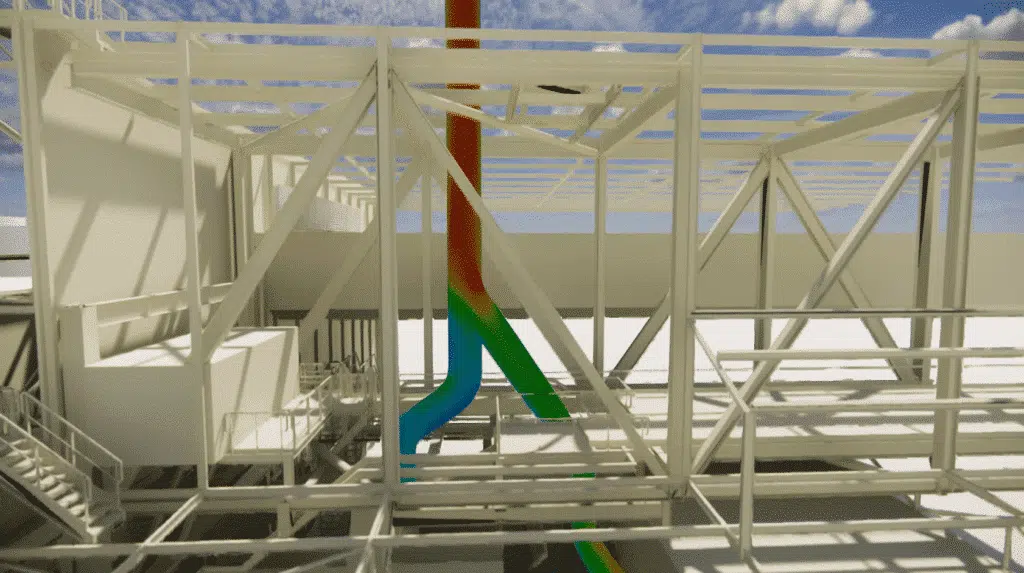
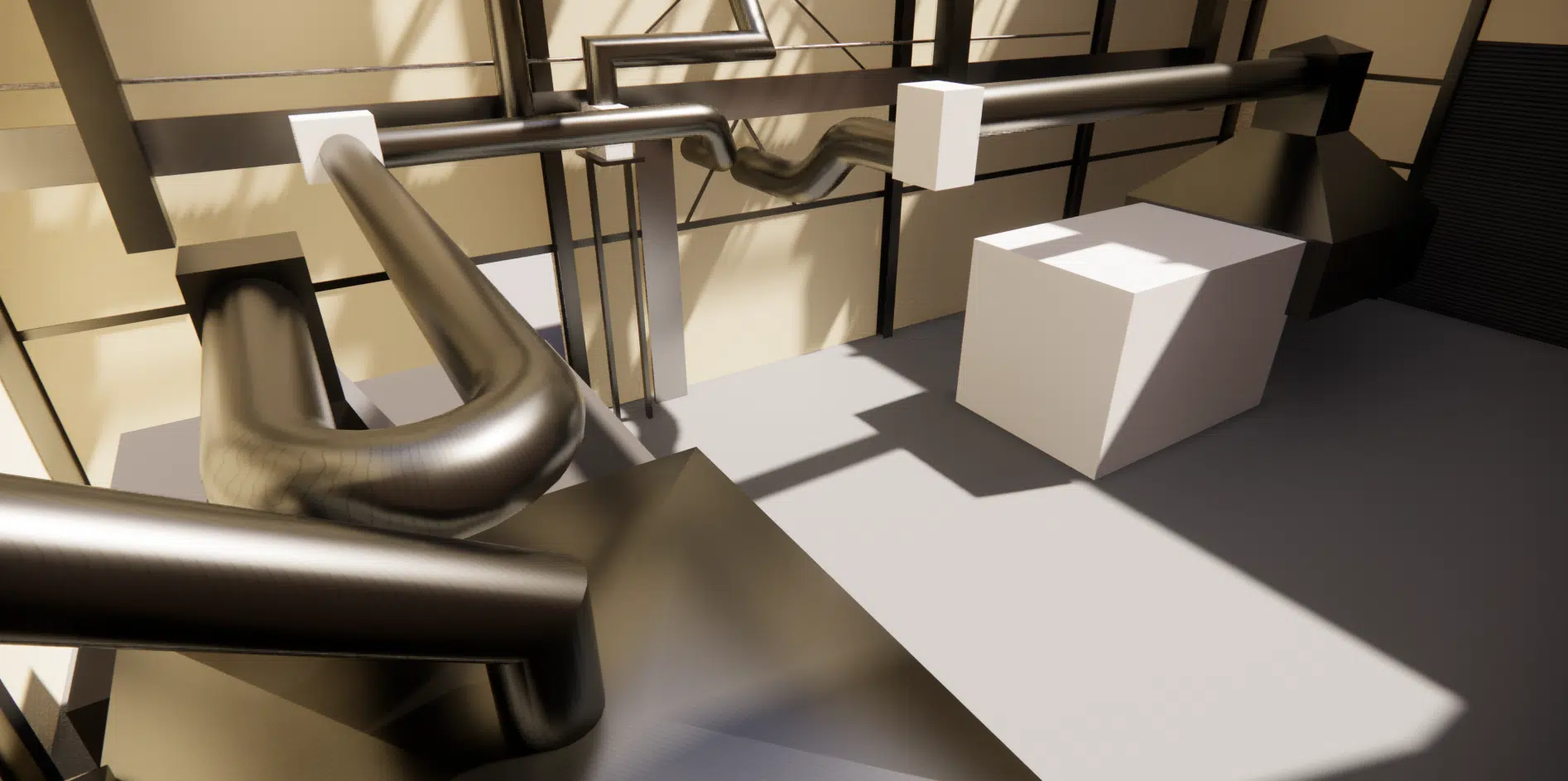
To do this, the CFD numerical computation simulates the thermo-airflow behaviour of the various phenomena that take place both outside the model and inside the technical rooms of the generators.
An air cooler rejects the heat of a fluid to the outdoor air using fans. On a roof, its performance depends directly on the temperature of the air it draws in: as soon as that air is warmed by its own discharge, the cooling capacity drops. The topic relates to data center cooling systems.
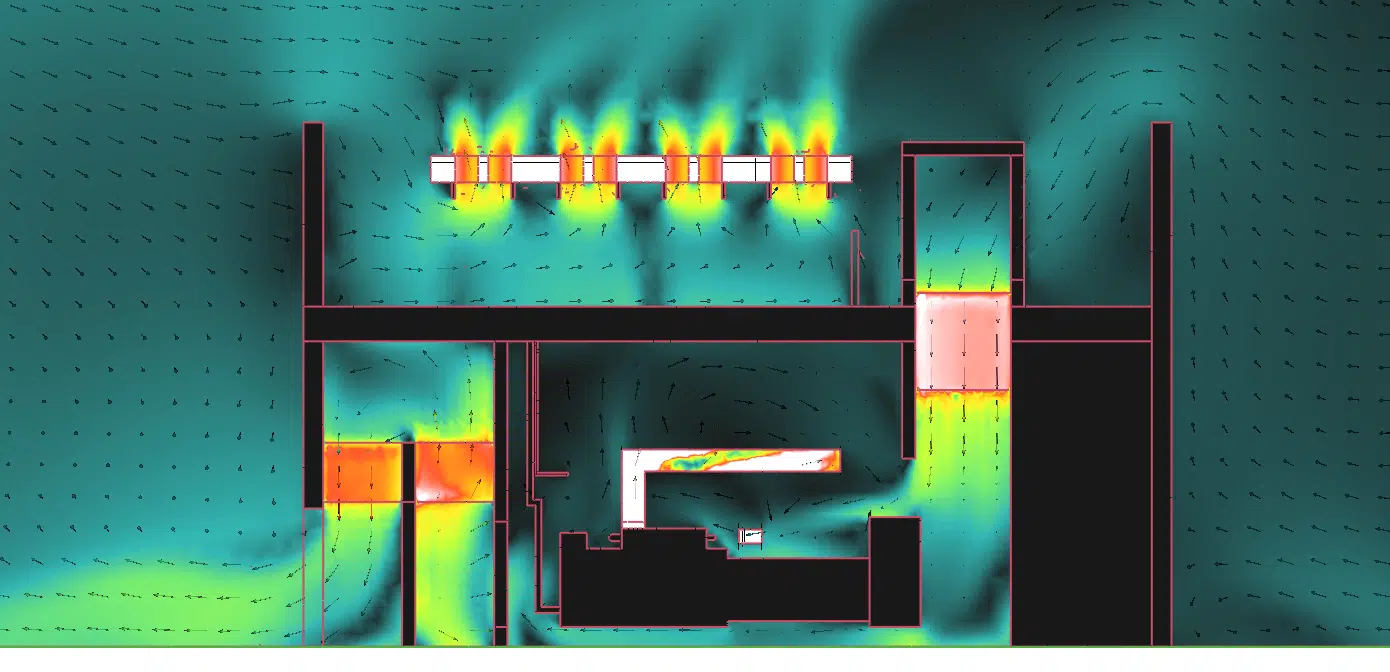
The simulation incorporated all the physical phenomena that determine cooling reliability:
Thermal draft is the upward movement of hot air, lighter, that escapes through the high openings while drawing fresh air in from below. In a generator room, it governs the air flow rate actually crossing the engines, and therefore the real cooling capacity available.
The results of the first studies revealed a recirculation loop and a sub-optimal extraction of heat for the rooftop systems. The presence of an opaque gable promoted the recirculation of the air extracted from the air coolers towards the intake zones.
This recirculation phenomenon causes an increase in the systems' discharge temperature, which, through the loop effect, in turn causes an increase in the intake temperature, which progressively degrades the cooling performance and the reliability of the installation.
Recirculation is the re-intake, by the air coolers, of part of the hot air they have just discharged. Each turn of the loop raises the intake temperature and makes the operating point diverge: it is a mechanism close to the origin of hot spots in data centers.
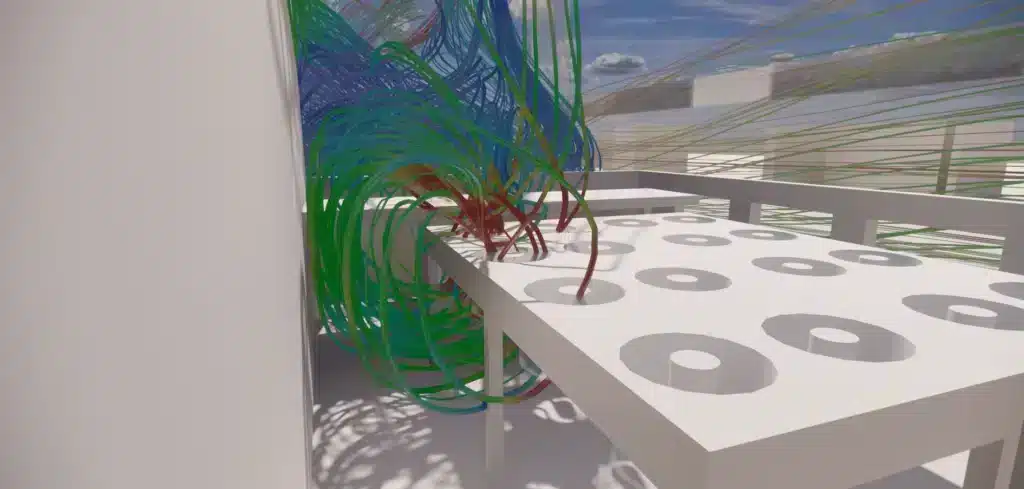
From this diagnosis, optimisation solutions could be brought to the design to break the recirculation loop, restore efficient heat extraction and secure the operation of the rooftop generators.
This study illustrates the full contribution of numerical modelling at the design stage: by revealing an invisible recirculation phenomenon before commissioning, CFD simulation makes it possible to adjust the technical choices to guarantee the reliability of the backup cooling, an essential condition for a data center's availability.
Key takeaway. A generator room that looks well sized on paper can still recirculate once built: it is the real geometry (gable, layout, openings) confronted with the wind and the draft that decides, and only a coupled indoor/outdoor study shows it before works.
Rooftop recirculation, indoor/outdoor coupling and the contribution of CFD on a generator room.
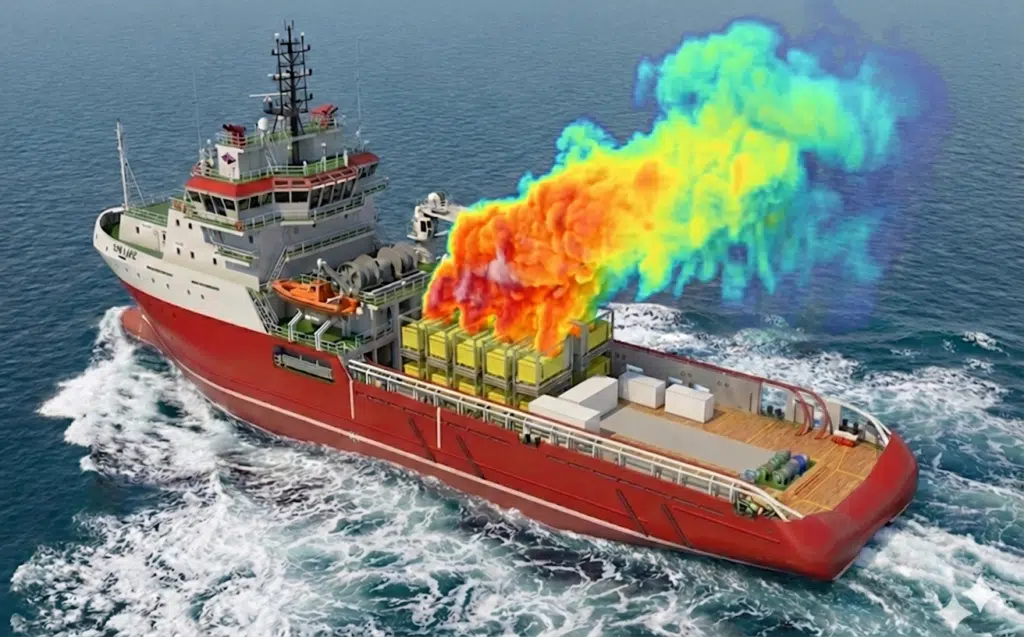
Recirculation is the re-intake, by the air coolers, of part of the hot air they have just discharged. The intake temperature rises, which progressively degrades the cooling efficiency and the reliability of the installation. A comparable phenomenon was studied on our project compressors on an offshore vessel.
The gable screens the wind and creates a recirculation zone downstream, in which the extracted hot air stays trapped instead of being evacuated. It is then re-drawn in by the nearby air intakes.
Cooling depends on the coupling of the two: the outdoor wind and topography set the boundary conditions, while the thermal draft and internal pressure losses govern the real flow rate crossing the generators. Treating them together avoids a biased result.
It reveals phenomena that are invisible on a drawing, such as a recirculation loop, before commissioning. The layout and openings can then be corrected to secure the backup cooling without costly remedial works afterwards.
The generators take over in the event of a grid outage. If their cooling collapses through recirculation, they may trip to a safe state, which directly threatens the data center's availability at the worst moment.
Explore our expertise, projects and technical papers to go further than the FAQ.
This thermo-airflow study by EOLIOS concerns the backup cooling of a data center equipped with 4 generators. The CFD simulation of the on-site wind and thermal flows made it possible to analyse the exhaust plume, identify a hot-air recirculation loop on the roof promoted by an opaque gable, and optimise the air-cooler mixing to make the heat extraction reliable.
The simplest thing is to talk it through together. Our engineers reply with an initial technical read.